2.24.2011

God...and High School Wrestling?!?!

If you watch SportsCenter, or read ESPN.com, you'll have heard about Cassy Herkelman's victory over Joel Northrup at the Iowa state high school wrestling tournament to become the first girl in the history of the tournament to win a match. The twist? Northrup defaulted, rather than wrestle her.

The reasons Northrup gave for his decision to default were that "wrestling is a combat sport and it can get violent at times. As a matter of conscience and my faith I do not believe that it is appropriate for a boy to engage a girl in this manner." By invoking God, Northrup invoked the wrath of notable ESPN.com columnist and Damon Runyon Award winner for "outstanding contributions to sports journalism" Rick Reilly. In his February 19 column, Reilly wrote that God has no place on the wrestling mat. When the other competitors, including the Herkelmans, praised Northrup for being "strong in his religion" and claimed that "you have to respect that," Reilly asked why:

"Does any wrong-headed decision suddenly become right when defended with religious conviction? In this age, don't we know better? If my God told me to poke the elderly with sharp sticks, would that make it morally acceptable to others?"

Now, I have several problems with Reilly's stance on this matter. First of all, his argument (if it can be called that) is a classic straw man. He sets up something that is obviously flawed (the comparison between Northrup's decision and poking the elderly with sharp sticks) just so he can knock it down. There is an obvious, and huge, difference, between a person declining to participate in an event (passivity) because they believe the are doing what God has required of them and actively engaging in the wounding of others for the same reason. It feels silly even to type it. Clearly, there are sins of passivity: when we say that confession each week, we confess our sins, both things done and left undone. But it is ultimately a fool's errand to decide what God has called a certain person to do, and whether or not that person is being faithful to that call.

My larger issue with Reilly is his claim that God shouldn't be involved at all. What good is religious conviction if there are limits to its applicability. Reilly's use of the phrase "in this age, don't we know better" is particularly troubling. Such language has been used to shunt God off to a supposedly impotent corner so that we can do just what we want with supposed impunity. I say "supposedly" and "supposed" because God is not impotent and we remain liable for the things we do. God is not mocked (Galatians 6:7).

Again, I am not making "sinful" or "righteous" assignations to Northrup's decision. I am merely suggesting that while, as Reilly rightly notes, it does not "say in the Bible not to wrestle against girls? Or compete against them? What religion forbids the two-point reversal?," it is imprudent to suggest that there are areas of our lives, be they our sexual mores, our business practices, or our wrestling strategies, that are free from the touch of God's power.
And what of other things we hold dear, better than which, "in this age," we seem to know? Like the idea that we are not ultimately judged according to our deeds or that a criminal's death can save the world? In some sense, Reilly's appeal to "this age" undercuts his own argument. This age is twisted like any other, and, despite our protestations, we don't know any better.

Labels: , , ,

2.18.2011

Conference Preview: Bride of Mockingbird at the Movies!


How do we go from "I don't even believe in Jebus" to "Save me Jebus!"? We need to be impacted. Whether you're looking for new insight about faith and the Gospel for yourself, or looking for new ways to share it with others, come to the "Bride of Mockingbird at the Movies" breakout session at the upcoming Mockingbird Conference (March 31 to April 2 in NYC). In our time, and really, since the Lumiere brothers invented the moving picture in 1895, movies and television have had a special access to us. Drama can bring us to tears, and comedy can put aches in our sides, all while we remain on the couch, physically unmoved.

This access can be a powerful tool for ministry, and a powerful access point for God. At "Bride of Mockingbird at the Movies," we'll look at some film clips (all-new content from last year!) and talk about how even those godless Hollywood-types can tell stories that touch us and communicate something of God's grace to us, often without mentioning God at all. We'll have something both for the person looking to have the Gospel proclaimed to them in a new way, and for the person looking to proclaim the Gospel to others in a new way.

So come, join us, and let the movies do the preaching!

Labels: , , , , ,

2.10.2011

Aladdin Makes No Sense: Mockingbird at the Movies

As I've said before, having a two-year-old has made me a connoisseur of Disney movies. When you watch these movies over and over again, things start to jump out at you. Only sometimes, when you're lucky, are they useful, theological things.

One of these things has ruined Aladdin for me forever. The thing I noticed is this: The genie mis-grants one of Aladdin's wishes! Aladdin wishes to be a prince, so that he can impress and marry Jasmine, but the genie only makes Aladdin appear to be a prince! He gets the trappings but not the juice. Obviously, this is important, as it provides the story's main conflict...but it's a HUGE plot hole. When Jafar controls the genie, and wishes to be Sultan, he is made the ACTUAL Sultan. When he wishes to be an all-powerful genie, he is made an ACTUAL genie. In neither case does Jafar's wish only grant him the APPEARANCE of his wished-for state.

Therefore, dear reader, I submit to you that Aladdin got gypped.

If we can liken our omnipotent God to Aladdin's all-powerful genie, we need to make sure we don't get gypped. When we're promised righteousness and salvation as a free gift (a granted wish) we need to make sure it's real. Not a shadow or a trick. It can't be something we're called to account for later, as Aladdin is.

And, in fact, our righteousness is precisely the opposite of Aladdin's prince-hood. Aladdin appears to be a prince, but isn't. All the genie's power went into the robes, menagerie, coterie, and theme song. And it's a catchy song. But there's no magic left to make Aladdin an ACTUAL prince, which is all that really matters. We, on the other hand, appear to be unchanged in the slightest. We are beset by the same selfishness, the same mercurial nature, the same everything. None of God's power has gone to changing our exteriors. What HAS happened, though, is a total renovation of our nature. We have become the princes that we wished to be, looks be damned.

Labels: , , ,

2.03.2011

My Mom Lied to Me

You probably heard it when you were a kid, too: "Sticks and stones may break my bones, but words will never hurt me." Our moms said this so that the merciless taunts might be forgotten. Though well-meaning, it's just not true. A good friend, and frequent contributor to this blog, once amended the platitude: "Sticks and stones may break my bones, but words will [expletive] up my life forever."

Exhibit A consists of the many wounds we all still carry from all the times we've been derided, scorned, excluded, and shunned. Witness Exhibit B:


That was Peyton Manning, interviewed at the Pro Bowl in 2003 about Mike Vanderjagt, the then-kicker for his Indianapolis Colts. Vanderjagt had questioned Manning's leadership ability on a Canadian TV show, and this was Manning's frustrated response. A few seasons later, Vanderjagt was cut, and has been out of pro football ever since. The "liquored-up" tag has stuck. Vanderjagt even has a legal affadavit, signed by Manning, stating that his characterization of Vanderjagt as "liquored-up" was inaccurate. Details of Vanderjagt's story since the incident can be found in a very well-written article HERE.

Suffice it to say, words are powerful. Sticks and stones may hurt, to be sure, but words can hurt, too, and the damage can last longer.

Labels: , ,

1.28.2011

Self-Knowledge and the Steelers

I'm a huge Steelers fan. I come by it honestly, having lived in Pittsburgh for three years while I was in seminary. Yet I've recently noticed that rooting for the Steelers really throws my lack of sanctification into sharp relief.

Before last week's AFC Championship game against the hometown Jets (my parish, though in New Jersey, is closer to New York than New Meadowlands Stadium, where both the "New York" Jets and Giants play), people started asking me if we were going to throw a Super Bowl party at our church. We did last year, watching the Colts fall short against Drew Brees and the sentimental favorite New Orleans Saints. Our sanctuary is outfitted with a projector and giant screen, so it's undeniably fun to watch a game there. My stock answer to the Super Bowl question, though, was "Not if the Steelers win tonight." This, of course, only made people more curious. As it turns out, the reason I was only willing to host a Super Bowl party if the Steelers WEREN'T in it was that I didn't want people to see the person I turn into when the Steelers are losing.

Though our church (notably named "Grace Church") preaches a message of Grace and Gospel every day of our lives together, it says something about humans, or at least about me, that I still don't believe that if people REALLY knew what I was like they'd still want to come to my church. I'm an incredibly gracious victor. Unfortunately, I'm a pretty sore loser. I'm also mildly embarrassed that I refer to the Steelers in the first person. You know, as in, "We made the Super Bowl!" I'm even more embarrassed that the ups and downs of a silly football team hold such sway over my emotions. I ride such a high after a win and such a morose down after a loss. It's good for my congregation that I have Mondays off.

This roller coaster ride serves to remind me, though, that it is the miracle of the Gospel that Jesus can truly know us, and yet love us. When it happens amongst humans, it's shocking. It's why people get married. It's also the very cornerstone of the Good News. We are known, in all our sin, our imperfection, and our pettiness. And yet, the Son of God, who knew none of that, no sin, no imperfection, no pettiness, died for us, to reconcile us to God.

It's possible that this knowledge might allow me to survive a Steelers loss in the Super Bowl. I just pray I don't have to find out.

Labels: , , ,

1.21.2011

Mockingbird at the Movies: A Little Bit of Pixie Dust

My two-and-a-half year old daughter is really into Disney movies now. She has gone through phases of loving everything from Snow White to Ratatouille. Their catalog is extensive enough that we don't have to repeat very often, though she often gets stuck in a rut, requesting the same film over and over again. The Lion King and Beauty and the Beast are her two favorites. Last night, though, we watched Peter Pan, and, as I sometimes am, I was struck by a theological chord in the first scenes.

When Peter tells the Darling children that they can go with him to Neverland, they ask how to get there. He tells them that they'll fly. When they try and fail, Peter is puzzled. "This won't do," Peter murmurs. "What's the matter with you? All it takes is faith and trust." I could almost hear the frustrated preacher behind those words. "What's the matter with you, congregation of mine? Why aren't you doing Good Christian Thing A or Good Christian Thing B? All it takes is faith and trust!"

Most pastors, and for that matter, Christians in general, have too high a view of human ability (anthropology). We are left wondering what is the matter with us when we try to do something and fail. We wonder why our minds drift to the same selfish or impure places day after day, despite our efforts to control them. We wonder why our children exasperate us so...they're just kids. We wonder why our relationships seem to falter when we've tried so hard to make them work.

But Peter Pan is forgetting something: "All it takes is faith and trust. Oh! And something I forgot...dust! A little bit of pixie dust." And so, the magic ingredient introduced into the situation, flight is possible. Sure it helps to set your mind on "the happiest things," but the pixie dust is the key. It's the fuel that makes the flight go.

In the same way, it is the Holy Spirit that makes our "Christian" lives possible. But unlike Tinkerbell's dust, we can't grab the Holy Spirit and shake a little out. No, it's better than that. The Holy Spirit is promised to us.

But it's the pixie dust that allows for flight, not the quality of the faith and trust of the Darling children, and the Holy Spirit that allows for Christian life in the Christian. Someone said that as one's anthropology increases (as one's opinion of human ability goes up) one's Christology decreases (one's reliance on Jesus goes down). Let's always remember that, without that pixie dust, no one's getting to Neverland.

Labels: , , , ,

1.06.2011

A Christmas (Carol) Reflection

"Ah! You do not know the weight and length of strong chain you bear yourself! It was as full and as long as this seven Christmas eves ago and you have labored on it since. Ah, it is a ponderous chain!" - Jacob Marley

This is how Jacob Marley responds to Ebenezer Scrooge's curiosity about the nature of the chain his ghost wears in Dickens' more-than-classic "A Christmas Carol." Having watched multiple versions of the film every year for my entire childhood, I thought I knew every in and out of the story.

This year, though, I was struck by something different. I was, of course, in the throes of preparing a sermon (as I often am) as I watched, and my mind had wandered to St. Paul's greeting to his readers in the first letter to the Corinthians. Paul greets the Corinthians as "sanctified in Christ Jesus," "enriched in every way," and not lacking "any spiritual gift." He says that he thanks God for them "because of His grace given [them] in Christ Jesus." He also says that God will keep them "firm to the end, so that you will be blameless of the day of our Lord Jesus Christ." If only people thought I was worthy of such a greeting!

Paul's greeting stands in stark contrast to Marley's. Marley has come to Scrooge to warn him to change his ways, lest he bear a similar burden in the afterlife. Paul seems to be saying, "You're great, and you're going to KEEP being great." And the difference between Scrooge and the Corinthians seems obvious: the Corinthians are faithful Christians, while Scrooge is a terrible sinner. But, as American Beauty suggested, look closer:

In chapter 5 of his letter to these Corinthians, Paul exclaims that "It is actually reported that there is sexual immorality among you, and of a kind that even pagans do not tolerate: A man is sleeping with his father’s wife. And you are proud!" So the Corinthians are, at the very least, getting something of a mixed message. But it's a mixed message that contains the very truth of the Gospel.

Marley's message for Scrooge is "You are a sinner. Better become a saint."

Paul's message for the Corinthians, and the Bible's message for us, is "You are a sinner. And yet, you are a saint."

The why is the old Sunday School standy: Jesus. "God demonstrates his own love for us in this: While we were still sinners, Christ died for us" (Romans 5:8).

Like Scrooge, we have forged for ourselves a ponderous chain. And yet, every single link is worn by our Savior, Jesus Christ.

Merry Christmas, all year long!

Labels: , , , , ,

12.16.2010

Some Favorite Christmas Entertainments

Some things I eagerly anticipate every Christmas:

Die Hard
Never was I happier than last year, Christmas 2009, when I came home from doing our final Christmas Eve service (probably around 11:45pm) to find my family wrapping presents and just starting Die Hard in my living room. Nothing puts me in the mood more than hearing Run-DMC starting "Christmas in Hollis" as De'voreaux White exclaims, "This IS Christmas music!" And then, of course, brilliance ensues. Villains are villainous, heroes are heroic, and the Nakatomi building is saved. Just the way Jesus would do it.


"The Night of the Meek" - The Twilight Zone
As a child, we'd watch this episode of the classic TV show every year, as we tried to put needle and thread through popcorn...a tough job. In the episode, a laid-off (and alcoholic) department store Santa comes across a bag of gifts lying in an alley. Moved to give the gifts, he is as happy as he's ever been until they're gone. Depressed again, he slumps back into the alley...where elves and a sleigh await. They say that they've been waiting for him, and that they've got a lot more work to do. He is Santa Claus. The act of giving has, in fact, turned him into the ultimate gift giver! Just a hugely comforting childhood memory, and a reminder that a laid-off drunk can be the recipient of the greatest gift ever. You can watch the full episode HERE.

A Christmas Story
An obvious classic. And one I'm protective of. I watched this every year as a kid, sometimes more than once. I sort of hate the fact that everyone knows and loves this movie. It's mine! I feel the same way about Monty Python and the Holy Grail...I can't watch either with people who will quote along with them...they're sullying my childhood! But, whatever the viewing situation, nothing is better than Darren McGavin shouting, "Not a finger!"

A Christmas Memory
A story by Truman Capote, this is a sweet little Christmas tale. Capote narrates, and is wonderful. Again, just a warm memory from my own childhood. Mismatched misfits care deeply for one another, and commiserate over terrible Christmas presents: socks.

Bushfire Moon
Seen on U.S. TV as "Miracle Down Under," this is another little-seen classic from my childhood. Man, Christmas really brings back the childhood memories, doesn't it? Could you guess that this is a Christmas movie set in Australia? Where Christmas happens in the SUMMER? It's just crazy enough to involve dingos, an authentic yule log shipped all the way from England, and a full helping of familial warmth.

Year-End Lists
One of the most entertaining things about the Christmas season is reading other people's year-end lists. My favorite so far is The A.V. Club's 15 Worst Films of 2010. Enjoy!

Sheltering from Christmas Music
And finally, maybe my favorite entertainment of all comes the day after Christmas (Boxing Day to you Brits) when I can finally turn on some regular music and escape the repetitive droning that is Christmas music without being called an insufferable Scrooge. Happy Holidays!

What are your favorites?

Labels: , , , ,

12.03.2010

Mockingbird at the Movies: What Scares You?

I watched The Strangers the other night...very scary. I tend to not be afraid of monster/supernatural horror movies...I'm more afraid of things that might happen to me. That said, as I made the list below, there is an embarrassing supernatural horror movie on there. Oh well. Anyway, below is a list of movies that have scared me, either in the theater, or walking home afterwards...

Three home invaders terrorize a young couple in a rural home. That's it. I think the movie goes a little far with what people could actually do (at one point, we see the boyfriend get physically touched on the shoulder while leaning into his car in the driveway, and when he turns around, no one is there...) but it's scary as heck. We never see the villains' faces, even when they take their masks off to make the final kill. The girlfriend asks, "Why are you doing this to us?" And one of the home invaders, almost puzzled, responds..."Because you were home." Jeez...

Sort of a funny one. I saw this in my campus movie theater while in college, and really enjoyed it. It's not particularly scary, although it fits my "Things-That-Could-Actually-Happen" Corollary. It wasn't until I was lying in my bed late that night that I started to get scared. It's a little embarrassing to be afraid of Skeet Ulrich and Matthew Lillard (although not the most embarrassing thing on this list...) but I couldn't help myself. Freaky kids with no compunction? Scary.

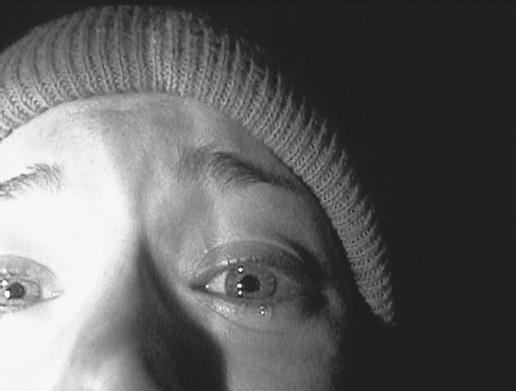
I talked about the Blair Witch in my Greatest Movie Villains discussion. This movie is scary. If you can handle the shaky-cam business, which I blessedly have never had a problem with, this one will make your hair stand on end. It's just three kids lost in the woods...and scary stuff starts happening at night. Aren't we all already afraid of this? Also, this movie has one of the greatest endings of all time. Even years after seeing it, I would RUN from my car to my apartment if I got home too late at night. And this was when I lived in the desert. But hey, maybe the Blair Witch is a snowbird.
[CONTINUE READING]

Labels: , , ,

11.24.2010

Jesse Eisenberg: Crazy Cat Lady?

I love it when the first guest on a talk show, always a FAR bigger name than the second guest, stays for the second guest and the musical act. A classy move. What usually happens, though, is that the star's handlers get them there, shove them onto the set, they respond to a set of pre-approved "questions" ("I understand you recently had an interesting experience on an airplane..."), pimp their latest project, and get out of town.

Jesse Eisenberg (The Squid and the Whale, Zombieland, and most recently, The Social Network) was on Conan on Thursday, and was a class act. He was funny, self-effacing, and most importantly, stayed on the couch through the Venus Williams interview and the Decemberists' song. Great move, Jesse, now I like you even more.

But the thing that I liked even more, the reason I'm blogging about this episode of Conan, was something that Eisenberg said in his interview. When Conan asked him if his life had changed in any way since the release of The Social Network, he said, somewhat cryptically, "I have a lot more cats." So it comes out that Eisenberg is on a list of cat-adopters, so his apartment is basically a cat boarding house. He said that it's full of cat food, litter, and nothing else. Why does he have all the cats? Guilt! He said that he feels guilty for having such success in movies, and so cares for abandoned cats. The more success he had, the more cats he adopted. More popular movie? More cats. The result? Some potentially (and temporarily) expiated guilt and a house full of cats!

Isn't it great that we have a God who accepted expiation once and for all? Who doesn't require that we keep punishing ourselves (by filling our homes with animals who think they're smarter than us)?

Labels: , , , , ,

11.05.2010

Being "Human"


Human
I'm only human
Of flesh and blood I'm made
Human
Born to make mistakes
- The Human League ("Human")

As it is written, there is no one righteous
Not even one
There is no one who understands
There is no one who seeks God
- St. Paul (Romans 3:10-11)

To watch the actual video in all its 80s hair-related glory (they won't let me embed it), go HERE.

When's the last time someone brought up their humanity as a good thing? Have you ever heard anyone say, when congratulated on a success, "Hey, I'm human!" All we can do is rely on the one who was born to not make mistakes.

Labels: , , ,

10.22.2010

(More) On Magnolia: Mockingbird at the Movies

I've posted about Magnolia before, but this is a film that bears further examination. One of the most beautiful modern American films, this movie won no Academy Awards, and was only nominated for three (Tom Cruise for Best Supporting Actor, Aimee Mann for Best Original Song, and P.T. Anderson (who also directed) for Best Original Screenplay). Magnolia was released in 1999, so I'm going to assume that no spoiler alert is necessary. That said, if spoiler warnings are necessary, how have you not seen this movie? It's 188-minute running time is an impediment to some, but weren't you willing to sit through Braveheart (177 minutes)? Magnolia is an infinitely better film. Anyway, Netflix it, stream it, get it On Demand, whatever you have to do.

Magnolia is a composite picture of 24 hours in Los Angeles, inter-cutting between seven stories (Anderson famously protested, "Michael De Luca (executive producer) says I'm making a movie with seven stories! I'm making ONE STORY!"), investigating the humanity of the subjects and the way in which they might relate. It boasts some of the finest actors of generation (Phillip Seymour Hoffman, Jason Robards, John C. Reilly, Julianne Moore, William H. Macy, Phillip Baker Hall, Alfred Molina, and the list goes on...) giving some of their greatest performances. The opening sequence is one of the most brilliant ever written or executed. In it, a narrator tells three stories of astounding coincidence, the final one culminating in a boy being noted as an accomplice in his own murder. As the circumstances get stranger, the narrator wonders of these stories can really be "things that happen." Finally, he says that these strange things happen every day. (If you want to watch this wonderful, but slightly NSFW (one f-word), opening sequence, it can be seen in another version of this post HERE)

Surely, the narrator asserts, these things can't just be "things that happen." Surely, "oh, it's just one of those things" isn't always a satisfactory response. Magnolia is a powerful argument for a divine being (specifically God of the Bible) who gets involved. The movie's story (or -ies, depending on whom you ask) and their interconnectedness could simply be written off as coincidence or "just one of those things..." until of course, a rain of frogs begins to fall. While the rest of the story is assuredly strange and improbable, a rain of frogs is beyond that. It's impossible. We would all agree that THAT is NOT part of the set "things that happen." That's NOT "just one of those things." That's an intervention from the outside.

And it's not just intervention for intervention's sake. It brings estranged people together, it knocks sense into people, and gives people purpose. It comes to those who are in need. And if these clues aren't enough, the Aimee Mann song for which she was Oscar nominated is called "Save Me." Further, the most powerful song of hers in the movie, "Wise Up," goes from, "It's not / What you thought / When you first began it / You got / What you want / Now you can hardly stand it though / By now you know / It's not going to stop / 'Til you wise up" to "It's not going to stop / 'Til you wise up / No, it's not going to stop / 'Til you wise up / No, it's not going to stop / So just...give up."

Did you get that? It goes from "Wise Up" to "Give Up." This is the call of the Christian. Recognize that without God getting involved (which he does, spectacularly), our wising up is sure to fail. It's only in giving up that we can be saved.

Labels: , , , , , ,

10.14.2010

Mockingbird at the Movies: About Schmidt

About Schmidt is a about a man named Schmidt (Jack Nicholson). An insurance actuary from Nebraska, Schmidt is a normal guy. That is, he's basically selfish. He's not overwhelmingly selfish, just sort of standard-ly selfish. In fact, if Schmidt has a defining characteristic, it's his almost oppressive normal-ness. After an unseen turn in his life (spoiler averted), Schmidt hits the road to attend his daughter's (Hope Davis) wedding to the underachieving Randall (an amazing Dermot Mulroney) in Denver. He interacts with his life in the standard human way: with himself at the center. The only seeming exception to this (he financially supports an African child) actually isn't: his letters to the child, Ndugu, are full of complaints about Schmidt's situation in life, his wife, and his future son-in-law. Now, to the clip, the final sequence in the film. Schmidt has just attended his daughter's wedding, and starts the drive back home:


So, Schmidt has realized, maybe just for a moment, that it is not "about Schmidt." His depression changes, if only briefly, to joy. And the reason? A little boy, many thousands of miles away, has loved him. Sure, Schmidt sends the money that makes the boy's life a little bit better, but you sense that it is the letters that he loves. Schmidt, of course, has been using these letters as an opportunity to vent on his own issues and to dispense ridiculous advice (at one point, he suggests that Ndugu save some of this money for college), not to build a relationship with the child.

The relationship between Schmidt and Ndugu is one-way. At first, it's from Schmidt to Ndugu, and Schmidt is unmoved. But when that changes, when Schmidt feels Ndugu's one-way love in a moment of need, he is reborn. It is when we are loved that everything changes. Like Schmidt, who appreciates one-way love that comes when he hits bottom, it is when we feel that no one could possibly love us that we are most eager for a God who says, "I came to love the unlovable."

Labels: , , , ,

10.07.2010

At the Movies: The Greatest Film Villain of All Time

This is a list that critics more esteemed than I have worked on. The American Film Institute's list of 50 Greatest Villains is HERE, along with their 50 Greatest Heroes. My list, on the other hand, is more of a personal one. These are the villains I'VE loved the most. I can't argue that Cruella De Vil isn't a great villain, she just doesn't move me like the Predator does. Needless to say, the Predator doesn't make the AFI's list. So let's get crackin'!

Hans Gruber
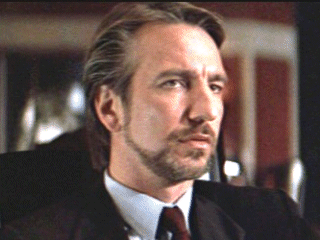
My favorite. Brought to life by Alan Rickman, Gruber actually does make the AFI's list, at #46. The key to a great action movie (this one is Die Hard) is a great villain. Gruber is funny, cultured, and not playing around. His plan is sound...perfectly so. He just doesn't count on Bruce Willis' John McClane ("a fly in the ointment...a monkey in the wrench"), in town on vacation and just the person to save us.


The Predator
Another classic. Less well-known than the Alien, The Predator is its superior in almost every way. Equipped with laser firepower and heat-vision, predators are quad-jawed animals that hunt other species (who are at the top of their respective food chains) for sport. Immortalized in its battle with Arnold Schwarzenegger, the Predator has made several unfortunate attempts to re-appear in films, from sequels to prequels, and out-and-out Alien battles.


The Terminator
#22 on the AFI's list, the Terminator (Schwarzenegger) is an unstoppable killing machine from the future. Well, unstoppable by anyone but Sarah Connor (Linda Hamilton). The Terminator was James Cameron's first attempt at larger-than-life sci-fi danger. Good start.


Satan
The biggie. Committed to celluloid dozens of times, the characterization that sticks in my mind is Rosalinda Celentano's chilling performance in Mel Gibson's divisive The Passion of the Christ. Maligned by many, awe-inspiring to many others, the film was, if nothing else, hugely successful. And Celentano's pale, androgynous Satan, complete with demon-baby, is a villain that will stick with you.
[CONTINUE READING]

Labels: , ,

9.30.2010

Michael Vick's American Redemption

A long time ago, I posted about Michael Vick. For those outside the sporting world who need a review, Vick was the one-time most exciting player in the NFL. The number 1 overall draft pick from Virginia Tech in the 2001 draft, Vick played for the Atlanta Falcons for six seasons before being arrested for and convicted of running an illegal dogfighting operation. He served 21 months in federal prison before declaring bankruptcy, being cut by the Falcons and sued for repayment of salary, and finally being signed by the Philadelphia Eagles in 2009.

Eagles owner Jeff Lurie said when he was thinking about signing Vick that we "needed to see some real self-hatred" for what he had done. Eagles fans protested outside the stadium, wanting nothing to do with Vick. An athletic quarterback known more for what he could with his legs than with his arm, Vick was roundly dismissed by sports pundits. It was assumed that, older now, his legs would betray him, leaving him to rely on passing skills that he never really had in the first place.

The pundits, apparently, were wrong.

Through three weeks of the 2010 NFL season, Michael Vick has been called, by the Washington Post's Michael Wilbon, a well-respected NFL commentator, the season's most valuable player so far. Steve Young, one of the all-time great quarterbacks to play the game, says he is "electrified" by the way Vick is playing and his potential for the season. Vick trails only Peyton Manning in passer rating, the cumulative statistic for judging quarterbacks. He has thrown six touchdown passes and no interceptions. As ESPN's Tim Keown says, though, "It would have been quite a bit easier had Michael Vick returned from prison and remained a mediocre backup."

What Keown is getting at is the conundrum that Vick has placed us in with his performance. In his article, Keown questions the validity of the "redemption story" tag that gets thrown at Vick. He cautions us not to think of this as more than a great football story. If you listen to sports talk, on radio or TV, you can hear the tide turning in Vick's favor. The fans who once picketed Lincoln Financial Field (where the Eagles play), now hold "Vickadelphia" signs.

But is this redemption? Keown says no. He says that we (Americans) love to say that "we're the land of second chances" and that "we're a forgiving nation" but accurately notes that "we do intolerance and rigidity when it fits our purpose." Keown argues that this situation feels redemptive to us because Vick is playing so well. "We're a country that values winners over the redeemed. The redemption we're seeking is often just the excuse to feel good about rooting for someone whose past is thoroughly distasteful." So where does that leave us with Vick? While his career may be being redeemed, what about Vick himself?
[CONTINUE READING]

Labels: , , , ,

9.16.2010

Mockingbird at the Movies: Duplicity and Real Love

I've often said, as I ply my trade, using examples from movies to illustrate the themes of law and gospel, that it's a lot easier to find examples of law in movies than it is to find examples of the gospel. The reason is simple: humans just don't love one another the way God loves us. That kind of the love (the unconditional kind) is simply beyond us, and wouldn't ring true if two characters in a movie behaved toward each other in that way.

But I may have found an example. The below clip, from the Tony Gilroy (Michael Clayton) -scripted and -directed Duplicity, has two characters speaking to each other in the language of love. The REAL language of love. Watch:


Now, don't worry about all that junk about the formula, that's just this particular film's macguffin. (For the wannabe cinephiles out there, "macguffin" is a term coined by Alfred Hitchcock to describe the object that everyone's after, the thing that sets the story in motion, but the nature of which ultimately doesn't really matter at all. Think the Maltese Falcon in The Maltese Falcon. Does the fact that it's (69-year-old SPOILER ALERT) made of tar make the movie any less exciting?) Do you feel the power of the scene?

These are two people, in a relationship, who haven't been able to trust each other since the day they met. They've just stolen a formula, worth billions, and are both pretty sure that the other is going to try to get all the money for themselves. In a situation like this, love cannot exist. But then, Julia Roberts begins to play the God role. "I know who you are. And I love you anyway." What a statement! These two sentences, when placed one after the other, have insurmountable power. Clive Owen is powerless before them. But more importantly, he is transformed by them. His distrust becomes trust. Not knowing what Roberts has, he offers the formula. And, in this wonderful scene, he tells us his reasoning. "I look at you...I can't stop looking at you...and I think, 'That woman. She knows me. And she loves me anyway.'"

This is the best non-cheesy illustration of the kind of love God has for us and its effect on us that I've ever seen. And believe me, I know that "loves me anyway" needs a serious theological fleshing-out, but the power of the statement cannot be ignored. God knows us, in all our conniving, self-centered, and jealousy-laden splendor, and loves us anyway. And this love is a creative love, creating trust where there was distrust, care for others where there was self-centeredness, and love where there was jealousy.

Labels: , , , ,

9.15.2010

Frasier Crane: Lawgiver? The Good Doctor and the Sermon on the Mount

Frasier has had a rough day. Someone parked in his spot at the office, making him late for work. Someone talked through the movie he tried to enjoy at a theater. Someone then rented the videotape out from under him. The clerk helps the person on the other end of the phone rather than helping Frasier, who has taken the trouble to come down to the store. His upstairs neighbor plays his rock music (which consists entirely of the lyrics, "Flesh is burning, na na na na na na."). Finally, when a man steals his waited-for seat at the local coffee shop, Frasier has had enough. Grabbing the man by the collar, he runs him out of the shop, shouting, "What you need is an etiquette lesson!"

This third-season episode is called "High Crane Drifter" in homage to the little-known Clint Eastwood film High Plains Drifter, in which a drifter (who may or may not be a ghost) blows into town and cleans it up by brute force. Frasier chastises himself for allowing his more animal nature to come out. He prefers, he says, to settle his disagreements like an adult, with words and reason. But the newspaper hails him as a sort of folk hero. And, to his dismay, people begin to follow his example.

Daphne, tired of someone taking her wet laundry out of the washing machine, decides to use a red article of clothing to take revenge on a load of whites, leading to a great line: "Those were my panties and I wasn't afraid to use them." People all over town start taking Frasier's example to heart and begin giving little "etiquette lessons" of their own. A caller whose neighbor used a leaf-blower at 7am, brags about smashing the leaf-blower into a tree. Another shoves a pound of rotten shrimp into a rival's air conditioner.

After dozens of callers describing their vigilante exploits, Frasier exclaims that they've gone too far! "I displayed a minor bit of force to just make a point...I didn't go around smashing windows or torching lawns! Where does it end?" His caller replies, "Are you saying that what I did was wrong?" "Of course I am!" shouts Frasier. And the caller responds, "But what you did was okay?" This stops Frasier in his tracks. And then, and this is one of the reasons I really love this show, Frasier realizes what the right thing to do is, and does it: "Come to think of it, what I did was just as wrong. I mean, who am I to draw the line at the acceptable level of force?"

This is a theologically profound statement. "Who am I to draw the line?" Well, you're no one. It's not our line to draw. We WANT it to be, which is why Frasier starts on his rant, and why we find The Sermon on the Mount so distasteful. Being angry is the same as murder? Lust is the same as adultery? This is ridiculous! And yet, as Frasier admits, if we are the ones left to draw the lines of acceptability, won't the next person just push it a little further than we did? Where does it end? If murder and adultery are seemingly more gross violations, surely anger and lust are the core of their inception. Frasier realizes in that moment what God has provided for all along: Righteousness must be complete to be worth anything at all. It is only God who can draw the line, and it is only God who can toe it.

Labels: , , ,

9.08.2010

Frasier Crane and the Illusion of Self-Control

In the final season episode "Murder Most Maris," Niles' (David Hyde Pierce) ex-wife is accused of murder. Niles is implicated as a possible accessory, for lending her an antique crossbow, which became the murder weapon. His life swirling out of control, Niles "chooses" to be calm. Martin (John Mahoney), the Crane boys' father, observes, "Wow! He's really holding up well!" "A little too well," Frasier (Kelsey Grammer) retorts. "I'm starting to fear that he's not dealing with his emotions at all!" Martin says, "Right. That's the whole secret to holding up."

This exchange illustrates a disconnect that people, and Christians, experience. What is the difference between what is on our outsides and what is on our insides? What is real? Which is more powerful? As Martin suggests, we often think of obscuring what's really going on as a skill. The grieving mother who gets right back to work, or the mourning father who never cries. This is called, in some circles, "strength." But is this kind of strength worth anything?

As "Murder Most Maris" continues, Niles' life becomes more and more unbearable, and he becomes more and more robotic in his insistence that everything is fine. Finally, he goes to Cafe Nervosa (the inevitable coffee shop where everyone is always hanging out) with Roz (Peri Gilpin) and asks for a straw, only to be told that Roz just got the last one. Here's what happens:


So you see the point: whatever's underneath will eventually come out. The core will come to the surface. The reason we find The Stepford Wives so creepy is that buried emotions are unnatural. This is the illusion of self-control. We tell ourselves that people like Niles are exhibiting great self-control. Martin certainly thinks so. But he's not actually controlling his discomfort and stress, he's simply hiding it. We find that he's only acting calm, cool, and collected. And no one can hide their true selves forever. We put a smile on our faces and say, "I'm happy." But isn't it well-known that clown make-up hides despondence?

Christians often feel it necessary to hide their insides (their sinfulness) from each other, fearing that they'll be revealed to be lagging behind on the great path to righteousness. However, and of course, God looks on the heart. And as we say all the time, it's a good thing that Jesus came for sinners, and not for the righteous! It's a good thing that he came for those of us who can't handle our lives, rather than for those of us who can. The Gospel is good news when we find ourselves exposed, as Niles does, by situations beyond our illusions of control.

Labels: , , , ,

9.06.2010

An Introduction to the Law and the Gospel - Sean Norris in Modern Reformation

The latest issue of Modern Reformation contains articles from not one but three Mockingbird Contributors: Jady Koch, Nick Lannon and Sean Norris. Well done, guys! If you're not a subscriber, do yourself a favor - ModRef is one of the best theological magazines going. It manages to be accessible to the non-academic and engaged in the real issues facing "people in the pews," without sacrificing one iota of intellectual firepower - all delivered with a healthy dose of stridency and self-effacing humor. If the Protestant Reformation is even remotely a concern for you (as it is for us!), then Modern Reformation is for you. Plug over. 

Sean Norris' article "An Introduction to the Law and the Gospel" is available online in its entirety, and it is indispensable. We talk a lot on here about "The Law" and "The Gospel," about the importance of dividing them in preaching or reading the Bible; in fact, these concepts lurk behind much of our output. Well, if you've ever wondered what we mean, or just want a refresher, run don't walk. A few paragraphs from the intro and the conclusion each to whet your appetite:

The distinction between the law and the gospel is a completely foreign concept to many Christians and one that eluded me for many years. Before I heard Christianity presented in these terms, the standard framework by which I understood Christianity was couched in relational language. The foundation of religion was expressed something like: "I want to get to know Jesus more," or, "It's all about a relationship with the Lord." The result of such a framework was a rather ambiguous understanding of the faith. If I was honest with myself, I only kind of knew what I believed, and I sort of knew why I believed it. My faith was dependent on my experience and emotions, which meant that I really had to work hard to keep the experience going. It was important to feel close to the Lord at all times because that was the primary indicator of a good relationship with him.

What did that look like? The usual: experiencing an intimate time of worship (warm fuzzy feelings or being brought to tears), a regular quiet time (reading the Bible), journaling, and so on. This outward show also extended to abstaining from the usual vices: swearing, gossiping, making fun of people, envying, lusting, and on, and on, and on. This was a depressing and scary way to live because I was never successful. The core of my entire belief system and worldview was built upon the sandy shore of my ability.

What are the law and the gospel? They are not abstract theological categories made up by people in their studies many years ago with way too much time on their hands. The law and the gospel are God's two words spoken to us in his Bible; they are its two main subcategories, if you will. As such, they constitute more than simply one of many possible frameworks for reading and understanding the Bible; they are the foundational framework. Understanding them and the distinction between them is key to understanding the whole of God's Word and the whole of the Christian religion. As Martin Luther wrote, "Virtually the whole of the scriptures and the understanding of the whole of theology depends upon the true understanding of the law and the gospel."

---------------

What are the implications of this distinction between law and gospel for our understanding of the Bible? Considering both the law and gospel kills the notion that the Bible is a manual for living--a view commonly held today. If the Bible were such a manual, Christianity would be all about what we do. Instead, the Bible is God's active Word in our lives. From it comes the law, "Be perfect as your heavenly Father is perfect," crushing any notion of self-justification by our good works and revealing our sinful state. With the law is the gospel--the freeing message that Jesus Christ died for our sins and was raised for our justification (Rom. 4:25). The two words tell us that Christianity is all about what he has done! The Bible is the proclamation of the truth--the truth about us and about God. It is nothing short of revelation, and this truth sets us free indeed.

What are the implications of these two inseparable words for our everyday lives? As mentioned above, our relationship with God does not depend on us; rather, it rests solely on the completed work of Jesus Christ at the cross. When we understand this about our relationship, the result is that we can rest. We can finally have peace. Our efforts to preserve a relationship with God can stop. Our motivations for our study of the Bible, prayer, and worship can come not out of fear of punishment or separation from God but out of the joy of security in God's faithfulness to us shown in his Son, Jesus, so that we are inspired to grateful living. Whenever we feel the accusation of the law, we can recognize its purpose, which is to drive us back to the cross where we hear the gospel again.
For I am sure that neither death nor life, nor angels nor rulers, nor things present nor things to come, nor powers, nor height nor depth, nor anything in all creation, will be able to separate us from the love of God in Christ Jesus our Lord. (Rom. 8:38-39)

Labels: , , , , ,

8.13.2010

Announcing The Gospel According to Pixar!!

Beginning with Toy Story in 1995, Pixar Animation Studios has taken American cinema by storm, setting a new standard of excellence in animated filmmaking and earning a fortune in the process. Their movies are not only highly entertaining but wise. Pixar has an all-too-rare gift for telling stories which speak about the reality of life and complexities of the human heart - and making us laugh while doing so.

Mockingbird's brand-new publication, The Gospel According to Pixar, looks at how each Pixar film portrays the basic concerns of everyday life and seeks to connect them with a Christian understanding of the world. Using imaginative stories about fish, monsters, and cars, Pixar films touch on such deeply human themes as love, identity, suffering, forgiveness, fear, freedom, guilt, purpose and belonging - to name just a few. These common concerns allow for easy avenues of dialogue between the films and Christianity, which The Gospel According to Pixar explores in hopes of communicating the Gospel in a fresh and persuasive way.

Written for a broad, all-ages audience, it can be used as a teaching series, a study guide, or simply as a commentary. And like the films themselves, we hope The Gospel According to Pixar is as moving as it is fun. Edited by Todd Brewer and David Zahl, and also featuring entries from blog contributors Bonnie, Nick Lannon and L.R.E. Larkin, we could not be more proud of it. The table of contents looks like this:
[CONTINUE READING]

Labels: , , , , , , , , , , , , ,