4.06.2011

Keeping a Reckoning in The Idiot

From Dostoevsky's The Idiot. Prince Myshkin is retelling to the Ivanovna girls a memory of a friend who was imprisoned and suddenly had his death sentence reversed. A telling depiction of our most human response to grace given us. The Prince, though, seems to find hope that it is possible, though maybe not observably so.  Myshkin begins by retelling his friend's inner-monologue while imprisoned:

"...he said nothing was more oppressive for him at that moment than the constant thought: 'What if I were not to die! What if life were given back to me--what infinity! And it would all be mine! Then I'd turn each minute into a whole age, I'd lose nothing, I'd reckon up every minute separately, I'd let nothing be wasted!' He said that in the end this thought turned into such anger in him that he wished they would hurry up and shoot him."

..."You're very fragmentary," observed Alexandra. "...That is all very praiseworthy, but, forgive me, what ever happened to the friend who told you all those horrors...his punishment was changed, which means he was granted 'infinite life.' Well, what did he do with so much wealth afterwards? Did he live 'reckoning up' every minute?"

"Oh, no, he told me himself--I asked him about it--he didn't live that way at all and lost many, many minutes."

"Well, so there's experience for you, so it's impossible to live really 'keeping a reckoning.' There's always some reason why it's impossible."

"Yes, for some reason it's impossible," the prince repeated. "I thought so myself...But still it's somehow hard to believe..."

Labels: , ,

The Law and Penguins

I recently saw the following comic strip in our local Newspaper (The Beaver County Times):


Eh, yup. That pretty much says it all...doesn't it?

Have a great Wednesday!

For a bigger version, click here.

Labels: , ,

3.30.2011

The Futility of "Out-Educating" Fat

Another insightful blurb on the failure of Pelagian-minded methodologies to solve the American obesity issue. According to Clotaire Rapaille, the "If Americans just knew more..." mentality seems to fly in the face of what's actually happening. Cited by Ramit Sethi (ht JD):

“Years ago, Tufts University invited me to lecture during a symposium on obesity…

Lecturer after lecturer offered solutions for America’s obesity problem, all of which revolved around education. Americans would be thinner if only they knew about good nutrition and the benefits of exercise, they told us. Slimming down the entire country was possible through an aggressive public awareness campaign…

When it was my turn to speak, I couldn’t help beginning with an observation. “I think it is fascinating that the other speakers today have suggested that education is the answer to our country’s obesity problem,” I said. I slowly gestured around the room. “If education is the answer, then why hasn’t it helped more of you?”

There were audible gasps in the auditorium when I said this, quite a few snickers, and five times as many sneers. Unsurprisingly, Tufts never invited me to lecture again.’”

Labels: , ,

3.28.2011

Charles Wright on the Law of Quid Pro Quo

From "Homage to Cesare Pavese," in The Other Side of the River (1984):

...
Death will come and it will have your eyes,
Ridiculous vice
and the same look.
You are the great weariness.
You are scorched and burned back by the sea.
You say nothing,
and nobody speaks to you.

This is a balance sheet and the names don't count.
One nail on top of another,
four nails make a cross.
Nothing can add to the past--
Woman is as woman does,
and night is always the night.
With its black heart and black hands it lays me down.

Labels: , ,

3.22.2011

Labels: ,

James Franco and Bradley Cooper Are More Perfect Than You

Remarkably insightful article by Carina Chocano in this past Sunday's NY Times Magazine, "Our Imperfect Search for Perfection," using, among other things, the two recent Hollywood releases "The Adjustment Bureau" and "Limitless" to discuss our profoundly troubled relationship with perfection. Certainly the first time I've ever seen Pelagius in the Times (and certainly in conjunction with The Real Housewives of Beverly Hills). I was only disappointed she gave the Christian understanding of human fallibility such short shrift. Weird, almost - because fashionable or not, what she's describing here is nothing less than the unshakeable and inherent religiosity that plagues all of us, believer or no. As a treatise on the anxiety and despair produced by the Law, however, not to mention the absurdity/tragedy of the universal human addiction, it's one of the two or three best things I've ever read in that paper. And the line about Franco is one for the ages:

Given the recent hell-in-a-handbasket zeitgeist, you’d think we would all find more comfort in “The Adjustment Bureau” idea that control over our own destiny is just an illusion; that if it’s not God or fate or John Slattery in a fedora controlling what happens to us, then it’s something like luck, birth order, genetics, macroeconomics, the law of attraction, big government or your damnable idiot boss. But this is not so. Given the amount of time we spend thinking and fretting and dreaming about how to become more perfect, it’s clear we’re all living in a “Limitless” world. After the movie, a woman beside me sighed, “I really need that pill.” And I blurted out involuntarily, “So do I!”

“Limitless,” in all its pulpy glory, represents the logical terminus of a certain pattern of modern thought, endlessly fueled by the culture: if you can theoretically become perfect, then it follows that you should at least try. This idea (that man is perfectible and so should strive for perfection) has been around for 2,000 years, but it has lately been streamlined and turbo-charged: in its contemporary incarnation, it regards any unfulfilled human potentialities as a particularly sad and sclerotic form of entropy. [CONTINUE READING]

Labels: , , , , ,

The Law of the Book


. . . and the Book of the Law: "For all who rely on works of the law are under a curse; for it is written, “Cursed be everyone who does not abide by all things written in the Book of the Law, and do them.” Gal. 3:10

Labels: , ,

3.21.2011

The Woman Who "Felt No Fear"

From the March edition of Harper's, an interesting bit about a woman who, like all of us, feels a morbidly interesting compulsion towards those things which most terrify her. A telling chunk:

"For many years, SM has repeatedly told us that she 'hates' snakes and spiders and 'tries to avoid them.' To test her real-life behavior, we took her to an exotic pet store. Upon entering the store, SM was spontaneously drawn to the snake terrariums. A store employee asked SM whether she would like to hold a snake, and she agreed. She rubbed its leathery scales, touched its flicking tongue, and watched it slither through her hands. SM displayed a compulsive desire to 'touch' and 'poke' the store's more dangerous snakes, even though the store employee repeatedly told her that those snakes were not safe and could bite. She also attempted to touch a tarantula and had to be stopped because of the high risk of being bitten. When asked why she would want to touch something she knew was dangerous, SM replied that she was overcome with 'curiousity'."

Labels: , ,

Part X and the Death and Resurrection of Hollywood

Lots of interesting connections and disconnections to be found in the New Yorker profile of Barry Michels, therapist to the stars. Michels is an interesting conglomeration of Jungian psychoanalyst, self-help guru, and Alcoholic Anonymous-style breakdown-inducing tough love. You have to slog through a fair amount of nonsense, but the stuff about judgment as it relates to creativity is particularly relevant, not to mention Michels' insights at the end about death and rebirth. One can't help but wonder how much Michels picked up from close family friend Rod Serling?! ht RJH:

One recent afternoon, Michels put on his glasses, pulled out a file, and began to leaf through a pile of yellow legal-pad pages. It was a difficult case—a writer who had been blocked for two years. He was a type Michels sees frequently: someone vacillating between thinking he is God’s gift to mankind and thinking he is garbage. “Mmm, now this is interesting,” he said, looking at his notes. “That voice, the voice that says ‘I’m [crummy]’ or ‘I’m above this,’ is going to increase in volume the closer you get to actually doing the deed. You have to anticipate it, label it, and reject it every time it comes up.”

The voice belongs to what Stutz refers to as Part X, a deeply primitive dimension of the personality he identified after he began to work with show-business patients; its characteristics are petulance, rage, arrogance, hypersensitivity, a sense of victimization, and, above all, a resistance to process. Michels explains it by invoking the behavior of a two-year-old. “It’s the part that’s pounding on the table because nothing’s good enough,” he says. “They’re saying no to everything, even the color of the sippy cup—unacceptable. Most of us grow beyond the expectation that life will meet our needs in every instance. Some don’t. That’s the head of the studio, the head of the agency, or whatever, pounding his fist on a table and saying, ‘God damn it, somebody is going to pay for it!’ It’s the part of the ego that is so egotistical it believes it’s God, king of the universe. At every moment, the universe is telling him, ‘Sorry, bub, you’re not God,’ and he’s screaming, ‘No, you’re wrong and I’m going to prove it to you!’ ” [CONTINUE READING]

Labels: , , , ,

3.18.2011

Children At Play

Slate posted a good article yesterday about children, learning, and the effect of the Law in early learning environments: i.e. an Authority Figure telling you what is right and true and interesting rather than you discovering that on your own.

It's a good piece and I really agree with everything it says. (Full disclosure: I spent much of my early and mid-20s working with children, and have been thinking about learning and school ever since I was 9 and discovered teachers were crazy.)

What I find most striking, though sadly familiar, is the timidity with which the Slate columnist approaches her piece. She thinks this really needs to said -- for kids under the age of six, that is. But of course, once you hit first grade it doesn't apply any more: that's when lining kids up in desks and having them lectured to by "teachers" suddenly becomes the ideal way to learn. In short, a complete lack of awareness of how we are all children inside.

That said, the article is good as far as it goes. Here are a few excerpts (but read the whole thing to find out about some really fascinating experiments):

"Anxious parents instruct their children more and more, at younger and younger ages, until they're reading books to babies in the womb."

"Shouldn't very young children be allowed to explore, inquire, play, and discover...?"

"Direct instruction made the children less curious and less likely to discover new information."

"Adults often assume that most learning is the result of teaching and that exploratory, spontaneous learning is unusual. But actually, spontaneous learning is more fundamental."

Labels: , ,

3.16.2011

Art Imitates Law

Labels: , ,

3.15.2011

Fail In Need Of A Caption

Labels: ,

Fat Children Took My Life

A provocative piece on the obesity epidemic via Slate's new Hive project, in which author Daniel Engbar compiles a startling amount of data about the ineffectiveness of 'tough love' when it comes to dealing with this issue. In fact, the evidence of "the law increasing the trespass" (Romans 5:20) is pretty egregious here. A classic example of the civil use of the law (healthy weight being undeniably in the best interest of individuals and society as whole) backfiring completely, i.e. regardless of the intention, the law in this area is only ever heard/received in its moral capacity, therefore producing its opposite. At least, if the data is to be trusted... Take that, tiger mothers!

If it's really true that America suffers from a lack of tough love, and that's why we got so fat in the first place, then you might expect the nation's swelling obesity rates to have arrived on a wave of warm fuzzies. But we've seen just the opposite, says Rebecca Puhl of Yale's Rudd Center for Food Policy and Obesity (a leading advocate for the soda tax, among many other aggressive anti-obesity interventions). No one has been giving fat people a free ride. In fact, the prevalence of weight-based discrimination has increased by two-thirds since the mid-1990s; even middle-schoolers are getting meaner. The Hive tells us that to fight obesity we must "go on the offensive against obese people." Just look at the data. We tried that approach, and it didn't work.

As I've argued before, it could even be the case that all this stigma is making things worse. Columbia University epidemiologist Peter Muennig has found evidence that the life-shortening effects of obesity are more severe among women than men, and more severe among white women than black women. Women and whites also happen to be the two groups most affected by weight-based discrimination. According to Muennig, it makes sense that the more shame you feel as a result of being fat, the greater the toll on your body. So a widespread war on obesity, or indeed an effort to "fix" the nation's fat children, could serve to exacerbate the problem.

But you don't have to buy into the idea that fat shame is killing us. Research also shows that stigma doesn't help anyone slim down. Nor does it encourage healthy behavior (which is, after all, very different from weight loss). At the University of Minnesota, Dianne Neumark-Sztainer recruited nearly 5,000 adolescents for a long-term study of weight- and food-related issues, and according to her data, the teenage girls who were most dissatisfied with their bodies gained more weight over a five-year stretch than their classmates. In fact, these dissatisfied girls showed triple the increase in body-mass index, controlling for the possibility that they were fatter to begin with. All that self-hate didn't turn them into gym rats, either: The same group ended up getting less exercise than their peers.
[CONTINUE READING]

Labels: , , ,

3.14.2011

Cool Hand Luke: A Conference Primer

Possibly overdone, but nevertheless a beautiful depiction of the impotence of the Law (VIOLATION!) in the realm of grace and freedom. Note how Newman kisses each meter before popping it off.

Labels: , ,

3.11.2011

3.04.2011

Conference Preview: Freedom to Fail - A Conversation about Grace and Failure in Parenting (and Being Parented)

On December 6, 2006, the doctor handed us an 8lb ball of pure fury that sounded more like a baby pterodactyl than, well, a human baby. Filled with romantic notions of being the perfect mom and dad (always calm, always gentle, always smiling), we headed home with our first born son. When he wasn't sleeping (which was scattered) he was screaming. Within two weeks after our son's birth, everything that we believed would be our parenting experience shattered. Our patience and energy levels were depleted, and our frustration and exhaustion levels were sky high. Rather than feeling nurturing, we felt resentful and angry; rather than going to him when he cried, I (Lauren) would crawl under the covers and cry. We couldn't do it; we couldn't be the perfect parents. We were plagued with guilt and convinced of our failure. We were failing, and our failure would be our son's undoing.

But the Gospel told us something different: that it wasn't all up to us or on our shoulders, that we were forgiven and justified apart from our actions. The Gospel put the lie to the equation that perfect parents = perfect children (or that perfection is possible in either party). The Gospel gave us freedom...freedom to be the parents we were--faults and strengths combined--with the freedom to fail.

In recognizing our own failures and faults in parenting, we were able to begin to forgive our own parents--who are (it turns out) as human as we are, faults and all.

This breakout session was developed out of this experience of feeling like a failure in parenting and the freedom that the Gospel message brings. Come and hear our experience; more importantly, we would love to hear yours.

To register, click here.

Labels: , , , ,

3.03.2011

Could YOU Survive at BYU?

The BYU men's basketball team is on a roll this year. Ranked #3 in the nation, and boasting a leading candidate for the Player of the Year Award (Jimmer Fredette), BYU is 27-2. On Tuesday, though, their chances of winning the National Championship were dealt a crushing blow when Brandon Davies, a starter, was dismissed from the team for the remainder of the season for "a violation of the school's honor code." The nature of the violation has not been made public (UPDATE: Thursday morning, Davies was said to be dismissed for having sex with his girlfriend), but the nature of the violation is not what I'm writing about here. I'm also not writing about whether or not someone should be dismissed from a team because of such violations. What I am writing about is the code itself, and a question posed by ESPN's SportsNation on Wednesday: "Could you live up to BYU's honor code?"

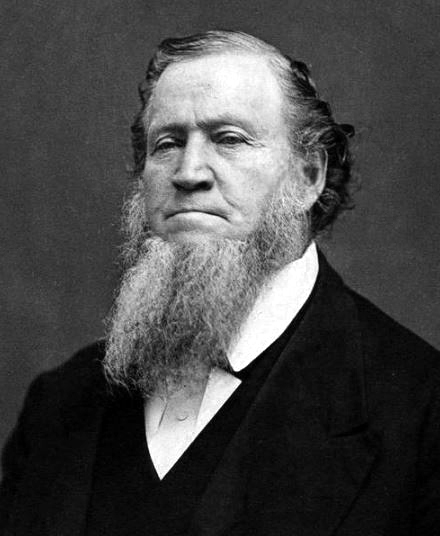
A famously Mormon school, named in honor of the second most famous Mormon ever (and wearer of the most famous Mormon beard ever), here is BYU's code in its entirety:

1. Be honest.
2. Live a chaste and virtuous life.
3. Obey the law and all campus policies.
4. Use clean language.
5. Respect others.
6. Abstain from alcoholic beverages, tobacco, tea, coffee and substance abuse.
7. Participate regularly in church services.
8. Observe the Dress and Grooming Standards.
9. Encourage others in their commitment to comply with the Honor Code.

My seminary had a similar Code of Conduct that I had to sign before being admitted. I signed it, knowing that I could fulfill it only by the broadest and most superficial definitions of the "commandments." Be honest, indeed.

SportsNation posed the question, though, and what do you think the answer was? Interestingly, there have been 13,700 votes cast (as of this writing) and EXACTLY 50% of people said that, yes, they could live up to the Honor Code for a year.

What are people thinking? That they can be completely honest for a year? How regular does regular church attendance have to be? How clean does clean language have to be? That a "virtuous" life only refers to their naughty bits and not to their minds? And that's not even bringing up the uber-amorphous "respect others" dictum. Do we think that 50% of people are being dishonest about their human capability, or do we think that 50% of people underestimate the power and depth of a commandment like Be Honest? Could you survive at BYU?

UPDATE: You have to vote yourself to see the results, but there are now 56% of respondents claiming to be able to follow the Code for a year, out of 23,258 votes.


Labels: , , ,

3.02.2011

Self-Criticism, Self-Compassion and Self-Indulgence, Reconsidered

A number of insights to be gleaned from the report in Monday's NY Times, "Go Easy On Yourself." Not just in the sense of horizontalized Law (discipline/criticism) vs Grace (compassion) - though that too - but in the clearly universal discrepancy between head knowledge and heart knowledge, and most remarkably, in the immediate objection that self-compassion will lead to self-indulgence. An objection known in Christian terms as the fear of antinomianism or licentiousness, which crops up whenever freedom is being proclaimed. In fact, I've rarely heard it voiced so clearly in the social science realm. Now, if the "self" part of this equation causes some unease/sets off New Age alarms - which it probably should - perhaps things become more palatable to think of self-compassion as the process of internalizing the Gospel (i.e. at the end of the day, do you really believe God's grace applies to you?). Meaning, I don't think the article is endorsing auto-suggestive nonsense; Christians need not reflexively steer clear altogether. In other words, just because we see the basis of personalized compassion in Calvary, and not some pie-in-the-sky Stuart Smalley sense of intrinsic goodness, doesn't make it any less real or concrete, ht CR:

People who find it easy to be supportive and understanding to others, it turns out, often score surprisingly low on self-compassion tests, berating themselves for perceived failures like being overweight or not exercising.

The research suggests that giving ourselves a break and accepting our imperfections may be the first step toward better health. People who score high on tests of self-compassion have less depression and anxiety, and tend to be happier and more optimistic. Preliminary data suggest that self-compassion can even influence how much we eat and may help some people lose weight.

This idea does seem at odds with the advice dispensed by many doctors and self-help books, which suggest that willpower and self-discipline are the keys to better health. But Kristin Neff, a pioneer in the field, says self-compassion is not to be confused with self-indulgence or lower standards.

“I found in my research that the biggest reason people aren’t more self-compassionate is that they are afraid they’ll become self-indulgent,” said Dr. Neff, an associate professor of human development at the University of Texas at Austin. “They believe self-criticism is what keeps them in line. Most people have gotten it wrong because our culture says being hard on yourself is the way to be.”

A positive response to the statement “I’m disapproving and judgmental about my own flaws and inadequacies,” for example, suggests lack of self-compassion. “When I feel inadequate in some way, I try to remind myself that feelings of inadequacy are shared by most people” suggests the opposite.

Labels: , , ,

3.01.2011

Labels: , ,