3.28.2011

Netflix Horizon

Here's a brief heads up about some movies that are about to be released in the next few weeks, on Blu-Ray or DVD.  Hopefully we'll see if we can do this on a regular basis.

TODAY: 127 Hours is being shipped today by Netflix -- with a stunning performance by Mockingbird favorite (Freaks and Geeks) James Franco.

APRIL 5: The last season of Friday Night Lights.  DZ and others say it is amazing.  Put it at the top of your queue now.

ALSO ON APRIL 5: I was elated to hear that Taxi Driver, one of the great movies of the amazingly fertile period of the 1970s, is being remastered and released on Blu-Ray.  A haunting aching portrayal of loneliness and the need for love; and inner violence, self-assertion, and identity.  The music is not to be missed: read this Slate piece on Bernard Herrman's last great work.  I have been on the phone with Netflix and they say they will be getting it, but perhaps not in time for the April 5 release.  (Note that the current Taxi Driver entry at NetFlix is not the Blu-Ray version -- wait for the real deal!)

A hidden treasure on the TD Blu-Ray may turn out to be the 21-minute featurette "God's Lonely Man," which examines how the theme of loneliness dominates the film, and where Paul Schrader discusses the personal hardships that led him to write the screenplay during a two-week stay in an ex-girlfriend's empty apartment in Los Angeles.

APRIL 12: Marwencol. I haven't had such a good feeling about a movie I have not yet seen in a long time.  I predict that this sweet and tender documentary will become an MB classic.  After a terrible beating left Mark Hogancamp brain damaged, he began creating models of a fictional town, Marwencol, to process the trauma. Jeff Malmberg's documentary explains how Hogancamp uses the elaborate dioramas as stand-ins for real life. When Hogancamp's work attracts the attention of a prestigious New York art gallery, however, he's forced to leave the safety of his make-believe world and reconnect with the real one.

And isn't the poster artwork fabulous?

PS.  As always, note that MB film recommendations should be seen with caution.  127 Hours and Taxi Driver both containing violent and disturbing material.  So does life, btw.

Labels: ,

3.25.2011

Another Week Ends: Ugly Anthropomorphism, Shaken Manchildren, Big Love, The Church's Cognitive Dissonance, March Madness, and the MoneyQuest for Happiness

Doing my best to fill in for DZ, who is currently gearing up for next week's conference.

1) A great article from the Times this week, discussing the recent tendency of creaturely films ("Rango" etc) to capture the creature in all of us:

THERE is a special kind of appeal to stories that lead us to the far boundary of the human and allow us a glance at what is on the other side, where the wild things are. What often comes into view out there is a projection of something buried deep within. That wolf in the bed, in grandma’s clothes, embodies some threatening animal emanation of the self, sexual or otherwise, lurking in disguise in our cozy domestic enclosures. Those invaders from outer space, preying on our cities, represent our own predatory, destructive urges in monstrous, alien form. And we can’t forget the vampires, whose cold glamour places them at the busy intersection of love and death, where our longings chase their morbid shadows.
The lizards, rodents and other creepy-crawlies that populate its desert landscape are far more grotesque to behold than traditional Disney fauna, but their ugliness only adds an extra frisson to the film’s charming anthropomorphism. We might recoil and squint at first, but by the time “Rango” is over, the reptiles are as cuddly as bunnies or the fish in “Finding Nemo” or the ants in “A Bug’s Life.”...And also as human.

2) This piece entitled "Men May Be Jerks...But Women Are Insane", explores the laws and demands of gender identity in today's "manchild culture," from a woman's perspective. For a laugh, The Onion, too, has something to say (ht JS).
[CONTINUE READING]

Labels: , , , , , , ,

3.23.2011

Weds Morning Rock N Roll: Nick Lowe And Dave Edmunds Were Born Fighting

Last week's long-awaited reissue of Nick Lowe's classic 1979 Labour of Lust record brought to light a previously unseen documentary about its recording, "Born Fighters." At the time, Nick was a member of Rockpile, a group whose one album under their own name tells only a fraction of their story. In fact, the closest corollary one could find would probably be the Traveling Wilburys, in that their short-lived collaboration was incredibly fruitful, with the creative juice overflowing into a number of other successful ventures. Over the three year period from 1978 to 1980, Rockpile (Lowe, Dave Edumunds, Billy Bremner and Terry Williams) were responsible for Edmunds' hit albums Trax on Wax 4 and Repeat When Necessary, Lowe's Labour of Lust, their own Seconds Of Pleasure, as well as most of Micky Jupp's Juppanese and Carlene Carter aka Johnny Cash's stepdaughter's Musical Shapes. Plus, if you're keeping track, you know that Lowe also found time to produce Elvis Costello's Armed Forces and Get Happy!! during that stretch. The stuff was just pouring out of them! And oddly enough, it's ALL exceptional...

Whenever such artistic explosions occur, it's important to take notice. If the documentary is to be trusted, it would appear that fun (and mutual love of bar music) was the chief motivating factor. Go figure. You can watch the whole thing on youtube... in 12 parts. But it's definitely worth the time/hassle, especially if you enjoy no-frills rock n roll with a raised eyebrow and a New Wave edge. I was especially surprised by how well their music has dated, considering what else was popular at the time:


The Rockpile project produced many gems, particularly from the pen of Nick Lowe, but none greater than "When I Write The Book," a song about regret and failure (and human bondage) that is somehow as fun as it is bittersweet:
[CONTINUE READING]

Labels: , ,

3.22.2011

Your Future has been Adjusted? Free Will and the Adjustment Bureau

Attempting to strike while the iron is hot, I figured a quick review of the Adjustment Bureau might be helpful given this morning's earlier NYT post. We posted the trailer for Bureau waaay back in June of '10, chuckling at the movie's tag line: "If you believe in free will, will you fight for it?" After seeing the movie, I figured I'd share a few non-spoiler observations about the movie, which turns out to be less preachy on the subject than you might imagine. The movie surprisingly presents a sympathetic understanding of the bound will. The "angelic" characters with the bureau step in regularly to intervene with the lives of human beings, driving the right person to the right place at the right time, setting up a chain reaction of events that change the course of the whole world for good. These "angels" disclose that human beings can't help but flub up the world every chance they get, andwould destroy themselves if they didn't intervene.

All is well and good, of course, until Matt Damon rejects his "divinely appointed future" for the woman he's fallen in love with. All of this is revealed to the audience at the movie's beginning.

A poignant quote from one of the "angels" about the nature of free will:

"We actually tried free will before. After taking you from hunting and gathering to the height of the Roman empire, we stepped back to see how you'd do on your own. You gave us the dark ages for five centuries until finally we decided we should come back in. The Chairman [God-like figure] thought that maybe we just needed to do a better job with teaching you how to ride a bike before taking the training wheels off again. So we gave you raised hopes, Enlightenment, scientific revolution. For six-hundred years we taught you to control your impulses with reason. Then in 1910, we stepped back. Within fifty years you'd brought us World War One, the depression, fascism, the holocaust and capped it off by bringing the entire planet to the brink of destruction in the Cuba missile crisis. At that point the decision was taken to step back in again before you did something that even we couldn't fix."

By the end of the movie, we might boil down its core message to this: "Free

will is only given to those who deserve it," an ironic Pelagian twist pitting works righteousness and freedom of the will against each other. Free will isn't the ideal of the picture- free will is the problem. And while Matt Damon might be self-actualized enough to earn his free will, what about the rest of us?

For further comment on this, I refer you to this morning's post about James Franco and Bradley Cooper. I would also recommend our resource page, where you can find a great primer on the subject by John Zahl, "Free Will (and the Lack Thereof)" under the section titled Misc. Talks & Articles (scroll down to the bottom, look on the right!).

Labels: , ,

James Franco and Bradley Cooper Are More Perfect Than You

Remarkably insightful article by Carina Chocano in this past Sunday's NY Times Magazine, "Our Imperfect Search for Perfection," using, among other things, the two recent Hollywood releases "The Adjustment Bureau" and "Limitless" to discuss our profoundly troubled relationship with perfection. Certainly the first time I've ever seen Pelagius in the Times (and certainly in conjunction with The Real Housewives of Beverly Hills). I was only disappointed she gave the Christian understanding of human fallibility such short shrift. Weird, almost - because fashionable or not, what she's describing here is nothing less than the unshakeable and inherent religiosity that plagues all of us, believer or no. As a treatise on the anxiety and despair produced by the Law, however, not to mention the absurdity/tragedy of the universal human addiction, it's one of the two or three best things I've ever read in that paper. And the line about Franco is one for the ages:

Given the recent hell-in-a-handbasket zeitgeist, you’d think we would all find more comfort in “The Adjustment Bureau” idea that control over our own destiny is just an illusion; that if it’s not God or fate or John Slattery in a fedora controlling what happens to us, then it’s something like luck, birth order, genetics, macroeconomics, the law of attraction, big government or your damnable idiot boss. But this is not so. Given the amount of time we spend thinking and fretting and dreaming about how to become more perfect, it’s clear we’re all living in a “Limitless” world. After the movie, a woman beside me sighed, “I really need that pill.” And I blurted out involuntarily, “So do I!”

“Limitless,” in all its pulpy glory, represents the logical terminus of a certain pattern of modern thought, endlessly fueled by the culture: if you can theoretically become perfect, then it follows that you should at least try. This idea (that man is perfectible and so should strive for perfection) has been around for 2,000 years, but it has lately been streamlined and turbo-charged: in its contemporary incarnation, it regards any unfulfilled human potentialities as a particularly sad and sclerotic form of entropy. [CONTINUE READING]

Labels: , , , , ,

3.16.2011

Why Pixar?

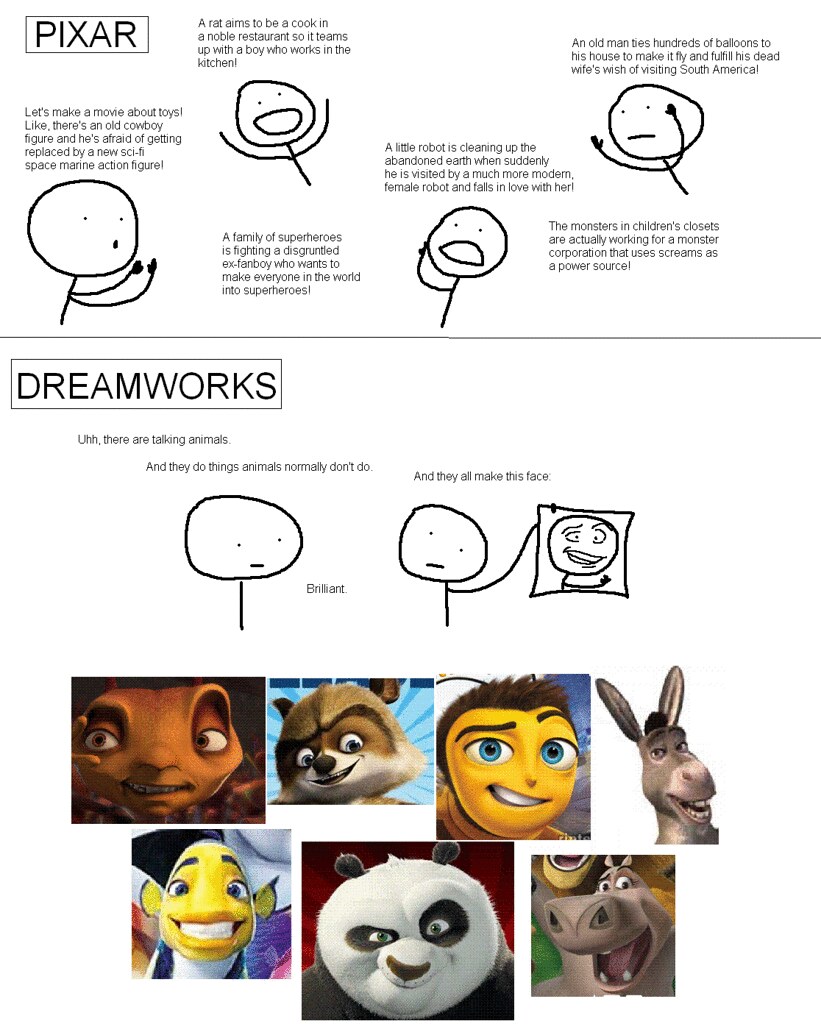
In case you needed another reason to check out our own The Gospel According to Pixar, I submit to you the following cartoon from poe-news:


It's funny because it's true. The Dreamworks formula is to get big name talent (Jack Black, Jerry Seinfeld, Will Smith, Eddie Murphy, and Will Farrell to name a few) to inflate a less than stellar story, while Pixar just keeps putting out Oscar winning movies.

Labels: , , ,

3.14.2011

Cool Hand Luke: A Conference Primer

Possibly overdone, but nevertheless a beautiful depiction of the impotence of the Law (VIOLATION!) in the realm of grace and freedom. Note how Newman kisses each meter before popping it off.

Labels: , ,

PZ's Podcast: The Phoenix Club

EPISODE 39

Here is a memory I've kept under wraps for 40 years, and it's not a bad one.

The success of The Social Network has put The Phoenix Club of Harvard College so boldly on the map, that if I didn't talk about it now, the "very stones would cry out". PZ was there.

The Phoenix Club, properly known as The Phoenix Sphinx-Kalumet., is an undergraduate Final Club of Harvard that is described in The Accidental Billionaires as "the king of the hill" in undergraduate social life.  Is it?  Was it?  Ever?  (We're speechless.)

What it was was a delightful expression of adolescent dissent, within the great flood of late Sixties attitude. We were about humor, stingers, the bon mot, Oscar Wilde, and a required reading of Brideshead Revisited. We laughed our way through as serious a period as you could imagine. Then, the seriousness concerned the Vietnam War. Now, as fashion has changed, the seriousness concerns identity and predicate. One thing we weren't, is serious.

PZ's Podcast this week tells a story, a tale attached to "The Social Network".  This story's been dying to be told.

One other thing, and it's painful: Why could I not talk about this chapter of my life 'til now? Was it the influence of Christian equality? Was it "class warfare", or something like that? I did find out, soon on in the Church, that any talk of Harvard College dropped like a lead balloon. So one didn't.

Now if the Faith can't handle a thing like that, which is a part of you like anything else, why not? What's wrong about 'the way we were' -- if that's the way you were. I often wished I'd never gone to Harvard. And The Phoenix, that delightful repository of fun and games?: Keep it big time under wraps. Like The Yardbirds, this makes me tremble.

Podcast 39 is in loving memory of Page Farnsworth Grubb, '71. 

Labels: , ,

3.10.2011

Mark Borchardt Confronts The Senselessness

From the brilliant, brilliant, brilliant American Movie doc:

Labels: , , ,

3.07.2011

PZ's Podcast: Tanz der Vampire

This is about some very talented proselytizers for death, or should we say, living death.

In 1966 Roman Polanski released a haunting and brilliant little film entitled The Fearless Vampire Killers, or Pardon Me but Your Teeth Are in My Neck. It was supposed to be a comedy. In 1997 Jim Steinman, of Meatloaf fame, and Michael Kunze created a German-language musical version of Polanski's movie, this time on stage, in Vienna. Polanski directed, and it was called Tanz der Vampire ("Dance of the Vampires"), which had been Polanski's original title for his movie.

The musical version, which Americans didn't see because its translation to Broadway flopped, is an extremely deft thing. You cannot shake the 'hook' of "Knoblauch" ("Garlic"), nor the overwhelming dark romanticism of "Totale Finsternis" ("Utter Darkness"). Steinman's soaring melodies and Kunze's either-or philosophy of death -- which works from ideas implicit in the 1966 film but takes them over the edge -- are unforgettable. They make you want to jump off a cliff, straight into the undead embrace of Count von Krolock; and thereby join his army of missionaries who long, with unstillbare Gier ("unquenchable desire"), to "eat your soul".  

However, Tanz der Vampire is not funny. The reason it's not funny is that it means business. It is one serious musical! Its over-all effect is so completely bewitching, the tunes are so catchy and so elegantly done, the rich colors and splendid voices -- tho' it's mainly the songs -- are so impressive, that it makes you want to sign up.

Polanski's 1966 movie is a delight, tho' again, if you see it more than once or twice, the current of its flow starts to take you somewhere. Like the 'Sarah' and 'Alfred' characters in the story, you may not want to go there. But you'll find yourself wanting to. The 1997 musical actually takes you there, and it's not Strawberry Fields.

Podcast 38 looks at "Tanz der Vampire" as an evangelistic exercise.  It is not neutral. Its makers are 'proclaiming'! They're inviting. "Tanz der Vampire" is an altar call.

Though I love Jim Steinman's music, and you will, too, I'm glad it flopped.  

Episode 38 of PZ's Podcast is dedicated to Ethan Magness. Ethan was the first person I met who loved "Tanz der Vampire" as I do. Ethan and I met one day "high in the foothills of the Carpathian Mountains".

[Ed. note: You may be surprised to hear Steinman (brilliantly) plagiarizing one of his masterpieces in the following riveting/insane/awesome performance of "Totale Finsternis"... aka Bonnie Tyler's truly immortal "Total Eclipse of the Heart"]:

Labels: , ,

2.25.2011

Another Year Ends: Mockingbird at the Oscars

Insert idolatry-related caption here.
As you all know, this Sunday brings us the Academy Awards. I was too far behind to comment on the best films of 2010 in December, but a few months grace-period(!) has allowed me to catch up and compile some Mockingbird Oscar picks: films that succeed on their own terms artistically, without turning a blind eye to our favorite themes (judgment and love, guilt and absolution/forgiveness, the quagmire of identity formation, redemption in suffering, the level-playing field of original sin, the bondage of the will, addiction, Jesus, resurrection, grace, grace, grace, etc). Fortunately, the two are seldom mutually exclusive, reality being what it is. In fact, as CNN picked up on, this year had more quality Grace in Practice-friendly films than any in recent memory - Get Low, King's Speech, and Toy Story 3 stand out particularly in that regard.

Disclaimer: The major releases I still haven't seen are Winter's Bone and Another Year. Also, it should go without saying that all of these movies have ratings, and that regardless of how non-glorifying/real they may be, if frank depictions of sex and drugs make you uncomfortable (which is perfectly valid!), don't watch Blue Valentine or The Fighter, respectively. The King's Speech has plenty of bad language, and True Grit some serious violence. Toy Story 3 has a scary bear (and clown).
[CONTINUE READING]

Labels: , , , ,

2.23.2011

Death, Loneliness and Beauty - According to Charlie Chaplin (Simul Justus...)

'Will Durant, author and philosopher, was also in Hollywood lecturing at UCLA. He was an old friend and occasionally dined at our house. They were amusing evenings. Will, an enthusiast who needed no stimulant to intoxicate himself but life itself, once asked me: "What is your conception of beauty?" I said I thought it was an omnipresence of death and loveliness, a smiling sadness that we discern in nature and all things, a mystic communion that the poet feels--an expression of it can be a dustbin with a shaft of sunlight across it, or it can be a rose in the gutter. El Greco saw it in our Saviour on the Cross.'

(Charlie Chaplin, My Autobiography. pp 458-9)

Labels: , ,

2.18.2011

Conference Preview: Bride of Mockingbird at the Movies!


How do we go from "I don't even believe in Jebus" to "Save me Jebus!"? We need to be impacted. Whether you're looking for new insight about faith and the Gospel for yourself, or looking for new ways to share it with others, come to the "Bride of Mockingbird at the Movies" breakout session at the upcoming Mockingbird Conference (March 31 to April 2 in NYC). In our time, and really, since the Lumiere brothers invented the moving picture in 1895, movies and television have had a special access to us. Drama can bring us to tears, and comedy can put aches in our sides, all while we remain on the couch, physically unmoved.

This access can be a powerful tool for ministry, and a powerful access point for God. At "Bride of Mockingbird at the Movies," we'll look at some film clips (all-new content from last year!) and talk about how even those godless Hollywood-types can tell stories that touch us and communicate something of God's grace to us, often without mentioning God at all. We'll have something both for the person looking to have the Gospel proclaimed to them in a new way, and for the person looking to proclaim the Gospel to others in a new way.

So come, join us, and let the movies do the preaching!

Labels: , , , , ,

2.15.2011

Control: A Conference Primer

“Mother, I tried, please believe me
I’m doing the best I can,
I’m ashamed of the things I’ve been put through,
I’m ashamed of the person I am.
Isolation, Isolation, Isolation.”

When Sam Riley, as Joy Division’s tragic lead singer Ian Curtis, drones out these lyrics in Corbijn’s 2007 film, Control, he’s sequestered to a recording room padded off from his bandmates. The movie audience can only hear a muffled shadow of the band’s music—it really just sounds like he’s singing by himself—and it sort of feels like he feels that way, too. In a film entitled Control, which seems to appropriately converse with the human (mis?)conception of control in much the same way the upcoming conference might, we find that, more or less, such a mythology leads one only into a state so aptly described in the lyrics above. It’s “Isolation.”

Curtis is portrayed from the beginning as a navigator. When the Joy Division bandmates are all but ecstatic to have had their album displayed on Tony Wilson’s TV show, Curtis is later found hounding him with napkin-notes at a bar to be put on the show to play live. Later, in their first live show in London, the smalltown boys farting nervously backstage before going on, Curtis is the visionary: “This is just the beginning.” He is the captain, he is in control.

Fame comes quickly for Joy Division, in almost seamless congruence with Curtis’ confidence. Well, sort of. Corbijn beautifully depicts that, at every moment where it seems that everything being chased is obtained, things get utterly complicated and muddled. It could very easily feel like any other band-loses-heart-in-pursuit-of-fame story, but what’s interesting is that this story is more about love than those are. Curtis’ wife and child become more and more alien within his pursuit for control, and it eventually leads him into a love affair with a foreign journalist, Annik Honore. More than the affair, though, he finds himself resenting his life and all that was important before. Despite proclaiming his hatred for his mistress at one point, the fact is that he cannot break himself from his affair. Love is lost and transmogrified into something that looks more and more like demand—numerous scenes depict Curtis coming home from a tour, weighed heavy by the army duffel he brings back into the house he resents.

This notion of demand continues into his music career as the film continues. As the thrill of success dampens, Ian’s relationship with his music, the listeners, the supporters becomes more of a puppeteering experience than a visionary one. He finds himself exhausted, deeper in the throes of his epileptic fits, and bitter about the demands of his manager and his crowds. After a particularly exhausting show, which ends in a riot of unsatisfied fans, Ian describes the weight of divisive expectations he feels now: “I never meant it to grow like this…and now they expect more. I have no control anymore. I don’t know what to do…It all used to be so simple, everything. Now everyone hates me, even the people who love me hate me.”[CONTINUE READING]

Labels: , , , , , ,

2.14.2011

I'm Gonna Always Love You - Little Miss Piggy and the Muppet Babies

Happy Valentine's Day from Mockingbird:

Labels: , , ,

PZ's Podcast: "Mr." Priest and The King's Speech (Cosmo Lang)

EPISODES 33&34

You can usually tell when things aren't going well for an institution, when professional titles become inflated. Great academics in this country used often to be called by the title 'Mr.' rather than 'Professor' or 'Doctor'. Or take the United States Navy. Then, too, in the Episcopal Church and the Church of England, ministers were always called 'Mr.'. That is, until recently. As with other things, no one believes you when you point this out. It is simply inconceivable to the great majority of church folk that the rector of their parish should have been known as 'Mr.' Smith. 'Mr.' is heard today as if it were a devaluation of the office somehow, or a less religious form of address. But back then, in those distant days before the 1979 Prayer Book, the title 'Mr.' was normative, just as the word 'minister' was normative, rather than 'priest' -- not just for the Eisenhower era but for the 400 years up to the Eisenhower era. 'Mr.' Smith for the parson was a democratization of the clergy, a welcome expression of Jesus' own repeated injunction, 'Call no man father'.

In Episode 33 of PZ's Podcast, the story is just told, the story of titles for clergy in England and America. Novels are the chief evidence, from Fielding through Forster. It's always 'Mr.' -- right up through the era of "Mad Men". I know this, because I was there.

Why is this footnote to history important? It is important because it tells us something interesting: When churches go on the defensive in relation to the outside world, titles become inflated in relation to their inside world. First, I was 'Mr.' Zahl. Then I became, against my will (but there was nothing I could ever do about it) 'Father' Zahl. Then -- O frabjous Day! Calloo! Callay! -- I became 'Father Paul'. Paging Bing Crosby, which was the only way I could reconcile myself to this. Funny thing, the higher the title, the lower one's rep in the community. The more dirty looks I got, out on the avenue, the more fixated 'my people' became on my title.

Episode 34 (to be posted on Thursday) is inspired by "The King's Speech", but sadly, not by the wonderful teacher who helps a future king, but rather by the film's portrayal of the Archbishop of Canterbury, Cosmo Gordon Lang. Cosmo Lang's famous 'teaching moment' in December 1936, by which he sought to use the abdication of King Edward VIII to 'recall' the nation to religion, not only backfired, but caused the whole Church of England to be regarded as judgmental and pharisaical. The Archbishop, acted superciliously but accurately by Derek Jacobi, played right into the hands of a culture that desires to see the Church identified with Law, in the negative sense, and Free Thought identified with emancipation. This podcast tries to understand why Christians have such a hard time expressing the very Grace we've been given, ironically packaging it in terms of its opposite.

Labels: , ,

The Sally Fowler Rat Pack (at 7-years old)


NEW YORK CITY—This dance school image was part of a photo story about upper-class children taking dancing lessons and being taught social graces. The lesson pictured was conducted in the lobby of a ritzy Park Avenue building to the music of a live four-person band, part of the social set Lester Lanin Orchestra that used to play at many of the New York balls and social events (and perhaps still does), 1977.

Taken from Slate's always amazing MAGNUM photo gallery.

Watch the Mockingbird favorite Metropolitan if you want to see those kids all grown up.

Labels: , ,

2.10.2011

Aladdin Makes No Sense: Mockingbird at the Movies

As I've said before, having a two-year-old has made me a connoisseur of Disney movies. When you watch these movies over and over again, things start to jump out at you. Only sometimes, when you're lucky, are they useful, theological things.

One of these things has ruined Aladdin for me forever. The thing I noticed is this: The genie mis-grants one of Aladdin's wishes! Aladdin wishes to be a prince, so that he can impress and marry Jasmine, but the genie only makes Aladdin appear to be a prince! He gets the trappings but not the juice. Obviously, this is important, as it provides the story's main conflict...but it's a HUGE plot hole. When Jafar controls the genie, and wishes to be Sultan, he is made the ACTUAL Sultan. When he wishes to be an all-powerful genie, he is made an ACTUAL genie. In neither case does Jafar's wish only grant him the APPEARANCE of his wished-for state.

Therefore, dear reader, I submit to you that Aladdin got gypped.

If we can liken our omnipotent God to Aladdin's all-powerful genie, we need to make sure we don't get gypped. When we're promised righteousness and salvation as a free gift (a granted wish) we need to make sure it's real. Not a shadow or a trick. It can't be something we're called to account for later, as Aladdin is.

And, in fact, our righteousness is precisely the opposite of Aladdin's prince-hood. Aladdin appears to be a prince, but isn't. All the genie's power went into the robes, menagerie, coterie, and theme song. And it's a catchy song. But there's no magic left to make Aladdin an ACTUAL prince, which is all that really matters. We, on the other hand, appear to be unchanged in the slightest. We are beset by the same selfishness, the same mercurial nature, the same everything. None of God's power has gone to changing our exteriors. What HAS happened, though, is a total renovation of our nature. We have become the princes that we wished to be, looks be damned.

Labels: , , ,

2.04.2011

Eleven Or So Entertainments Worth Looking Forward To This Year

As snow continues to pound the East Coast and seasonal affective disorder hits full stride, I thought we could all use a reminder of what the rest of 2011 promises, pop culture-wise:

1. Damsels in Distress. Hallelujah, hallelujah, a new Whit Stillman film at last! If this were the only thing happening this year, it'd be enough.

2. The Pale King. David Foster Wallace's unfinished final novel hits the stands April 15th. Mindfulness and taxes sound like a powerful brew. 

3. The Muppets. (11/23). For the first time since The Muppet Christmas Carol, it would appear that Kermit and company are in the hands of folks that not only understand them, but can do them justice. When the powers behind Forgetting Sarah Marshall and Flight of the Conchords combine...

4. Britpop Revival. This summer brings reunion tours from both Blur and Pulp, as well the full slate of overdue Suede reissues that Brett Anderson just announced. And we may even see the first post-Oasis project from Noel Gallagher. God-willing, Pulp may even deign to visit these shores. God-willing.

5. Living in the Material World. Martin Scorsese's long-awaited George Harrison documentary. The soundtrack could very well mean treasures galore from the as-of-yet unpilfered Harrison archives. The advent of Scorsese's first children's film, Hugo Cabret, is nothing to sneeze at either.

6. The Cabin in The Woods. Joss Whedon - who some of us consider an unfallen man, creatively speaking - brings us "the horror movie to end all horror movies" (his words). We should pray that MGM's financial woes don't delay the film any further. Because The Avengers is still a ways off.

7. Tree of Life. (5/27/11). The Gospel According to Terrence Malick.

8. Angles - The Strokes. (3/22). Those three records of theirs sound better and better with each year of their silence. It will be a welcome return.

9. Game of Thrones. (4/17). Fantasy finally gets the HBO treatment. Epic... meet epic.

10. New U2 Project. They've been hinting at four different releases, all of which sound potentially awesome. Yes, even Spiderman.

11. Precinct 17. If anyone can deliver on the "Harry Potter for Grown Ups" teaser, it's BSG writer/producer Ronald Moore. 

Other: Tarsem's The Immortals (11/11), Nick Lowe's Labor of Lust reissue (3/15), Elbow's Build a Rocket Boys! (3/15), Harry Potter and the Deathly Hallows Part 2 (7/15), Trey Parker and Matt Stone's Book Of Mormon musical (3/24), untitled Jeff Lynne solo record, The Spierig Brothers' The Power of the Dark Crystal, Breaking Bad's 4th Season (July sometime), Kurt Busiek's Batman: Creature of the Night and The Witchlands, and of course... whatever obligatory posthumous MJ they throw at us.

I'm sure there's tons I'm missing, especially of the non inner-child variety. What are you looking forward to?

Labels: , , , ,

2.02.2011

The Force