2.14.2011

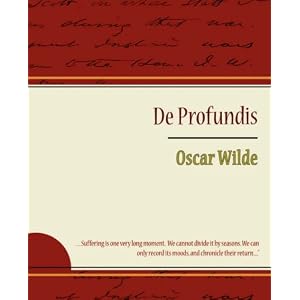
Oscar Wilde and the Love of Christ- Part 4 of 4

I thought it fitting to end this little series on Oscar Wilde with what is probably my favorite Wilde quotation. (Click for: Part 1, Part 2, Part 3, and Part 3.5.)

"Christ, like all fascinating personalities, had the power not merely of saying beautiful things himself, but of making other people say beautiful things to him; and I love the story St. Mark tells us about the Greek woman who, when as a trial of her faith he said to her that he could not give her the bread of the children of Israel, answered him that the little dogs who are under the table eat of the crumbs that the children let fall.

Most people live
for love and admiration. But it is by love and admiration that we should live. If any love is shown us we should recognize that we are quite unworthy of it. Nobody is worthy to be loved. The fact that God loves man shows that in the divine order of ideal things it is written that eternal love is to be given to what is eternally unworthy. Or if that phrase seems to you a bitter one to hear, let us say that everyone is worthy of love, except he who thinks that he is. Love is a sacrament that should be taken kneeling, and 'Lord, I am not worthy' should be on the lips and in the hearts of those who receive it."

By way of slight explanation, the first half demonstrates a profound understanding of the earthly ministry of Christ. Here Christ's words and acts are themselves creative events. Jesus' life is not simply a model to pursue or a mere prerequisite before his death, but is gospel. Jesus was not simply a prophet, but an evangelist. What follows in the second half is Wilde's own personal reflection as affected by his reading of St. Mark. In other words, Jesus' words have reached out to Wilde, now 1850 years later, so that Wilde speaks beautiful words back to Jesus. The humbled, yet worshipful, Wilde speaks of God's eternal love for that which is 'eternally unworthy', namely everyone.

Labels: , , , ,

2.02.2011

A Quick Quote from Oscar Wilde, part 3.5

Wilde wrote so much on the subject of suffering and rebirth that this series could go on forever. (Sadly, it won't. The final installment comes next week). For those interested, the full account of Wilde's prison writings can be found here. For an academic summary of the tenor of this series click here.

"I have told you this account of the mode of my being conveyed here simply that you should realise how hard it has been for me to get anything out of my punishment but bitterness and despair. I have however to do it, and now and then I have moments of submission and acceptance.


All the spring may be hidden in a single bud, and low the ground-nest of the lark may hold the joy that is to herald the feet of many rose-red dawns, and so perhaps whatever beauty of life still remains to me is contained in some moment of surrender, abasement and humiliation. I can, at any rate, merely proceed on the lines of my own development, and by accepting all that has happened to me make myself worthy of it."

Labels: , ,

1.28.2011

The Theology of the Cross and Oscar Wilde - Part 3

The follow is the third of four posts highlighting the deeply Christian thought of Oscar Wilde while serving time in Reading Gaol. Having been given a Greek New Testament for reading, Wilde thinks about the suffering of his life and the person of Christ in a fresh way. The passage below reflects a version of the theology of the cross as applied to suffering and sin. Ultimately, Wilde sees God's redemptive work through such suffering. It is a lengthy quote, but worth reading in its entirety. (See also Part 1 and Part 2.)

"But it is when he [Jesus] deals with the Sinner that he is the most romantic, in the sense of most real. The world had always loved the Saint as being the nearest possible approach to the perfection of man. His primary desire was not to reform people, any more than his primary desire was to relieve suffering. To turn an interesting thief into a tedious honest man was not his aim. He would have thought little of the Prisoners' Aid Society and other modern movements of the kind. The conversion of a Publician into a Pharisee would not have seemed to him a great achievement by any means. But in a manner not yet understood of the world he regarded sin and suffering as being in themselves beautiful, holy things, and modes of perfection. It sounds a very dangerous idea. It is so. All great ideas are dangerous...

Of course the sinner must repent. But why? Simply because otherwise he would be unable to realise what he had done. The moment of repentance is the moment of initiation. More than that. It is the means by which one alters one's past... Christ showed that the commonest sinner could do it. That it was the one thing he could do. Christ, had he been asked, would have said - I feel quite certain about it - that the moment the prodigal son fell on his knees and wept he really made his having wasted his substance with harlots... beautiful and holy incidents in his life. It is difficult for most people to grasp the idea. I dare say one has to go to prison to understand it. If so, it may be worth while going to prison."

Labels: , , ,

1.25.2011

The Humbling of Oscar Wilde - Part 2

Here is the second post of at least four posts that examine the prison letters of Oscar Wilde. The following details what I can only call a conversion (his deathbed baptism aside...)!

"I bore up against everything with some stubbornness of will and much rebellion of nature till I had absolutely nothing left in the world but Cyril. I had lost my name, my position, my happiness, my freedom, my wealth. I was a prisoner and a pauper. But I had still one beautiful thing left, my own eldest son. Suddenly he was taken away from me by the law.

"It was a blow so appalling that I did not know what to do, so I flung myself on my knees, bowed my head, and wept and said '
The body of a child is as the body of the Lord: I am not worthy of either.' That moment seemed to save me. I saw then that the only thing for me was to accept everything. Since then - curious as it will no doubt sound to you - I have been happier."

It seems to me that this is one of the best examples of the intersection between the vertical relationship with God and horizontal human relationships. The love of a son and father was, in a small way, representative for him of the love of God, while the taking away of his son resembled the judgment of God - "I am not worthy of either". He was found only when he had lost everything he held dear. However "curious" it may sound, this is the way toward happiness. Rather than grasping hold of life, Wilde finds life through his loss and death. The life of faith is now one of unconditional openness to whatever the future [read God] may hold.

Labels: , , ,

1.21.2011

The Humbling of Oscar Wilde: Part One

Michael Vick is not the only one to have gone to prison, lost everything, and somehow through it, find an abundance life and repentance. The following begins a short series that highlights some of his points of truly inspired brilliance.More than his "Ballad of Reading Gaol," his prose letters to friends sent out once a month provide a window to Wilde in his darkest hour. As we will find, Wilde's suffering has led to genuinely Christian self-understanding. The series begins with the beginning of his description of Jesus as he understood him:

"Christ's place is indeed with the poets. His whole conception of Humanity sprang right out of the imagination and can only be realised by it. What God was to the Panteist, man was to him. He was the first to conceive the divided races as a unity. Before his time there had been gods and men. He alone saw that on the hills of life there were but God and Man...

"There is still something to me almost incredible in the idea of a young Galilean peasant imagining that he could bear on his own shoulders the burden of the entire world: all that had been done and suffered : the sins of Nero, of Caeser Borgia, of Alexander VI., and of him who was Emperor of Rome and Priest of the Sun: the sufferings of those whose name is Legion and whose dwelling is among the tombs, oppressed nationals, factory children, thieves, people in prison, outcasts, those who are dumb under oppression and whose silence is heard only of God: and not merely imagining this but actually achieving it, so that at the present moment all who come in contact with his personality, even though they may neither bow to his altar nor kneel before his priest, yet somehow find that the ugliness of their sins is taken away and the beauty of their sorrow revealed to them."

Labels: , , ,

1.11.2011

W.H. Auden on Comedy and Christianity

From Auden's essay 'Notes on the Comic':

"[Comedy] is not only possible within a Christian society, but capable of a much greater breadth and depth than classical comedy. Greater in breadth because classical comedy is based upon a division of mankind into two classes, those who have arete [excellence] and those who do not, and only the second class, the fools, shameless rascals, slaves, are fit subjects for comedy.

But Christian comedy is based upon the belief that all men are sinners; no one, therefore, whatever his rank or talents, can claim immunity from the comic exposure and, indeed, the more virtuous, in the Greek sense, a a man is, the more he realizes that he deserves to be exposed. Greater in depth because, while classical comedy believes that rascals should get the drubbing they deserve, Christian comedy believes that we are forbidden to judge others and that it is our duty to forgive each other.

In the classical comedy the characters are exposed and forgiven: when the curtain falls, the audience is laughing and those on stage are in tears. In Christian comedy the characters are exposed and forgiven: when the curtain falls, the audience and the characters are laughing together" (Dyer's 177).

For a slightly imperfect, but still relevant example, check out this classic episode from Friends!

Labels: , , , , ,

1.04.2011

My Crystal Ball Looks Like a Mirror

Over at CNN, they’ve compiled a list of predictions by various religious leaders of what will happen as 2011 enfolds. While each prediction seems to be made in good faith, the collection of them read side-by-side unwittingly reveals just how narcissistic each guess really is. Each leader believes the future will bring something good for themselves or their cause. A few examples:

Selena Fox, a minister of a Wiccan community, sees greater acceptance of Wicca:
“More Wiccan ministers and other pagan leaders will be actively involved in interfaith organizations, conferences and initiatives in the United States and internationally. Interfaith endeavors will grow in importance in addressing ongoing needs in the world today as well as in responding to natural disasters and other tragedies.”

Christian author Don Miller sees a growth in his core demographic:
“As religious tensions grow over the coming presidential election and domestic cultural issues involving perceived legislation of morality, the media will find more zealous Christians reacting to the issues of the day whose extreme positions will further divide the evangelical church into radical positions, and turn away seekers looking for a peaceful resolution to the churning in their own souls. In other words, the devil will play a trick on the church, and the church will, like sheep, lose their focus on the grace and love of Christ and wander astray. Those who seek peace, then, will turn to liberal ideologies.”

Muslim playwright Wajahat Ali sees more Muslims becoming playwrights:
“A new generation of Muslims will bust out of their culturally and politically isolated cocoons and passionately reclaim their voice and narratives; one that has been stolen, used, abused and hijacked by extremists, terrorists and fear-mongering propagandists. Watch out for a major cultural renaissance as a new generation of Muslim artists and storytellers grab the mic, enter the arena and speak their voice with a revived passion and purpose.”

Political and religious conservative Ralph Reed sees a return to conservative principals:
“Religious conservatives and Tea Party activists will increasingly work together to keep pressure on the Republican Party to remain true to its fiscal and culturally conservative principles in the new session of Congress and the 2012 presidential nomination.”

All this reveals just how much our beliefs about the future are really projections of ourselves and our beliefs. If apocalyptic movies reflect the belief that there will someday be a final reckoning for all that we’ve done with the world (For example, Wall-e), then these quotes reflect the optimistic and unbearably sunny disposition characteristic of many religious people. In either case, the future becomes the blank slate which we mold and shape according to our beliefs and/or aspirations.

Even more dangerous is when we pull in God to justify these self-delusions. We think God will come and punish everyone else but us, that a failure to “go green” will bring about the end of the world, or the end will be an egalitarian, agrarian utopia.

Perhaps this is why Jesus warned to “Therefore do not worry about tomorrow, for tomorrow will worry about itself. Each day has enough trouble of its own.”

Labels: , , , ,

12.28.2010

Mikhail Bakhtin and Glee on Identity

"I cannot manage without another, I cannot become myself without another; I must find myself in another by finding another in myself (in mutual reflection and mutual acceptance). Justification cannot be self-justification, recognition cannot be self-recognition. I receive my name from others, and it exists for others (self-nomination is imposture)."
(Taken from: Problems of Dostoevsky's Poetics, p. 287-288.)

In the above quote, Russian Philosopher Mikhail Bakhtin promotes a relational understand of the self whereby who I am is dependent upon who and what I encounter. If you've been watching Glee recently, you'll see this first hand in the relationship between the OCD/
Mysophobic Emma Pillsbury and Dentist Carl Howell. Through her relationship with the adventurous and spontaneous Carl, Emma has discarded her vices while assimilating Carl's daring. She cares less about hygiene, attends a midnight showing of The Rocky Horror Picture Show, and even elopes to Las Vegas. Emma has changed almost effortlessly and without any struggle. Carl did for Emma what no self-help book could do. Most importantly, Carl hasn't even tried to change Emma. He's loved her without any preconditions.

In other words, who can resist the gravitational pull of love? You unexpectedly meet someone new, or by chance see someone in a different light and its as if the world has been turned upside down. You lose yourself in them, thereby discovering a new self. You find you tolerate Grey's Anatomy (or UFC!) more than you thought you ever would. Even your work seems like its been more enjoyable than normal.

What is true in general is also specifically true about God and Christianity. When the love of God is truly grasped, when it is recognized that God no longer regards us as sinners (thought we are!) it changes everything. We are no longer the same people: we are given confidence where we were shy, thankfulness where we were bitter, or new love in place of our cold hearts. We become reflections of the people God sees us to be. In the same way that God renamed Abram and Saul to be Abraham and Paul, or Jesus renamed Simon to be Peter, a new identity is given and effortlessly received in a radically new way.

Labels: , , , ,

12.24.2010

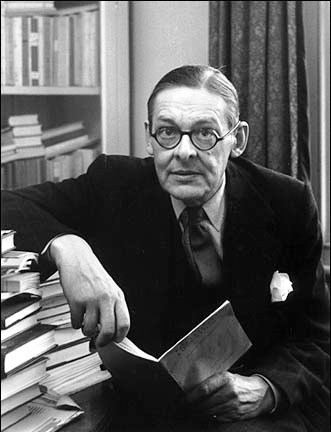
Christmas Cheer, According to T.S. Eliot

The following is from Eliot's "The Cultivation of Christmas Trees." While less popular than Eliot's other Christmas poems, it is his last- and probably his most insightful.

There are several attitudes towards Christmas,
Some of which we may disregard:
The social, the torpid, the patently commercial,
The rowdy (the pubs being open till midnight),
And the childish---which is not that of the child
For whom the candle is a star, and the gilded angel
Spreading its wings at the summit of the tree
Is not only a decoration, but an angel.
The child wonders at the Christmas Tree:
Let him continue in the spirit of wonder
At the Feast as an event not accepted as a pretext;
So that the glittering rapture, the amazement
Of the first-remembered Christmas Tree,
So that the surprises, delight in new possessions
(Each one with its peculiar and exciting smell),
The expectation of the goose or turkey
And the expected awe on its appearance,
So that the reverence and the gaiety
May not be forgotten in later experience,

In the bored habituation, the fatigue, the tedium,
The awareness of death, the consciousness of failure,
Or in the piety of the convert
Which may be tainted with a self-conceit
Displeasing to God and disrespectful to the children
(And here I remember also with gratitude
St. Lucy, her carol, and her crown of fire):
So that before the end, the eightieth Christmas
By "eightieth" meaning whichever is the last)
The accumulated memories of annual emotion
May be concentrated into a great joy
Which shall be also a great fear, as on the occasion
When fear came upon every soul:
Because the beginning shall remind us of the end
And the first coming of the second coming.

Eliot seems to strike the appropriate tone when it comes to the long-held debate about proper celebration and meaning of Christmas. He advocates the innocence and simplicity of an unabashedly sentimental celebration of Christmas – filled with a beautiful tree, bountiful feast, and (yes) new toys. Yet this almost naïve celebration ironically corresponds with both the reality of life and reverence for Christ’s first and last comings. We must embrace this childlike wonder to silence the burden of later experience (Matt 19:14?). The spirit of the season is not idolatry, but a truly Christian “happiness and cheer” in the midst of a loveless world in need of saving.

Labels: , , ,

12.16.2010

The Timeless God, an excerpt from T.S. Eliot

An excerpt taken from T.S. Eliot's "Four Quartets", "Dry Salvages":

To communicate with Mars, converse with spirits,
To report the behaviour of the sea monster,
Describe the horoscope, haruspicate or scry,
Observe disease in signatures, evoke
Biography from the wrinkles of the palm
And tragedy from fingers; release omens
By sortilege, or tea leaves, riddle the inevitable
With playing cards, fiddle with pentagrams
Or barbituric acids, or dissect
The recurrent image into pre-conscious terrors—
To explore the womb, or tomb, or dreams; all these are usual
Pastimes and drugs, and features of the press:
And always will be, some of them especially
When there is distress of nations and perplexity
Whether on the shores of Asia, or in the Edgware Road.
Men's curiosity searches past and future
And clings to that dimension. But to apprehend
The point of intersection of the timeless
With time, is an occupation for the saint
—
No occupation either, but something given
And taken, in a lifetime's death in love,
Ardour and selflessness and self-surrender.
For most of us, there is only the unattended
Moment, the moment in and out of time,
The distraction fit, lost in a shaft of sunlight,
The wild thyme unseen, or the winter lightning
Or the waterfall, or music heard so deeply
That it is not heard at all, but you are the music
While the music lasts. These are only hints and guesses,
Hints followed by guesses; and the rest
Is prayer, observance, discipline, thought and action.
The hint half guessed, the gift half understood, is Incarnation.
Here the impossible union
Of spheres of existence is actual,
Here the past and future
Are conquered, and reconciled,
Where action were otherwise movement
Of that which is only moved
And has in it no source of movement—
Driven by daemonic, chthonic
Powers. And right action is freedom
From past and future also.
For most of us, this is the aim
Never here to be realised;
Who are only undefeated
Because we have gone on trying;
We, content at the last
If our temporal reversion nourish
(Not too far from the yew-tree)
The life of significant soil.


[CONTINUE READING]

Labels: , , , ,

12.02.2010

Steeler's James Harrison and the Law

Next to the Michael Vick redemption story, the next biggest storyline this NFL season has been the overwhelming amount of penalties and fines given out against defenders for potentially dangerous hits. Football is a violent game and the league hopes to curtail injuries, especially to its prized quarterbacks.

Steelers linebacker James Harrison has become the poster child for the league's campaign. In the short span of 11 games, he has been fined four separate times for a total of $125,000. Harrison is by far the most frequent repeat offender in the NFL. But for all the publicity these fines have received, it seems they've made things worse, not better.

With each new fine, the opposition has publicly increased to greater levels of suspicion and animosity. Various players from around the league have voice their opposition. Harrison thinks he is a marked man and has even contemplated retirement. Goodell has become a common enemy within the Steelers. Normally soft-spoken Troy Polamalu has complained that the commission has too much power. Coach Mike Tomlin complained that "[Harrison's] got two kids. That’s some serious college schooling right there potentially for those kids 16, 18 years from now." Even Steelers President Art Rooney thought that the fines are an overreaction.

I'm not saying that the NFL is wrong about the fines. Legally speaking, commissioner Roger Goodell has the power to enforce the rules how he sees fit. The question is, have they worked?
[CONTINUE READING]

Labels: , , ,

12.01.2010

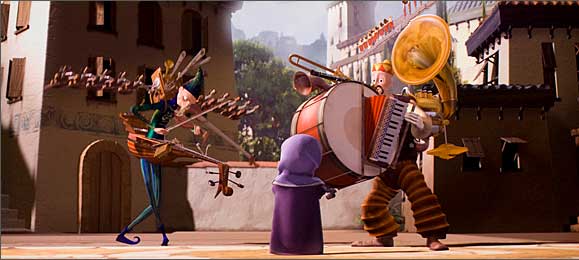
More Pixar! - Animated Short "One Man Band"

In case you haven't noticed, we at Mockingbird happen to be big fans of Pixar. The following comes from the Pixar short "One Man Band" (video below). For further reading, see our recently published book The Gospel According to Pixar.

The plot of "One Man Band" is fairly straightforward. A street performer, “Bass,” tries to persuade a young girl to give him her only coin. His light-hearted tune is interrupted by a new performer named Treble. With his fancy strings Treble wins the young girl away from Bass. The simple struggle over a single coin quickly escalates into a war. Without realizing it, each performer has turned away from the girl and only look at each other. They no longer try to charm the young girl with pleasant music, but each tries to outshine the other.

What we find in this short animated film is a simple, but powerful parable about the destructive nature of competition. The struggle between Bass and Treble frightens the girl, losing the coin (and a violin) in the process. The desire to win consumes each so that they can no longer recognize themselves or their surroundings. Instead of musicians holding instruments, they become brutes wielding weapons. Instead of playing a sweet sonata or a hearty march, their combined melody sounds like “Dreams of a Witches' Sabbath.” What's true of the short is true of life in general: any relationship containing competition will eventually end in defeat. The desire to be right or the need to assert your identity will ultimately kill any relationship (or church, for that matter!). Your rival can’t simultaneously be your spouse, parent, or child.

The parable hopes for an end to competition as the genesis of beautiful music. Musically-speaking, treble and bass represent the opposite high and low ends of audio pitch. The two are meant to be heard cooperatively in unison. The same can be said of our two street performers. Had they given up their desire to win and played together, they could have performed remarkable music. Instead of losing the coin altogether, they could even have been the beneficiaries of that large sack of coins.

True and loving relationships are founded upon the giving up all claims or demands for credit and recognition. In short, competition kills, self-giving love brings life.

In many ways this is an aural and visual demonstration of what Paul means in I Cor. 13:1 "If I speak in the tongues of men or of angels, but do not have love, I am only a resounding gong or a clanging cymbal." [Watch after the break].
[CONTINUE READING]

Labels: , , , ,

11.17.2010

What is (theological) Liberalism?

The word “liberalism” comes with much contemporary baggage – especially in particularly religious circles. Often even on this blog, we throw the term around in a fairly negative fashion. Sometimes it is popularly spoken of as a threat to the eternal truths of God and traditional creeds. Other times liberalism is seen as replacing the time-honored values and customs with fashionable cultural trends. Setting aside the unhelpful dichotomies, such accounts of liberalism rarely define the word itself. I would like to argue that theological liberalism properly defined is not an enemy, but integral to faith (it should be said, though, that the word is rarely used with this classical definition in mind).... According to Karl Barth:

“Being truly liberal means thinking and speaking in responsibility and openness on all sides, backwards and forwards, towards both past and future, and with what I might call total personal modesty. To be modest is not to be skeptical; it is to see what one thinks and says also has limits. This does not hinder me from saying very definitely what I think I see and know. But I can do this only in the awareness that there have been and are other people before and alongside me, and that still others will come after me. This awareness gives me an inner peace, so that I do not think I always have to be right even though I say definitely what I say and think.”
--Karl Barth in “Final Testimonies”

Theological liberalism, according to Barth, is openness to an imaginative understanding of God that illuminates the present. This openness is not a product of the supposed indeterminacy or incomprehensibility of God - any theology which is Christian has as its subject the person and work of Christ. Instead this liberalism is predicated upon an awareness of one’s insignificant place in this history of thought. Barth opens himself to the certainty that others are correct and he is wrong. This humility, or as Barth says “total personal modesty,” is the origin of an “inner peace” that enables creativity of thought and the immodest endeavor to assert one’s opinion.

This seems counter-intuitive: by acknowledging oneself to be wrong one finds the resources to say one is right. Said another way, if one embraces the negative through the dispossession of the self (as Rowan Williams would say) one receives from God anew. One must lay down their certainties and presumptions of God which limit the possibility of true understanding. It is not simply that one must listen for God in unusual or unexpected places; rather one must first admit that one is deaf if one is to hear at all. Anything short of this pure passivity and we have simply made God in our own image.

To be theologically liberal means to come before God naked and without any self-defined identity, agenda, or ideological commitments. It is an openness to hear from God and understand Him afresh. Without such a liberal impulse, Christian faith is in danger of becoming a static, fossilized list of truths that testify of a God who "died" a long time ago.

[For further reading, see also Jacob's wonderful post on fundamentalism and its relation to Christian faith.]

Labels: ,

10.22.2010

Another Week Ends: Altruism, Homer Simpson, Friends, and Dogs

Filling in for DZ this week...

1. Judith Lichtenberg
of the NY Times writes this article in defense of altruism over against egotism – known on this blog as a low anthropology. Her critiques of egotism are valid and while she proposes an understanding of altruism which may sound close to Reformation ideas of freedom and love, it instead seems to be a return to Aristotle and the formation of a virtuous identity (ht DZ):

“The point is rather that the kind of altruism we ought to encourage, and probably the only kind with staying power, is satisfying to those who practice it. Studies of rescuers show that they don’t believe their behavior is extraordinary; they feel they must do what they do, because it’s just part of who they are. …As Prof. Neera Badhwar has argued, their identity is tied up with their values, thus tying self-interest and altruism together.”

1a. Speaking of self-perception, a recent study by Dr. Jessica Escobedo has found the people give their actions greater moral worth than their peers -shocking! (ht KW):

“Other data we collected showed that when you're asked to rate your own actions, you rate yourself as about 10 percent more morally good than other people rate your behavior. While this isn't too surprising, we found that if you were asked how other people would rate those same actions, you were remarkably accurate in estimating their ratings of your behavior. In other words, even though you know what other people think of your choices, you still think you're doing better than others give you credit for.”

2. Is Homer Simpson a Roman Catholic? So says this article and the Vatican’s own “L'Osservatore Romano.” As the Vatican magazine suggests: “Few people know it, and he does everything he can to hide it, but it is true: Homer J Simpson is a Catholic”. Who am I to contradict the Vatican on all things Catholic, but this seems like a bit of a stretch (ht DZ).

3. Setting aside political allegiances (honestly), this research article from the Wall Street Journal about the Tea Party movement is worth the read. The author, Jonathan Haidt, sees a strong belief in the notion of Karma amongst conservative Tea Partiers that ultimately underpins their emphasis on personal independence.
That’s not to say that all Tea Partiers agree with Karma (Haidt notes that libertarian Tea Partiers largely disagreed with Karma), but given the recent very religious march on Washington, it may be worth it to ask what Christianity has to say about all this. As the article notes (ht JD):

“[In] today's ongoing financial and economic crisis… those guilty of corruption and irresponsibility have escaped the consequences of their wrongdoing, rescued first by President Bush and then by President Obama. Bailouts and bonuses sent unimaginable sums of the taxpayers' money to the very people who brought calamity upon the rest of us. Where is punishment for the wicked?"
[CONTINUE READING]

Labels: , , , , , , , ,

10.08.2010

"Ain't No Rest for the Wicked" - Cage the Elephant and Anthropology

At the moment, I can't find a song that speaks so directly to the problem of being human (known theologically as sin) as the Cage the Elephant's recent single "Ain't No Rest for the Wicked." According to the song we are all wearied sinners trying to find a way to deal with the mess of our lives. (The chorus is below, for full lyrics go here)

"There ain't no rest for the wicked,
Money don't grow on trees

I got bills to pay, I got mouths to feed

Ain't nothing in this world for free

No I can't slow down, I can't hold back

Though you know I wish I could

No there ain't no rest for the wicked,

Until we close our eyes for good"


In the song, the singer asks different people why they committed their crimes and each time the simple answer is "there ain't no rest for the wicked." The interviewed criminals in the story are all caught in a the cycle of their transgression, trying to pay a debt they cannot afford. The world itself is against all their efforts to make amends- nothing is free and everything is scarce. They know that life isn't as it should be and long for release from their imprisonment.

The criminals in the story even vaguely know that to be extirpated from the rat race of life we must "slow down" and "turn back," yet even this is beyond their control ("You know I wish I could").

But what is most striking about this song is that the singer sees each criminal and (as the video demonstrates) he sees himself in each of them. In other words, the problem is universally applicable to everyone. We are all the thief and the harlot looking for free pass to pay for everything that the world demands of us. We long for an intervention of grace which pays our ransom and gives us true rest and freedom.

Labels: , , ,

9.16.2010

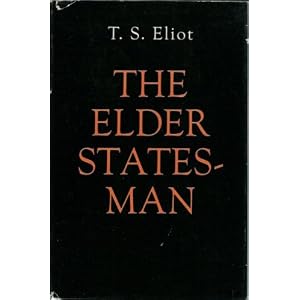
Confessions of an Elder Statesman - Part 4 of 4

The fourth and final installment of this series looking at T.S. Eliot's "The Elder Statesman" culminates in what is the decisive dialogue in the entire play. For previous installments click here, here, and here. By way of review, Lord Claverton has been pressured out of high office "for his health's sake" and finds that his youthful indiscretions have resurfaced now in his retirement.

For almost the entirety of the first two acts, Claverton is morosely resigned at the revelation of his past sins. He is given remarkable clarity at the folly of his life and the absurdity of the false self he fostered so closely. Yet it is not enough for Claverton to simply know what is wrong with himself. In the vacuum created by his suffering a new medicine must be prescribed which births freedom and love. For Eliot, such a medicine is found in the act of confession. This is what Claverton had to say:

I’ve made my confession to you, Monica:
That is the first step taken toward my freedom,
And perhaps the most important.

…

You think that I suffer from a morbid conscience,
From brooding over faults I might well hav
e forgotten.
You think I’m sickening, when I’m just recovering!
It’s hard to make other people realize

The magnitude of things that appear to them petty;

It’s harder to confess the sin that no one believes in

Than the crime that everyone can appreciate.
For the crime is in relation to the law

And the sin is in relation to the sinner.

What has made the difference in the last
five minutes
Is not the heinousness of my misdeeds

But the fact of my confession.

To a sufferer and a guilty conscience it is not enough to simply exhort them to get over their burden by lowering or redefining the standards. Though what Claverton did was not illegal, the immorality of his action pressed upon him all the more. Though we may try to tell ourselves that what we did isn't all that bad, the fact that we have to tell ourselves anything betrays our efforts. On the flip side, this is not a confession borne of an artificial guilt. Claverton's remorse is not imposed or forced upon him, rather it is the natural and tragic product of his life's course.

Most importantly, Claverton's plight demonstrates that the only way to move forward is to look backward and find absolution. One must dig deep enough into the well of their being and confess with un-tinted glasses the truth of themselves.

For Eliot, Confession brings to the front of one's mind that which has been hidden. It is a naming of that which has a powerful hold of you. Love of the confessor (known as absolution) absorbs the power and threat of sin and returns in its place a word of forgiveness. It sees the sinner for who they are and loves them as though there were no sin. Consequently, our and
Claverton's lives are no longer defined by the heinousness of our misdeeds, but the fact of our confession. It is the happy exchange of good for evil, love and hope for despair.

Labels: , , , , ,

9.07.2010

Who I Am Hates Who I've Been - T.S. Eliot, Part 3 of 4

The following looks at the issue of identity as understood by T.S. Eliot in his play "The Elder Statesman." For previous posts in this short series click here and here.

Lord Claverton is a politician by profession. And like a politician, he has tried to play the role of the responsible, admirable father to earn the love of his daughter. Sadly and predictably, this has pushed his daughter away. In a moment of inspiration he reflects on his life and who he has become.

The worst kind of failure, in my opinion,
Is the man who has to keep on pretending to himself

That he’s a success – the man who in the morning

Has to make up his face before he looks in the mirror


I’ve spent my life in trying to forget myself,

I
n trying to identify myself with the part
I had chosen to play. And the longer we pretend

The harder it becomes to drop the pretense,

Walk of the stage, change into our own clothes

And speak as ourselves.

...

I’ve had your love under false pretenses.

Now, I’m tired of keeping up those pretenses,

But I hope that you’ll find a little love in your heart

Still, for your father, when you know him
For what he is, the broken-down actor.


Claverton speaks of a new self-awareness that has come through suffering and pain. In the pang of loss, the false self is distanced from the present, suffering, true self so that he can see clearly the folly of who he was. Note the contrast here - Claverton does not mourn his present loss; the broken-down actor is the only one that loves and sees things clearly. Rather he mourns the successful actor who aspired for greatness. It is both easier and burdensome to keep up the façade, the illusion, than it is to see life as it actually is.

Eliot understands that life is marked by the tension between delusion and honesty, between the active life and a received reality. The bridge between these opposites is death. Identity is not found through its realization, but through its demise. Real love does not come to those who demand to be loved by becoming lovable, but the passive, unlovable.

Parenthetically, it's common to say that the enemy of self-fulfillment are external enemies like the artificially constructed online reality of facebook or twitter. As the saying goes, digital reality obscures us from true reality. This wrongly presumes that life is a series of obstacles (tests) to overcome on the path to greatness. Eliot would argue that the enemy of ourselves is not an external threat, but our very selves:

I’ve been freed from the self that pretends to be someone;

And in becoming no one, I begin to live.

It is worth while dying, to find out what life is.

Labels: , , ,

9.02.2010

T.S. Eliot, Part 2 - The Past

The following comes from T.S. Eliot's play "The Elder Statesman." It's part 2 of 4. For the previous post go here.

Those who flee from their past will always lose the race,
I know this from experience. When you reach your goal,
Your imagined paradise of success and grandeur,
You will find your past failures waiting there to greet you.

The entire play can be seen as a demonstration of the truth these words spoken by Lord Claverton to his son Michael. Claverton has lived a mildly successful political life, yet the sins of youth have now greeted him in his old age.

Like Scrooge of Dicken's "A Christmas Carol" or Carl Fredrickson of Pixar's "UP!", the accumulation of sins in the past will always come back. For better or worse, who we are in the present is defined by our past.

As Eliot indicates, this means that one cannot pursue paradise to extract themselves from hell because wherever you go you always bring yourself. Just when you think you've reach the pinnacle of life, you're on the brink of disaster. Just when you thought you edited enough tapes, a 'smoking gun' is found.

Labels: , , ,

8.31.2010

T. S. Eliot's "The Elder Statesman" - Part 1 of 4

I’ve recently been floored by T.S. Eliot’s last play “The Elder Statesman.” Eliot’s plays at their best speak with universal brilliance while remaining true to a moving plot. This play tells the story of a retired politician, Lord Claverton, whose past sins have come to back to haunt him. This brief series will reflect on some of the high points of this play in four manageable topics.

"Perhaps I’ve never really enjoyed living
As much as most people. At least, as they seem to do.

Without knowing that they enjoy it. Whereas I’ve often known

That I didn’t enjoy it. Some dissatisfaction

With myself, I suspect, very deep within myself

Has impelled me all my life to find justification

Not so much to the world – first of all to myself.

What is this self inside us, this silent observer,

Severe and speechless critic, who can terrorise us

And urge us on to futile activity,

And in the end, judge us still more severely

For the errors into which his own reproaches drove us?"


The passage above is a perfect description of what theology calls self-justification. We live with a gnawing dissatisfaction with our life and ourselves that pollutes even the simplest of pleasures. For Eliot, the source of this unending dissatisfaction is a “speechless critic” – a figure of judgment. In the face of this criticism (either self-imposed, divine, or a 3rd-party) we seek to satisfy this insatiable and mercurial inner-voice.

We reinvent ourselves in hopes that our new clothes would fit better. Yet this "self" is more constricting and dissatisfied than the one we discarded. The project of self-justification is a self-perpetuating cycle of depression and “futile activity.” With each new attempt, the problem only gets worse.

Labels: , , , , ,

8.27.2010

Another Week Ends: Parenting, Katy Perry, New Weezer, U2 and "God Told me to..."

Filling in for DZ this week...

1. A great article from Chris Gottlieb for any parent who has ever been given unsolicited advice on their parenting skills ( I suppose that includes everyone?).

The author laments: I marvel at how comfortable people feel telling complete strangers about their purported parenting flaws...
No infraction is too small or too strange to elicit comment. (The newspaper was too close to the baby’s eyes?) All my parent friends have experienced this no-win culture of judging parenting. Depending on their personalities, they have cowered, gotten angry or been demoralized by it. Yet as stinging as the comments and glares can be, for most of us they are limited to park benches and supermarket lines or, if we’re unlucky, to visits with the in-laws. Our culture of judging parenting by impossible standards hits some much harder. (ht JD)

1a. As a follow- up check out this article from Lisa Belkin on the same issue. What is it about parenting that emboldens people to criticize so quickly?

Every time I hear a story of a public-parenting busybody I wonder the same thing. What were they thinking? Then I cringe a little. Because, I confess, I have been guilty of being that busybody.

2. On this lighter side, a slideshow by Marc Hartzman satirically wonders why God gives such bad advice. Topics range from toilet papering a tree, to shoplifting, to UFO's! (ht JD)

3. For anyone looking to be overall more happy, read the following:

a. Some interesting findings from psychologist Marina Adshade about the inverse relationship between promiscuity and happiness. (ht SZ)

b. Will buying stuff make you happy? An article by Stephanie Rosenblum on decreasing marginal utility, I mean... why "stuff" does and doesn't bring you happiness and the impact the recession is having on people's spending habits. (ht VH)

4. On the heels of a recent Rolling Stone interview and the deeply religious song "Who am I living for" many people are wondering: what does Katy Perry believe? For a short religious biography of Katy (Hudson) Perry click here. Apparently, KP grew up as a pastor's kid and was once a budding Christian music pop star.


5. Weezer's new album features none other than LOST star Jorge Garcia. Below is a preview of the song "Memories". (ht DZ)
[CONTINUE READING]

Labels: , , , , ,