4.07.2011

"Lonnie Loosie" on the Bound Will

An article that appeared in Monday's New York Times discussed something absolutely fascinating to me. I had no idea of the problems that the New York City cigarette tax has created for so many New York residents.

According to the article, an average pack of smokes now costs $12.50 in Midtown Manhattan, a price that is outrageous. Even with the salary premiums that New Yorkers enjoy when compared with other parts of the country, such a high price is going to price people out of the habit...or should price people out. But instead, it simply turns them to illegal means. And so a brisk little cottage industry of selling "loosies", or loose cigarettes (one for 75 cents or two for a dollar), has sprung up around the city.

Of course, there's a problem with this: the "man" wants his taxes. So, naturally, every untaxed tobacco sale is a misdemeanor offense for both the seller and the purchaser. And many people thus find themselves in an untenable position: while they are addicted to the cigarettes, they can't afford them; and so their choice is to either cut other vital needs from already drum-tight budgets or break the law in order to get one more fix.

The purveyor of loose cigarettes who was interviewed for this article, a guy who uses the moniker "Lonnie Loosie", has observed this phenomenon, and gave what I think is a money quote on the bound will:

In his time, [Lonnie Loosie] has learned a lot about smokers' habits. He sometimes hears from customers who explain to him they are quitting as they buy two final loosies.

"A lot of them believe they are quitting," he said, "but they come back every day."

Labels: , ,

The Internet Never Forgets, or The Impossibility of Digital Absolution

A follow-up to a post we did a little while ago about the indelibility of the Internet, via an article published this past weekend in the Times "Erasing the Digital Past." This is fertile ground in a number of ways. When I worked as a youth minister, one of our most effectively incriminating illustrations for sin was that of a DVD of one's life, subtitled with one's thoughts. The kids would always gasp. Well, it would appear that the need for such illustrations may become a thing of the past - with the Internet serving that function in real time. Not only have we been given an ongoing, often inconvenient chronicle of our public and private lives, we've been given one that effortlessly exposes the fruitlessness of our attempts to manage our condition (the whack-a-mole analogy that Ms. Allison uses below has also been used in countless evangelistic talks). Of course, this is all very good news for those like Good News, as it clearly begs the question, how does one translate Psalm 103:12 for the digital age?  "As far as DOS is from Java, so far has he removed our search results from us"? Wakka wakka wakka:

At first, some tried manipulating the Web results on their own, by doing things like manually deleting photos from Flickr, revising Facebook pages and asking bloggers to remove offending posts. But like a metastasized cancer, the incriminating data had embedded itself into the nether reaches of cyberspace, etched into archives, algorithms and a web of hyperlinks. 

After failing to rid the negative sites on their own, most turned to a new breed of Web specialists known as online reputation managers, who offer to expunge negative posts, bury unfavorable search results and monitor a client’s virtual image.

Reputation.com... is among a growing corps of online reputation managers that promise to make clients look better online. In an age when a person’s reputation is increasingly defined by Google, Facebook and Twitter, these services offer what is essentially an online makeover, improving how someone appears on the Internet, usually by spotlighting flattering features and concealing negative ones.

“The Internet has become the go-to resources to destroy someone’s life online, which in turn means their offline life gets turned upside, too,” said Michael Fertik, the chief executive of Reputation.com, which is in Redwood City, Calif., and is among the largest in this field. “We’ve reached a point where the Internet has become so complicated, vast and fast-paced, that people can’t control it by themselves anymore. They now need an army of technologists to back them up online.”
 ---------------

Social networks, online comments and oversharing online have created a threat to everyone’s reputation and privacy,” said Mr. Fertik of Reputation.com. “Now people are trying to figure out how to put that toothpaste back in the bottle.” ONCE something is online, it can be very difficult, if not impossible, to delete. So tweaking one’s online reputation usually boils down to gaming the search engines. Image-conscious people with an understanding of the Web’s architecture can try doing it themselves, by populating the Web with favorable content... But these tactics have their limits, especially when the Web sites in question are popular and optimized for search engines.

One such site would be Gawker, the New York media blog, which had been known to pluck characters out of relative obscurity and turn them into villains. Starting in 2009, Gawker published a series of snarky items about Julia Allison, a former dating columnist for Time Out New York magazine and a social media expert. Readers were soon acquainted with her videos of her publicly arguing with a boyfriend at the time, personal e-mails sent to Gawker editors and photos of Ms. Allison in lingerie which were posted online.

Ms. Allison tried tinkering with the search result herself, but became so fed up that she once announced that she was “quitting” the Internet. “It’s more like whack-a-mole than anything else,” said Ms. Allison, who has been in talks with Reputation.com to work or online presence. “Hit one, and another pops up. I have spent hours and hours attempting to solve the nearly impossible problem of a maligned online reputation.” 

“The hardest thing is when you have a very unique name,” added Don Sorenson, the founder of Big Blue Robot, an online reputation management company in Orem, Utah, that works with corporations. “If you have a last name like Smith or Brown, you’re going to be better off, but if you have a unique name you will definitely have your work cut out for you.”

At that point, some people have been known to legally change their name.

It hasn’t become that bad for Ms. Allison. She compares the scar to her online reputation to a large tattoo: “Technically, it’s possible to remove it, but it’s painful and expensive. Plus, there’s no guarantee that you’ll ever remove it 100 percent.” The entire experience has made her more cautious about what she shares. “I swore too much and there are a few lingerie photos I wish were private now, but they are the relatively average mistakes of youth,” she said. “Unfortunately, they are now mistakes that will follow me in perpetuity.”

Labels: ,

4.06.2011

Boeing: It's Not OK to be Honest

I read an article in the paper today about the cracks in the fuselage of a Southwest Boeing 737 that occurred mid flight and resulted in an emergency landing.  OK, I actually just read 2 paragraphs of the article.  But one sentence stuck out:

In trying to explain what went wrong, Boeing made the unusual move of publicly acknowledging technical missteps.

The move was unusual because it's not wise to admit failure or mistakes in the business world.  You just might get sued or cost your stockholders lots of money.  It was declared unusual to be honest.

Unfortunately the same is true in the church.  It's actually not OK to admit marital problems, difficulty with your children, or any personal failures or shortcomings.  This is because people are used to being judged inside and outside of the church.  Jesus spent all his time with sinners and the self-righteous.  In the churches St. Paul wrote to, he was dealing with sinners with lots of problems.  The problems and crises of life are the rule not the exception.  The sooner we can admit defeat, the sooner we are a church of the comforting words of our savior:

Come unto me, all ye that travail and are heavy laden, and 
I will refresh you.    Matthew 11:28
This is a true saying, and worthy of all men to be received,
that Christ Jesus came into the world to save sinners.
1 Timothy 1:15

Labels: ,

4.05.2011

From The Onion: Majority Of Americans Just Gotta, You Know, Get Motivated And Do It

Yet another shot of brilliance from our favorite publication:

WASHINGTON—According to a new report from the National Association of Just Getting Out There and Getting It Done, when it comes to making it happen, a majority of Americans just have to, you know, get motivated and do it. The group's findings, which indicate nearly 80 percent of the nation needs to give it a shot at some point because, hey, you never know, suggest that the country can talk about it all it wants, but when it comes down to actually doing it, well, there's talking about things and then there's doing things.

The study confirmed that there's not much more to say, really.

"The American populace needs to figure out what it wants to do and then get out there and, you know, do it," the report read in part, adding that, hey, look, the nation's gotta start somewhere, right? "Nearly half the country is currently sitting on the couch wondering if it's ever going to happen for them, and further data suggests that, to be perfectly honest, it's only gonna happen if they make it happen. See what we're saying?"

"Basically, the U.S. populace has to think about finally getting things in gear here because statistics point to the fact that the constant hemming and hawing is getting a little ridiculous. After all, nowhere in our research could we find what's stopping them or what they really have to lose," he added.

The study concluded that while this is going to sound corny, the truth of the matter is that if the citizenry doesn't step up to the plate and take a crack at it, they'll regret it for the rest of their lives. There is absolutely no doubt about that, the report confirmed. "Overall, a plurality of males and females from ages 18 to 57 need to ask themselves 'Why the hell not?' when considering if they should just do this thing already," the report's co-author Melony Steele said. "And it would seem many Americans have a motive to give it a go, because a vast majority said they didn't want to end up like their sibling or friend who had the chance once but let it slip away."

Though the study's recommendation to, you know, put your best foot forward because anything worth doing is worth doing right has inspired some citizens, most of the population reportedly still believes that the timing just isn't quite right. "Yeah, I dunno, we'll see," 34-year-old American Eagle retail worker Kevin Pratt told reporters. "I got some stuff I eventually want to do, but I don't really see the rush. I make rent every month and have enough money left over to hang out. And, you know, I'm still pretty young."

Labels: ,

3.28.2011

Netflix Horizon

Here's a brief heads up about some movies that are about to be released in the next few weeks, on Blu-Ray or DVD.  Hopefully we'll see if we can do this on a regular basis.

TODAY: 127 Hours is being shipped today by Netflix -- with a stunning performance by Mockingbird favorite (Freaks and Geeks) James Franco.

APRIL 5: The last season of Friday Night Lights.  DZ and others say it is amazing.  Put it at the top of your queue now.

ALSO ON APRIL 5: I was elated to hear that Taxi Driver, one of the great movies of the amazingly fertile period of the 1970s, is being remastered and released on Blu-Ray.  A haunting aching portrayal of loneliness and the need for love; and inner violence, self-assertion, and identity.  The music is not to be missed: read this Slate piece on Bernard Herrman's last great work.  I have been on the phone with Netflix and they say they will be getting it, but perhaps not in time for the April 5 release.  (Note that the current Taxi Driver entry at NetFlix is not the Blu-Ray version -- wait for the real deal!)

A hidden treasure on the TD Blu-Ray may turn out to be the 21-minute featurette "God's Lonely Man," which examines how the theme of loneliness dominates the film, and where Paul Schrader discusses the personal hardships that led him to write the screenplay during a two-week stay in an ex-girlfriend's empty apartment in Los Angeles.

APRIL 12: Marwencol. I haven't had such a good feeling about a movie I have not yet seen in a long time.  I predict that this sweet and tender documentary will become an MB classic.  After a terrible beating left Mark Hogancamp brain damaged, he began creating models of a fictional town, Marwencol, to process the trauma. Jeff Malmberg's documentary explains how Hogancamp uses the elaborate dioramas as stand-ins for real life. When Hogancamp's work attracts the attention of a prestigious New York art gallery, however, he's forced to leave the safety of his make-believe world and reconnect with the real one.

And isn't the poster artwork fabulous?

PS.  As always, note that MB film recommendations should be seen with caution.  127 Hours and Taxi Driver both containing violent and disturbing material.  So does life, btw.

Labels: ,

3.24.2011

Taking the Bait: The Urge to Escape

This morning, over at I Think I Believe, a blog written by theology student Arni Zachariassen (living in Manchester, England), Mockingbird got a mention... and was baited. Arni posted a video, called it “Mockingbird bait”, and said it would be right up our alley. So here we are, taking the bait. The video:
So, what to make? Well, that WOULD be a great stunt, if I thought the "winners" weren't corporate plants in crowd! (It’s got to be tough to predict that a guy’s vision of a perfect escape will be a trip to Lapland!) But I think the reason this is “Mockingbird Bait” is the truth inherent in the recognition that we humans have an incredible desire for escape. Loren Dean (in the great and under-seen movie "Mumford") says that humans have always found a way to escape, "even if it's just banging our heads against a rock." In the movie, he's talking about his drug use, but the fact remains, escape is a tantalizing prospect. Dean’s character can’t take the depths to which his life has sunk, and turns to drugs as his means of escape. People turn to virtual worlds (like World of Warcraft or Second Life), pornography, or literal travel to “get away.” The problem with escaping is that you always have to come back. The drugs wear off, the computer gets shut down, or the headache (from the rock) dulls. I wonder if the guy's trip to Lapland has a required end? Is it a round trip ticket? Bet it is! The fact that a person (disbelief suspended for a moment) would press a button on a scary black box for the chance at escape is evidence of the pressure (what we MBirders…and St. Paul before us…call "the law") we all feel all the time. But like trips to Lapland, human- (or coporate-) provided escapes always end. It's only the escape (or, more accurately, the death and resurrection) provided by Christ that is forever (2 Cor. 5:17).

Labels: , ,

3.23.2011

Pole Dancing... For Jesus

In the you-can't-make-this-up department:

Labels: , ,

3.21.2011

The Woman Who "Felt No Fear"

From the March edition of Harper's, an interesting bit about a woman who, like all of us, feels a morbidly interesting compulsion towards those things which most terrify her. A telling chunk:

"For many years, SM has repeatedly told us that she 'hates' snakes and spiders and 'tries to avoid them.' To test her real-life behavior, we took her to an exotic pet store. Upon entering the store, SM was spontaneously drawn to the snake terrariums. A store employee asked SM whether she would like to hold a snake, and she agreed. She rubbed its leathery scales, touched its flicking tongue, and watched it slither through her hands. SM displayed a compulsive desire to 'touch' and 'poke' the store's more dangerous snakes, even though the store employee repeatedly told her that those snakes were not safe and could bite. She also attempted to touch a tarantula and had to be stopped because of the high risk of being bitten. When asked why she would want to touch something she knew was dangerous, SM replied that she was overcome with 'curiousity'."

Labels: , ,

3.18.2011

Another Week Ends: Japan, Facebook & Divorce, Preschool Litigation, more Galli on B(h)ell, The Beach Boys' Smile, Community

1. Two very moving additions to the coverage of the disasters in Japan. First, if you can decipher the google-translation, there's the story of a woman who sacrificed her life to warn a village of the impending destruction here. And two, the footage that made this all very real to yours truly. If it doesn't get you on your knees, nothing will (be sure to stick with it to the end):


2. An amusing report in the Guardian about Facebook and divorce. If ever there was an excuse to take a potshot at lawyers for having a shallow view of human nature...:

A 2010 survey by the American Academy of Matrimonial Lawyers (AAML) found that four out of five lawyers reported an increasing number of divorce cases citing evidence derived from social networking sites in the past five years, with Facebook being the market leader. Two-thirds of the lawyers surveyed said that Facebook was the "primary source" of evidence in divorce proceedings, while MySpace with 15% and Twitter with 5% lagged far behind.

A spokesperson for Facebook said: "It's ridiculous to suggest that Facebook leads to divorce. Whether you're breaking up or just getting together, Facebook is just a way to communicate, like letters, phone calls and emails. Facebook doesn't cause divorces, people do."

The NY Times Magazine had a similarly Zeitgeisty take on divorce this past week too, which is worth it for the candid quotes on depravity/original sin.

3. Speaking of the Zeitgeist, there's the outrageous but evidently very real "Mother Sues Preschool For Damaging Her Daughter's Shot at the Ivy League." ht JD. 

4. For those of you interested in the ongoing Rob Bell-univeralism saga, conference speaker Mark Galli's review of the Bell's Love Wins book appeared this week, and it is very much worth your time. Galli rightly places Bell in the context of Protestant liberalism, not in order to callously write him off as such, but in an attempt to discuss the heart of the matter, which as always, has to do with atonement/justification:
[CONTINUE READING]

Labels: , , , , , , , , , ,

3.17.2011

Stumbling and Imperfectable

A stunning and poetic few paragraphs in Jonathan Schell's moving reflection in yesterday's The NY Times on the disasters afflicting Japan right now, specifically the tragic partial meltdown of several nuclear power plants:

The chain of events at the reactors now running out of control provides a case history of the underlying mismatch between human nature and the force we imagine we can control.

Nuclear power is a complex, high technology. But the things that endemically malfunction are of a humble kind. The art of nuclear power is to boil water with the incredible heat generated by a nuclear chain reaction. But such temperatures necessitate continuous cooling. Cooling requires pumps. Pumps require conventional power. These are the things that habitually go wrong — and have gone wrong in Japan. A backup generator shuts down. A battery runs out. The pump grinds to a halt.

You might suppose that it is easy to pump water into a big container, and that is usually true, but the best-laid plans go awry from time to time. Sometimes the problem is a tsunami, and sometimes it is an operator asleep at the switch.

These predictable and unpredictable failings affect every stage of the operation. For instance, in Japan, the nuclear power industry has a record of garden-variety cover-ups, ducking safety regulations, hiding safety violations and other problems. But which large bureaucratic organization does not? And if these happen in Japan, as orderly and efficient a country as exists on earth, in which country will they not? When the bureaucracy is the parking violations bureau or the sanitation department, ordinary mistakes lead to ordinary mishaps. But when the basic power of the universe is involved, they court catastrophe.

The problem is not that another backup generator is needed, or that the safety rules aren’t tight enough, or that the pit for the nuclear waste is in the wrong geological location, or that controls on proliferation are lax. It is that a stumbling, imperfect, probably imperfectable creature like ourselves is unfit to wield the stellar fire released by the split or fused atom.

Labels: ,

3.16.2011

Catholic Action!

There are a lot of different Bibles out there. Go to your local bookstore, and you'll find Bibles for groups ("Make some non-Christian friends"), Bibles for teens ("Don't look at bad internet sites"), Bibles for the retired ("You can still have a vocation in your golden years"), Bibles for men ("Remember, don't look at bad internet sites"), Bibles for women ("Right now, men are looking at bad internet sites") and on and on. The text of these Bibles are almost always from the NIV, and therefore the same. It's the notes, the exercises, and the study guides that differentiate them.

This in mind, I went into my sacristy before church last week, and saw the book pictured to the left. I'm curious, what notes, exercises and study guides might we find inside? Got any ideas? Serious and funny ideas welcome...

Example: For group discussion: Who would win in a fight, The Pope or The Terminator? And go deeper: What characteristics does the T-1000's liquid metal constitution share with the Holy Spirit?

Labels: , ,

Voodoo Child: Classic Rock, Celebrity, and Idolatry

A fun NYT article about a link between celebrity and idolatry: In trying to discover why somebody would pay $959,500 for Eric Clapton's signature Fender Strat named Blackie, or thousands still for a "replica" of Blackie, a team of researchers at Yale have theorized that the same urges that drove our ancestors to magic and voodoo make us think that the celebrity artifacts are somehow "contagious" (though you might instead be thinking of "The Pearl of Great Price" if you love rock-n-roll!). The article is short and worth a quick read- especially for anybody who a) loves Clapton, b) loves a celebrity, or c) needs a primer on the subtle mechanics of idolatry.

The researchers asked people how much they would like to buy objects that had been owned by different celebrities, including popular ones like George Clooney and pariahs like Saddam Hussein. People’s affection for the celebrity did not predict how much value they assigned to the memorabilia — apparently they were not buying it primarily for the pleasant associations. Nor were they chiefly motivated by the prospect of a profit, as the researchers discovered when they tested people’s eagerness to acquire a celebrity possession that could not be resold... The most important factor seemed to be the degree of “celebrity contagion.” The Yale team found that a sweater owned by a popular celebrity became more valuable to people if they learned it had actually been worn by their idol. But if the sweater had subsequently been cleaned and sterilized, it seemed less valuable to the fans, apparently because the celebrity’s essence had somehow been removed.

"That is a belief in what is also called imitative magic: things that resemble each other have similar powers. Cultural practices such as burning voodoo dolls to harm one’s enemies are consistent with a belief in the law of similarity,” Dr. Newman said. “An identical Clapton guitar replica with all of the dents and scratches may serve as such a close proxy to Clapton’s original guitar that it is in some way confused for the real thing. Of course, the replica is worth far less than the actual guitar that he played, but it still appears to be getting a significant amount of value for its similarity..."
[CONTINUE READING]

Labels: , ,

3.15.2011

Fat Children Took My Life

A provocative piece on the obesity epidemic via Slate's new Hive project, in which author Daniel Engbar compiles a startling amount of data about the ineffectiveness of 'tough love' when it comes to dealing with this issue. In fact, the evidence of "the law increasing the trespass" (Romans 5:20) is pretty egregious here. A classic example of the civil use of the law (healthy weight being undeniably in the best interest of individuals and society as whole) backfiring completely, i.e. regardless of the intention, the law in this area is only ever heard/received in its moral capacity, therefore producing its opposite. At least, if the data is to be trusted... Take that, tiger mothers!

If it's really true that America suffers from a lack of tough love, and that's why we got so fat in the first place, then you might expect the nation's swelling obesity rates to have arrived on a wave of warm fuzzies. But we've seen just the opposite, says Rebecca Puhl of Yale's Rudd Center for Food Policy and Obesity (a leading advocate for the soda tax, among many other aggressive anti-obesity interventions). No one has been giving fat people a free ride. In fact, the prevalence of weight-based discrimination has increased by two-thirds since the mid-1990s; even middle-schoolers are getting meaner. The Hive tells us that to fight obesity we must "go on the offensive against obese people." Just look at the data. We tried that approach, and it didn't work.

As I've argued before, it could even be the case that all this stigma is making things worse. Columbia University epidemiologist Peter Muennig has found evidence that the life-shortening effects of obesity are more severe among women than men, and more severe among white women than black women. Women and whites also happen to be the two groups most affected by weight-based discrimination. According to Muennig, it makes sense that the more shame you feel as a result of being fat, the greater the toll on your body. So a widespread war on obesity, or indeed an effort to "fix" the nation's fat children, could serve to exacerbate the problem.

But you don't have to buy into the idea that fat shame is killing us. Research also shows that stigma doesn't help anyone slim down. Nor does it encourage healthy behavior (which is, after all, very different from weight loss). At the University of Minnesota, Dianne Neumark-Sztainer recruited nearly 5,000 adolescents for a long-term study of weight- and food-related issues, and according to her data, the teenage girls who were most dissatisfied with their bodies gained more weight over a five-year stretch than their classmates. In fact, these dissatisfied girls showed triple the increase in body-mass index, controlling for the possibility that they were fatter to begin with. All that self-hate didn't turn them into gym rats, either: The same group ended up getting less exercise than their peers.
[CONTINUE READING]

Labels: , , ,

3.10.2011

The Power and The Glory and Luke 19

I was intrigued by a recent article in The NY Times entitled, “Mexican Church Takes a Closer Look at Donors,” which looks at the Roman Catholic Church in Mexico. Apparently it receives large donations from Mexican drug lords. It's convicting for several reasons, and certainly made the ash on my head yesterday feel a little bit more real.

The first element I found convicting, especially during the season of Lent, was the idea of "an acceptable offering and sacrifice." The article opens by pointing out that the Roman Catholic Chapel in Pachuca, Mexico has a plaque that honors its patron Heriberto Lazcano Lazcano, commander of the crime syndicate called Zetas. The plaque bears a quote from Psalm 143, and there is an inference that this is all deeply wrong: “How dare they take that dirty money!” Father Coogan, a priest in the area, bluntly explains why the church has taken the drug lords’ money, “Hey, the guy who owns the factory, he’s a bastard, but we take his money, so why not take the drug money?” He captures exactly what makes the Psalm quote on this drug lord’s plaque so stunning: it brings one back down to Earth. The church has traditionally understood Psalm 143 as one of penance; the opening verses are in the form of a general confession reminding us that everyone, even the purest of givers, without God's grace and mercy, is actually - to quote Father Coogan - a bastard. On our own, we have more in common with the Zetas than we do the righteousness of God.

The story also evokes the theology of the cross powerfully. The cross reminds us that when it comes to good and evil, in an ultimate sense, we have no idea what God is actually doing. We don't see or understand the things of God. Elvira Rodriguez Lopez’s quote says it best (rubbing the Pharisee in me the wrong way), “the mysteries of God are great and that all donors should be thanked.” Amen! The cross reminds us that God works in evil things, through suffering and character flaws, even local drug lords to lead us into Christ’s arms. That we can give thanks for all things, even the Zetas, because God is responsible, and he makes the mess in order to clean it up his way, for his is The Power and the Glory (ht Graham Greene).

Labels: , ,

3.08.2011

Nymphomania and The Morally Disabled

Neuroscience Day, part two: An admittedly wild article from Slate, with the inspired title "Naughty By Nature", looking at nymphomania through the lens of neuroscience and free will (and the profound lack thereof). Specifically, the article discusses what's known as Kluever-Bucy Syndrome, which causes a neurological breakdown in the ability to control one's sexual urges... [insert joke about the average male libido here], but more generally, it asks the question of whether or not neuroscience can/should explain moral lapses as well as cognitive ones. The examples they use are, by necessity, rather salacious, so be warned - seriously, folks - but the conclusions are too priceless not to post. Perhaps "morally disabled" should be our new watchword, ht JS:

Most of us—materialist and dualist alike—have sympathy aplenty for those patients whose brain disturbances have interfered with their everyday cognitive abilities. We're perfectly willing to accommodate their intellectual disabilities by, say, helping them create a new mnemonic strategy or giving them a pat on the back or a word of encouragement when they're trying to remember someone's name. Yet when chunks of gray matter that have evolved to control and inhibit, say, our sexual appetites and other Bacchanalian drives experience a similar catastrophic blowout, are we so understanding? What if those impairments lead their victims to display … oh, I don't know, let's call them moral disabilities? Cases of libidinal brain systems going haywire have our kind-hearted, humanistic materialism rubbing elbows—or butting heads—with our belief in free will and moral culpability.
---------------

If a "good" person's brain can be rendered morally disabled by an invasive tumor or an epileptic fuse-shortage, subsequently causing them to do very bad deeds, then isn't it rather hypocritical to assume that a "bad" person without brain injury—whose brain is anatomically organized by epigenetics (the complex interplay between genes and experiences)—has any more free will than the neuroclinical case? After all, perhaps it's just a matter of timing: The "good" are born with brains that can "go bad," whereas the "bad" are hogtied by a morally disabled neural architecture from the very start. And although it may be less common, if a "bad" person behaves in an upstanding manner, could that be the result of fortuitous brain damage or epilepsy, too?

It's all brain-based in the end, including the parameters by which one can contemplate and, especially, execute their free will. Perhaps we're only as free as our genes are pliable in the slosh of our developmental milieus.

Labels: , , ,

3.07.2011

Alvin Wong: The Happiest Man in America

Fun little article in this past weekend's NY Times:

The New York Times asked Gallup to come up with a statistical composite for the happiest person in America, based on the characteristics that most closely correlated with happiness in 2010. Men, for example, tend to be happier than women, older people are happier than middle-aged people, and so on.

Gallup’s answer: he’s a tall, Asian-American, observant Jew who is at least 65 and married, has children, lives in Hawaii, runs his own business and has a household income of more than $120,000 a year. A few phone calls later and ...

Meet Alvin Wong. He is a 5-foot-10, 69-year-old, Chinese-American, Kosher-observing Jew, who’s married with children and lives in Honolulu. He runs his own health care management business and earns more than $120,000 a year.


For the "happiness map," click here.

Labels: , ,

3.04.2011

Ideas or the Human Heart?

From a BBC news flash yesterday:

Pope Benedict has rejected the idea of collective Jewish guilt for Jesus Christ's death, in a new book to be published next week.

Tackling an issue that has led to centuries of persecution, the Pope argues there is no basis in scripture for the Jewish people to be blamed.


It’s a good thing for the Pope to say this, of course. But the BBC article (read it here) is misleading in that it repeatedly gives the casual reader the impression that this idea is the result of groundbreaking exegetical research. That’s of course always going to be the bias of a “news” organization (News Flash! Stunning pronouncement changes 2000 years of Christian teaching!). To say “Pope reaffirms again what many Christians from many communions have said for many centuries” -- that’s not quite as sexy of a headline.

More importantly, however, beneath the BBC article lies a worldview: which is that human nature is not in itself a huge mess of evil passions (“If you, being evil…”), but instead tries to explain human evil on bad “ideas.” Centuries of terrible anti-Semitism must be traceable, the BBC and most people think, to some bad idea early in Christian thought. If only we had had Pope Benedict around in the first few centuries, he could have given us the right “idea” and then we could have been saved all those years of pogroms, and Inquisitions, and death camps! A more accurate reading of human history, however, is the Christian aphorism from the late 1500s: What the heart desires, the will chooses and the mind justifies. People would have always have found some reason to commit terrible acts against a vulnerable people; anyone who remembers bullies in the schoolyard knows this intuitively. The BBC thinks that an idea comes first, the free human reason chooses it, and then one’s heart is based on the idea. Thomas Cranmer and others knew better.

Labels: , , ,

3.03.2011

Could YOU Survive at BYU?

The BYU men's basketball team is on a roll this year. Ranked #3 in the nation, and boasting a leading candidate for the Player of the Year Award (Jimmer Fredette), BYU is 27-2. On Tuesday, though, their chances of winning the National Championship were dealt a crushing blow when Brandon Davies, a starter, was dismissed from the team for the remainder of the season for "a violation of the school's honor code." The nature of the violation has not been made public (UPDATE: Thursday morning, Davies was said to be dismissed for having sex with his girlfriend), but the nature of the violation is not what I'm writing about here. I'm also not writing about whether or not someone should be dismissed from a team because of such violations. What I am writing about is the code itself, and a question posed by ESPN's SportsNation on Wednesday: "Could you live up to BYU's honor code?"

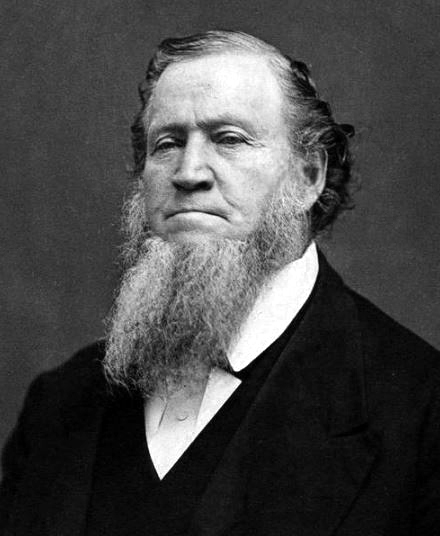
A famously Mormon school, named in honor of the second most famous Mormon ever (and wearer of the most famous Mormon beard ever), here is BYU's code in its entirety:

1. Be honest.
2. Live a chaste and virtuous life.
3. Obey the law and all campus policies.
4. Use clean language.
5. Respect others.
6. Abstain from alcoholic beverages, tobacco, tea, coffee and substance abuse.
7. Participate regularly in church services.
8. Observe the Dress and Grooming Standards.
9. Encourage others in their commitment to comply with the Honor Code.

My seminary had a similar Code of Conduct that I had to sign before being admitted. I signed it, knowing that I could fulfill it only by the broadest and most superficial definitions of the "commandments." Be honest, indeed.

SportsNation posed the question, though, and what do you think the answer was? Interestingly, there have been 13,700 votes cast (as of this writing) and EXACTLY 50% of people said that, yes, they could live up to the Honor Code for a year.

What are people thinking? That they can be completely honest for a year? How regular does regular church attendance have to be? How clean does clean language have to be? That a "virtuous" life only refers to their naughty bits and not to their minds? And that's not even bringing up the uber-amorphous "respect others" dictum. Do we think that 50% of people are being dishonest about their human capability, or do we think that 50% of people underestimate the power and depth of a commandment like Be Honest? Could you survive at BYU?

UPDATE: You have to vote yourself to see the results, but there are now 56% of respondents claiming to be able to follow the Code for a year, out of 23,258 votes.


Labels: , , ,

3.01.2011

Friction and Addiction in New Social Media

A fascinating read, from beginning to end, in GQ about what's going on behind the "New Social Media" phenomenon in Silicon Valley, "The Viral Me". The answer appears to be a peculiar form of narcissism, which is as idealistic about changing the way people relate as it is cynical in its understanding of how to do so. In other words, these guys are attempting to (and succeeding in) exploit our addictive tendencies (via endlessly random incentives) and predict our self-justifying impulses for the sake of efficiency and harmony. At bottom, all this new tech is exciting, terrifying and very, very human (ht KW):

I still have an embarrassingly antiquated idea of what people mean by "privacy" when they complain about, say, Facebook. To me the danger is basically some Russian guy who steals my credit card number. Or Google knowing my porn predilections. Both of those things are certainly happening. But the "private" stuff that's most likely to get you into trouble is the information you willingly share—semipublic stuff provided by you that can become known by audiences you don't anticipate. My reflexive response to that privacy fear would be to pull all data whatsoever from the public sphere—erase my Facebook account, stop with the Twitter. People like Rahul have the opposite solution: Flood the social layer with information you want out there about yourself.

(If you're confused by the term social layer, think of the word layer as meaning "lens." The social layer is one lens you can look through to see the content of the Internet. Who you're connected to, what they're connected to, what they like and don't like.)

"More and more people are going to have careers where they move from one thing to another fairly publicly," Rahul says. "And what people are really investing in is your track record. Your brand. What you do and what you say and what you think are just as important as your skills. Specifically for me, for our company, it's very important for me to be known, to have credibility, and to have opinions."
--------------

The first thing I want to know is why, apparently, people on [DailyBooth] don't feel exposed, vulnerable, embarrassingly narcissistic. "There was a study done," Brian says. "They gave people video cameras. Everyone over the age of 25 would turn it outward, and everyone under the age of 25 would turn it inward. This is the first platform that captured this behavior of turning the camera inward. It created a platform for communication around that one behavior. Look at the iPhone 4. It has two cameras—they added one specifically to face inward. And the fact that Steve Jobs, who's sort of the person who defines what's acceptable in technology and behavior, put this here? So this behavior is becoming even more acceptable."[CONTINUE READING]

Labels: , , , ,

2.18.2011

Another Week Ends: U-Bending Happiness, South Park Religion, Charlie Sheen, Louie CK, Friday Night Lights

1. From one of the December issues of The Economist, some interesting findings about "Age and Happiness". The main discovery being the "U-Bend" - i.e. the finding that people are happiest in their youth and old age, and least happy in between. The most relevant section for us has to do with "the death ambition" (ht VH):

Maybe people come to accept their strengths and weaknesses [as they grow older], give up hoping to become chief executive or have a picture shown in the Royal Academy, and learn to be satisfied as assistant branch manager, with their watercolour on display at the church fete. “Being an old maid”, says one of the characters in a story by Edna Ferber, an (unmarried) American novelist, was “like death by drowning—a really delightful sensation when you ceased struggling.” Perhaps acceptance of ageing itself is a source of relief. “How pleasant is the day”, observed William James, an American philosopher, “when we give up striving to be young—or slender.”

2. A great overview on Slate of South Park's Trey Parker and Matt Stone's dealings over the years with religion. They've certainly not shied away from the topic, as their upcoming Book of Mormon musical boldly drives home. Parker has always seemed to be the driving force, so it's a shame they didn't interview him, but nevertheless [vulgarity warning - duh]:

What Parker and Stone do isn't religion-bashing. It's religion-teasing. And it's born more from fascination than disdain. "I'm an atheist that admires and likes religion," Stone told me in an interview. He describes the new musical as "an atheist's love letter to religion." If you had to classify Parker and Stone's world view, you might call it Hobbesian absurdism.[CONTINUE READING]

Labels: , , , , , , ,