2.15.2011

Control: A Conference Primer

“Mother, I tried, please believe me
I’m doing the best I can,
I’m ashamed of the things I’ve been put through,
I’m ashamed of the person I am.
Isolation, Isolation, Isolation.”

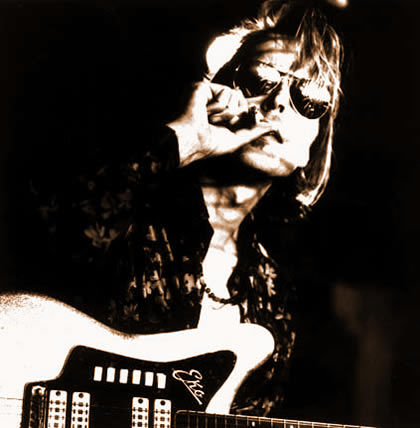
When Sam Riley, as Joy Division’s tragic lead singer Ian Curtis, drones out these lyrics in Corbijn’s 2007 film, Control, he’s sequestered to a recording room padded off from his bandmates. The movie audience can only hear a muffled shadow of the band’s music—it really just sounds like he’s singing by himself—and it sort of feels like he feels that way, too. In a film entitled Control, which seems to appropriately converse with the human (mis?)conception of control in much the same way the upcoming conference might, we find that, more or less, such a mythology leads one only into a state so aptly described in the lyrics above. It’s “Isolation.”

Curtis is portrayed from the beginning as a navigator. When the Joy Division bandmates are all but ecstatic to have had their album displayed on Tony Wilson’s TV show, Curtis is later found hounding him with napkin-notes at a bar to be put on the show to play live. Later, in their first live show in London, the smalltown boys farting nervously backstage before going on, Curtis is the visionary: “This is just the beginning.” He is the captain, he is in control.

Fame comes quickly for Joy Division, in almost seamless congruence with Curtis’ confidence. Well, sort of. Corbijn beautifully depicts that, at every moment where it seems that everything being chased is obtained, things get utterly complicated and muddled. It could very easily feel like any other band-loses-heart-in-pursuit-of-fame story, but what’s interesting is that this story is more about love than those are. Curtis’ wife and child become more and more alien within his pursuit for control, and it eventually leads him into a love affair with a foreign journalist, Annik Honore. More than the affair, though, he finds himself resenting his life and all that was important before. Despite proclaiming his hatred for his mistress at one point, the fact is that he cannot break himself from his affair. Love is lost and transmogrified into something that looks more and more like demand—numerous scenes depict Curtis coming home from a tour, weighed heavy by the army duffel he brings back into the house he resents.

This notion of demand continues into his music career as the film continues. As the thrill of success dampens, Ian’s relationship with his music, the listeners, the supporters becomes more of a puppeteering experience than a visionary one. He finds himself exhausted, deeper in the throes of his epileptic fits, and bitter about the demands of his manager and his crowds. After a particularly exhausting show, which ends in a riot of unsatisfied fans, Ian describes the weight of divisive expectations he feels now: “I never meant it to grow like this…and now they expect more. I have no control anymore. I don’t know what to do…It all used to be so simple, everything. Now everyone hates me, even the people who love me hate me.”[CONTINUE READING]

Labels: , , , , , ,

2.09.2011

"One Can Sometimes Believe in Sorcery": Dark Places, Addictive Force and The Devil

"Oh, these drugs, they play on me these terrible ways,
They don’t pay like they used to pay.
I used to make it day to day."
—Deerhunter, “Helicopter"

Tolstoy’s gripping short story The Devil chronicles the early life of a promising and potent Evgeny Irtenev, a young man endowed with the fortune to move him into a successful future, as well as the fortitude and wherewithal to make it happen. A visionary of sorts, all of his endowments lead him into a dreamlike pursuit to resurrect “the old life” of his family’s estate and business, an estate that had deteriorated in his father’s stead, and he does so with success, but not without cost. While living on the estate, not yet married, he finds himself entangled in a lusty affair with Stepanida, a peasant woman on the estate, married to a respectable man living away from home. Tolstoy’s illustration of Evgeny’s psychological turmoil throughout the affair brilliantly captures the force of addiction on the human will to conquer it.

Later married, Evgeny returns to the estate to successfully establish a happy home with a supportive, devoted wife. Just a year into married life, though, Stepanida returns, ironically hired by Evgeny’s wife to help in the house. The confliction between Evgeny’s “ought” and Evgeny’s fleshly “want” is almost too painful to bear. The stifled addiction resurfaces but his shame leaves him looking for a dark corner:

“He felt that he was losing his own will, was becoming almost insane. His severity towards himself did not diminish by a hair’s breadth; on the contrary, he saw all vileness of his desires, even of his actions…He knew that he needed only to run into her somewhere close, in the dark, where it was possible to touch her, and he would give way to his feeling. He knew that only shame before people, before her, and before himself held him back. And he knew that he was seeking conditions in which that shame would be stifled by animal passion. And therefore he knew that he was a vile criminal, and he despised and hated himself with all the powers of his soul…Everyday he prayed to God to strengthen him, to save him from perdition; every day he resolved that from then on he would not make a single step, would not look at her, would forget her. Every day he thought up ways to rid himself of this obsession, and ever day he put those ways to use.

“But it was all in vain.”


Evgeny’s ownership of and convictions for his familial responsibilities begin to erode in his own psychological imprisonment. Without even committing the crime, he begins to find that “That which formerly had been important, had given him joy, was now worthless. He unconsciously tried to free himself from business.” Seized by his own devil, Evgeny is left restless, wandering his own garden alone. He leaves that which is most important to him to “wait groundlessly” for something that can give nothing.

Without spoiling an ending that would be an appropriate supplement to AA’s Big Book, Tolstoy throws down the gauntlet to the reader in parable format: “And indeed, if Evgeny Irtenev was mentally ill, then all people are just as mentally ill, and the most mentally ill are undoubtedly those who see signs of madness in others that they do not see in themselves.”

For more on this as parable, this is a must-see! (ht JZ)

Labels: , , ,

12.21.2010

Bob Dylan on the Christmas Craze

It seems that Dylan might have written Russ's entry! As the list gets longer ("Ho ho ho", beard that's white, cherry nose, reindeer sleigh, and so on, and so on), the pace gets quicker, and the party gets rowdier. Watch as the classic mood goes from jovial festivity--arm-swinging good times--to a violent barrage of shattering nog glasses and chandelier swinging. I love the shrug at the end. What are you gonna do? What can be done?

It seems that Christmas brings out the best in us.

Labels: , ,

12.20.2010

Keeping Fear Alive: Colbert's (And Everyone's) Christmas Krampus

The Colbert ReportMon - Thurs 11:30pm / 10:30c
The Blitzkrieg on Grinchitude - Hallmark & Krampus
www.colbertnation.com
Colbert Report Full EpisodesPolitical Humor & Satire BlogMarch to Keep Fear Alive


An impressively perceptive--even if rapacious--anthropological move by Hallmark last year ("This isn't the year that any of us hoped for"), and an equally grounded card idea from Colbert.

My favorite line: "Everytime a bell rings, a Krampus torments a child with rusty chains." To the Krampus in us all! "God help us, everyone!"

Labels: , , , ,

10.25.2010

“A Life Well Planned”: What Might Flannery Say?

Raymond James Financial recently put out this commercial lionizing the “precisely organized retirement,” and it’s a pretty adept depiction of how we Americans so often view life anyways, having “a place for everything,” the self-ordering of life—you can do it, too! Immortality! And not just immortality, but a ceaseless mastery of life through rigorous activities of self-improvement and accomplishment: our figure has “planned for every eventuality,” to be beaten by nothing but her own limitless gaze into the future, at the spritely age of 187! What vigor, what pizzazz! “Despite her years, she had the means to live on as she saw fit.” What’s the secret? A strong plan, of course! Who is in control here? Apparently we are!

The urge was too strong to fight; it’s the perfect beginning to a post-mortem Flannery O’Connor story, without the ending! And yet, the ending’s been written, in her terrific story “Greenleaf.” It depicts a successful Southern woman, Mrs. May, trapped in her privatized conception of how ordered, how grand she is, who “thought the word, Jesus, should be kept inside the church building like other words inside the bedroom. She was a good Christian woman with a large respect for religion, though she did not, of course, believe any of it was true.” She puts everyone in their place, including the landworkers, the Greenleafs, whom she disdains. They are attempting to kill a bull, while she waits in the car, and she begins to get impatient, as her plans seem to be falling out of sort, so she decides to take things into her own hands. Watch the video first, then read this excerpt, as the violence of grace interrupts her.


“Here [the bull] is, Mr. Greenleaf!” she called and looked on the other side of the pasture to see if he could be coming out there but he was not in sight. She looked back and saw that the bull, his head lowered, was racing toward her. She remained perfectly still, not in fright, but in freezing unbelief. She stared at the violent black streak bounding toward her as if she had no sense of distance, as if she could not decide at once what his intention was, and the bull had buried his head in her lap, like a wild tormented lover, before her expression changed. One of his horns sank until it pierced her heart and other curved around her side and held her in an unbreakable grip. She continued to stare straight ahead but the entire scene in front of her had changed…"

Labels: , , , ,

10.13.2010

"Think About Yourself", Golden Smog

Starry nights, sunny days,
All you do is think about yourself.
Walk around, head in hands,
All you do is think about yourself.

Though you tried to rearrange
People in their place

All the things you re-created
Were about yourself,
All the lines you spent relating
Were about yourself.

Hide behind those pretty eyes,
And I can read your mind.

Every night you close your eyes
Your head is filled with alibis and rules to play,
Everywhere I turn I see the
Bridges that you've burned just to free again.

Labels: , ,

10.11.2010

Buddy Miller and the Faith from Desolation


For those who have not given ear to Buddy and Julie Miller, here's the recommendation. Start with either of these two albums. Both have startlingly strong voices, and have worked with the likes of Lucinda Williams, Emmylou Harris, and Steve Earle. Currently he's just co-produced Robert Plant's new record with his "Band of Joy" project. A beautiful depiction of the power of 'being lost' is the single "Fire and Water." In this depiction we see, rather than a faith that can calm a storm of its own power, a faith that is more like moving forward through the storm. It is this moving forward in the dark that somehow brings "life back again."


a man can walk - a million miles
and just be standing still
he can close his heart - and believe - he is strong

you were left - with a broken wing
the one - love left behind
in the arms - of the night - with nowhere to go

standing out - out in the rain
looking for - your way home
you walked on - on through the storm
through fire and water - you have come

like a storm carries a seed - away - upon the wind
when it falls to the ground - it brings life - back again

now everything - you longed to see
you hold - in your own hands
and on the wings - of the wind - you ride high

Labels: , ,

9.30.2010

Personhood in the Communio Peccatorum: "Little Boxes Made Of Ticky-Tacky"

My recent re-obsession with Weeds is understandable. It's got this impeccable grasp on people per se, the communio peccatorum, the communion of sinners, turned inwards on themselves for themselves, contorted. It ends up making us all the same in a startling way, and in a strangely comforting way, too. The introit to each episode begins with the same, eerily major-chorded song "Little Boxes," which depicts this suburban uniformity--an unnoticed and sort of sunny-dayed sameness. And yet as the episode unveils, despite this sameness, within this communio peccatorum, there is an utterly desolate (and usually sadistically comical) individuality and isolation under each roof or "little box". Each episode starts with the same song, and yet in the second season, as though to express the irony of its message, each episode is sung by a different artist to breathe personhood into the serial nature of it all--the one below is Engelbert Humperdinck. There is utter sameness in this communion of sinners, and yet a particular personhood calling for some form of particular mediation.


Labels: , , ,

9.29.2010

A Wednesday Word from ED

On faith, aptly reminiscent of Romans 5, "but we also boast in our sufferings, knowing that suffering produces endurance, and endurance produces character, and character produces hope, and hope does not disappoint us..."


We grow accustomed to the Dark --
When light is put away --
As when the Neighbor holds the Lamp
To witness her Goodbye --

A Moment -- We uncertain step
For newness of the night --
Then -- fit our Vision to the Dark --
And meet the Road -- erect --

And so of larger -- Darkness --
Those Evenings of the Brain --
When not a Moon disclose a sign --
Or Star -- come out -- within --

The Bravest -- grope a little --
And sometimes hit a Tree
Directly in the Forehead --
But as they learn to see --

Either the Darkness alters --
Or something in the sight
Adjusts itself to Midnight --
And Life steps almost straight.

Labels: , ,

9.27.2010

"Soap and Water, My Closest Friends": The Gospel According to Chuck Prophet

"Soap and water are my closest friends,
No one quite knows just where we've been."

He looks and sounds a lot like an acid-washed Tom Petty. He is a seasoned rock'n'roller, who ran 10 years with his country rock band, Green on Red, and has for 20 years run a fairly successful solo career. He's kind of abrasive, even annoying, but his music shows an understanding of the rock'n'roll philosophical lineage he follows, of the grit and filth of human hardship/addiction/disappointment and unrequited love, and hope for something more. In his website bio before the release of "Soap and Water" (2007), John Murry writes, "Trial by fire?... He was a kid; a kid who could play and sing and write like a musical time bomb and he kept himself alive long enough to find crack cocaine, the drug that finally brought him to his knees ten years ago. He's been clean ever since. They say 'cleanliness is next to godliness' but one can't be so sure when measuring Chuck's manic activities. He was saved from addiction but he's far from being saved from himself." In his most recent album, ¡Let Freedom Ring! "You and Me Baby (Holding On)" tells:

"I went to see the doctor,
He said, 'You should be dead!'
I said, 'I was doc, but now I'm back.
I'm holding on.'

"Well the doctor looked right through me,
Shook his little head, and said,
'What do you know about that?
It looks like you're holding on!'"

In the "Would You Love Me?" video he infers through Elvis the need for somebody to love us, someone to make us clean, and how much it sucks when it's not there. "Elvis died of a broken heart," he says. There's not definitive, clarion call, but it seems that the presence of the absence of the answer looms. He understands our limits and the dissatisfactions that come with self-reliance, the power of 'holding on' and 'waiting'. In his previous album, the last track concludes that "I'm waiting on that ending. I want that happy ending."

Labels: , ,

9.08.2010

10 Lyrically Persuasive Reasons to Be Intrigued about "Lisbon"


Surprised that next Tuesday's release of the Walkmen's "Lisbon" wasn't one of the twelve fall features, I'm compelled to present a few lines from albums previous to aid those not acquainted with the band to give an ear. A beautiful band with a keen eye on human relationships. Also recommended this album and this album. For a sneak peek, NPR put "Lisbon" up for streaming here.

10)"I'm still living at the old address
and I'm waiting on the weather
that I know will pass.
It's going to be a good year.
Out of the darkness and into the fire,
I'll tell you I love you."

9) "Something you ain't doing right
Is haunting you at home."

8) "Maybe, it's not good and it's not bad.
Maybe, that's the problem that we have."

7) "Goodbye to all your plans
You can listen to me now.
You head is bent out of shape
But your feet are on the ground."

6) "What happened to you?"

5) "What I need boils,
What I need boils,
And strangles with regret,
But still comes so easily."

4) "Oh you know I'd never leave you,
No matter how hard I try,
You know I'd never leave you,
And that's just how it is."

3) "What's in it for me?
What's in it for me?
I came here for a good time,
and you're telling me to leave."

2)"And my heart's in the strangest place,
That's how it started."

1) "Take me tonight as I am,
Leave me the way I was found."

Labels: , ,

9.06.2010

The American, Disordered Desires and the Conflicted Self

This one comes to us from new contributor Ethan Richardson:

“My soul, why do you face about and follow the lead of the flesh? Turn forward, and let it follow you! Whatever you feel through the senses of the flesh you only feel in part. It delights you, but it is only a part and you have no knowledge of the whole.”
--Augustine, Confessions

In Anton Corbijn’s new, spare and beautifully suspenseful film The American, which took the box office in its first weekend over Machete, viewers find a man conflicted—not in the usual heroic sense of “How can I save the girl and enact justice?”, but in a much more existential sense of “How can I truly live without ever being known?” George Clooney plays Jack, an American assassin and gunmaker who has “lost his edge,” after letting his emotions get in the way for the last time. His Italian job boss sends him away to an unassuming Italian village, with the orders for another job which must be completed in solitude, without any human contact whatsoever. Things get complicated when Jack befriends a priest and romantically pursues a prostitute in town, and his line of work becomes an obstacle to his salvation, which comes only in being known.

There is this beautiful scene where Jack is at dinner with the prostitute, Clara (Violante Placido). Just after ordering, the truth is invited and Clara exposes the reality that something’s hidden from her. Jack just stares in agony. You see the beauty of the film in the silent moments, like this one, where Jack is utterly turned inward. He cannot hide, and yet he cannot elect exposure—and so all of life is only part and not whole. They leave dinner and you feel the weight of Jack’s quiet constraint, a love that is shadowed without true known-ness. The prostitute only knows him as Mr. Butterfly. He is love contorted with disordered desires, leading him into a true bondage of will, hiding a gun behind a picnic basket because he can—with out being known—trust no one.

I am reminded of Augustine’s Confessions, his perspective on disordered desires, how every act is the shadow of an act rooted in good, yet turned inward on the self and so privated of good. This turning inward, like Jack’s crisis, finds us in a perpetual conflict, literally bound to the many desires of the tethered human heart. Corbijn’s paints this conflict with impressive skill—Jack is stuck in this place until he can relinquish, confess, and be known. And yet, as Augustine writes, “I did not reach it. I could not reach out to it or grasp it, because I held back from the step by which I should die to death and become alive to life…And the closer I came to the moment which was to mark the great change in me, the more I shrank from it in horror. But it did not drive me back or turn me from my purpose: it merely left me hanging in suspense.”

Labels: , , ,