4.05.2010

Read, Mark (Galli), Learn and Inwardly Digest

It seems that we can't get enough of Mark Galli. In a recent (web only) article entitled, Asking the Right Question: why neither worm theology or worth theology will do, he continues along a line of theological inquiry that is running parallel to what we are working through here. He writes:

We read the Bible not just to answer our questions but to frame the questions themselves. In our state of confusion, we're always tempted to ask the wrong questions. But God is so gracious he reveals not only the core issues that confront us, but the core questions we should be pondering. And when we read the Bible, then, we see that the urgent human question is not, "Do I have value and worth?" The Bible isn't particularly hostile to this question; it's just that the question stands on the periphery.

For us, it is the distinction between law and gospel that provides the correct interpretative framework---hermeneutic--that ensures we are asking the right questions. As we (particularly David Browder) never tire of saying, one of the results of such an interpretative framework is recognizing that the transition of the Christian life is not "vice to virtue," but "death to life." The rub, as it were, is that the former can be measured much more easily than the latter and, as such, is the more satisfying way. Unfortunately, this seemingly pious move from "vice to virtue," as Galli points out, is the height of narcissism (my words, not his). Language of worth is language of the law, and, quoting Werner Elert, "when the law speaks, the gospel is silent." There is a lot more to be said on this, and we're doing our best to say it all---hang on! But, until we get it all figured out, keep reading Mark Galli.

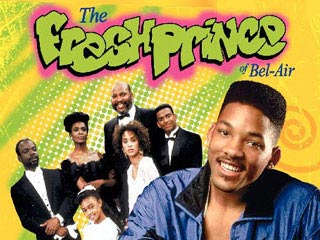
And now, for something completely different (though not totally unrelated).
[CONTINUE READING]

Labels: , , , , ,

2.18.2011

NYC Conference Update: Talk Titles


We are very excited to announce the official, appetite-whetting titles of the talks at our upcoming conference in New York City:

Thursday March 31st
7:00pm "Jesus Shot My Dog: Fear, Control and the End of the Law" - Jady Koch

Friday April 1st
9:15am "The Religious Culture of Control" - Mark Galli
2:30pm "The Liberating Grace of Chaos" - Mark Galli

Saturday April 2nd
9:30am "Grace in the Midst of Mere Religion" - Mark Galli
11:00am "What We Talk About When We Talk About Freedom: The Discontented Self and the Love of God" - David Zahl

The full schedule is up on the conference site, as are a host of other details. It's starting to fill up - Register Today!

Labels: , , , , , ,

10.02.2009

Another Week Ends: Holy Cross, Mysterious Flowers, Two Words, M. Galli, Capitalism, Coen Bros, and Sesame Street

1. First off, an irresistible little bit of nepotism - forgive me. Yesterday The Internet Monk posted a glowing and heartfelt reflection on a Communion service he attended at the heavily Mbird-connected Church of The Holy Cross on Sullivans Island, SC. Little known fact: the preacher in question - responsible on this site for Bringing You The Gospel - proposed to his wife in Transylvania. Yes, that Transylvania. Then there's the beautiful (in more ways than one) piece over at mardecortesbaja on The Mystery Of Flowers.

2. A couple of our favorite "wild stallions" recently joined the ranks of Pirate Christian Radio with a new show called "Two Words". The show explores the ramifications of Law/Gospel theology in a proudly unbridled(!) and provocative fashion, and airs every Friday. It may not be a Mockingbird production, but you'll certainly recognize some of our favorite themes and topics. Well done, guys! Go here to listen and please, be excellent to each other.

3. While we're at it, the Resources section of our website has been significantly updated. Ten new sermons and a detailed update/explanation of Mockingbird's financial situation, among other things. Keep an eye out next week for the outlines of this past summer's "Good News For People With Big Problems" talk series.

4. Be sure to read the fantastic cover article that Mark Galli wrote for this month's Christianity Today, "In The Beginning, Grace". It's a long one, but it's packed with the sort of insight, humility and cutting analysis of contemporary Evangelicalism that we've come to expect from Galli. One of my favorite portions from the conclusion reads:

"The first thing to do when we confront the dysfunctional horizontal, then, is not to address it as a horizontal problem. That would be to deny the word of the Cross; it would be to pretend that we can, of our own wisdom and strength, attend successfully to the problem. The Word of God says the way to start working on the horizontal is to look up, in particular, at the one hanging on the Cross. The place to begin is not more feverish doing but a type of non-doing, acknowledging the complete inadequacy of any doing and the utter powerlessness of the horizontal to fix the horizontal. It means to allow oneself to be borne up by the Word of grace."

5. Love him or hate him (I myself am closer to the latter category than the former), but this little article in NY Magazine called "Michael Moore, Bible Thumper" still came as a surprise. In reference to his new "documentary" Capitalism: A Love Story, they write:

"The film is actually a veiled religious tract. What Moore has done with his current cinematic manifesto is to tell the Book of Revelation through an account of the recent financial crisis."

"Many of the talking heads in the film are Catholic clergy, including the bishop of Detroit, who proclaim capitalism to be a “sin” and “radically evil.” “Eventually,” one prophesies, “God will come down and eradicate it.” The blunt moral power of Moore’s work has always derived from a very Catholic idea of sin. But in the current film, the salvation narrative is less veiled.


6. In other theologically-related movie news, The Coen Brothers new film A Serious Man opens this week, a modern day Book of Job. In his review for the NY Times (cleverly titled "Calls To God: Always a Buzy Signal"), A.O. Scott writes,

The story is at once hilarious and horrific, its significance both self-evident and opaque. The same could be said of most of the Coen brothers’ movies, in which human existence and the attempt to find meaning in it are equally futile, if also sometimes a lot of fun. (For us, at least.) Their insistence on the fundamental absence of a controlling order in the universe is matched among American filmmakers only by Woody Allen. The crucial difference is that the Coens are compulsive, rigorous formalists, as if they were trying in the same gesture to expose, and compensate for, the meaninglessness of life.
So a question put before the congregation by “A Serious Man” is whether it makes the case for atheism or looks at the world from a divine point of view. Are the Coens mocking God, playing God or taking his side in a rigged cosmic game? What’s the difference?
7. Finally, on Wednesday the NY Times published an account of the checkered history of the Palestinian Sesame Street entitled "Can The Muppets Make Friends In Ramallah?". Required reading for anyone interested in the conflict (or The Muppets for that matter - ht Kyra Shapurji).

Labels: , , , , , , , , ,

11.20.2009

Exclusive Interview: Mark Galli of Christianity Today (pt. 1)

Back in July, many of us at Mockingbird discovered (see earlier blog posts here and here) the writings of Mark Galli, Senior Managing Editor of Christianity Today, the flagship magazine of Evangelicalism (started in 1956 by Billy Graham). Galli's grasp of the Gospel—God’s grace in Jesus Christ to broken human beings (including Christians who can't get it together)—was as deeply refreshing as it was (almost) unique in the wider world of Evangelical Christianity. We were so intrigued that we sat down with him to find out more. It proved to be a fascinating conversation about the current landscape of Evangelicalism, the radical nature of the Gospel, and the pattern of the Christian life. UPDATE: Mark Galli will be the keynote speaker at the 2011 Mockingbird Conference in New York City, 3/31-4/2. Go here for more information.

Here's Part 1 of the interview.


Mockingbird: Christianity Today is a magazine written for a broa
d spectrum of theological perspectives. But in your regular Soulwork column, you have a distinct theological perspective that emphasizes God’s radical grace in the face of our human brokenness and narcissism. What’s the origin of your perspective and what role does it play in the magazine?

Mark Galli: You’re right that Christianity Today is a magazine for all evangelicals. So my job involves publishing stuff I may disagree with on a personal theological level. But CT is like a village green. People from all backgrounds can come together and talk about what they think they should be doing in the name of Christ in the world. In that, there’s a certain continuity and coherence, maybe less than there used to be, but it's still there: a passion to love Christ and serve him in the world.

This kind of activism has characterized evangelicalism from day one. That, to me, is our movement’s greatest strength and our Achilles heel. That is, on the one hand, I’m just always impressed how when you go to the far reaches of the planet and you find people who are working in the worst situations, they’re evangelicals. But at the same time, that activism is almost like an addiction. We need a voice in there saying, “Now, let’s remember from whence all this activism comes; what is
its root and where is it leading?”

So one of my concerns as a writer and as the Senior Managing Editor of
CT is to keep ringing that bell, that it all begins with God. And it all ends in God. And that it’s all done through God and through his grace. Anything that we achieve or call an achievement—even using that word “achievement” is problematic—has to be understood as God’s achievement. So in fact, the cover story, which I wrote, for the October issue was called, “In the Beginning, Grace.” And it’s an overview of what I consider to be the main concern with the evangelical movement right now; it’s addicted to the horizontal: what we do, what we’re doing wrong and how we should fix it. And I make a case that the very first thing we should do when we see a horizontal problem in the movement is that we should think vertically. We should be looking to the cross, first and foremost. So that is kind of a public setting of a statement that I hope we will be emphasizing in the magazine. And again, not at the expense of all the great things evangelicals are doing, but to keep pounding home the priority of grace in everything we do.

There was a lot of heated response to your recent column, "The Scandal of the Public Evangelical." You said that being sanctified in this life is mostly about becoming increasingly aware of just how much we are, as the Book of Common Prayer says, “miserable offenders” and there “is no health in us.” Essentially, realizing how bad we are, and the immensity of God's grace, and simply relying on that. Some people loved it, some hated it. One guy called it “appalling grace.” Why are people so heated in their response to this?

I don’t know that I’ve talked about grace in the radical nature in which Paul and the New Testament talk about it unless people are shocked and appalled by what I’ve said. The doctrine of grace is so radical and so contrary to our assumptions about what religion is about, that once we express it in a clear fashion, it will appall people. Because we’re all so anxious—even people like me who preach grace—to justify our lives. We want our lives to be meaningful, purposeful, useful. So we hook our futures to God and think, “Now I can really make my life purposeful and useful and I can do something for God in the world. And if I work with God, he’s going to change me.” We’re not so interested in God a lot of times, we’re tired of who we are and we're more interested in wanting to be a different kind of person so we can feel better about ourselves. So much of our religious language and religious motive is about ourselves: justifying ourselves or improving ourselves, with God as a means to that end. Well, the fact of the matter is it’s not about you. But that’s shocking and appalling to most people because we’re so used to thinking that religion is about us, even though we’ve learned to use religious language to suggest otherwise. But in fact, it really ends up being all about us.


The other thing is the whole business of “transformation.” I notice how often that word comes up—our lives can be transformed, our churches can be transformed, our culture can be transformed. We imagine if we do everything right according to what the New Testament teaches us, that things will be completely changed. And if they aren’t completely changed, I’ve either bet my life on something that’s not true, or the Gospel itself is not true.


I just keep on coming back to Luther’s truth that we are simultaneously justified and sinners. I keep on looking at my own life, and at church history, and I realize that when the Gospel talks about transformation, it can’t possibly mean an actual, literal change in this life of a dramatic nature, except in a few instances. It must be primarily eschatological; it must be referring to the fact that we will in fact be changed. The essential thing to make change possible has occurred—Christ died and rose again. (And in this life we will see flashes of that, just like in Jesus’ ministry there were moments when the Kingdom broke in and we see a miracle. And these moments tell us there is something better awaiting for us and God is gracious enough at times to allow a person or a church or a community to experience transformation at some level.) But we can’t get into the habit of thinking that this dramatic change is normal, this side of the Kingdom. What’s normal this side of the Kingdom is falling into sin (in big or small ways), and then appropriating the grace of God and looking forward to the transformation to come.

Now, some people would
say that it’s depressing that I can’t change. Well, it’s not depressing, it’s freeing! It’s depressing and oppressive to think every morning that I somehow have to be better than I was the day befor
e to justify my Christian religion and to justify my faith. That’s the oppressive thing. The freeing thing is to realize that I am a sinner and God has accepted me as such. And yes, of course we're called to strive and be better and to love and all those things—duh!—that’s not the issue. The issue is the motive out of which that comes and what we actually expect to happen as a result of that.

A lot of this is driven by my own personal spiritual journey and is hammered home by the biblical message, and something that Luther got really well: the harder I try to be a good Christian, I notice the worse Christian I am: more self-righteous, more impatient, more frustrated. But when I stop trying to be a good Christian and just realize I am a sinner and that God has accepted me, and that’s the way it is, that, for some reason, releases the striving part of me that makes life harder, and all of a sudden I find myself, surprisingly, more patient, more compassionate, less judgmental and more joyful. So I think that kind of personal experience is a merely reflection of what the Gospel truth is. And those moments when I experience that, that’s wonderful.


Many people have a personal story of going from legalistic Christianity to a new Gospel-focused faith centered on the cross, often due to some personal crisis. You talk in your book Jesus Mean and Wild about suffering being that thing which "plows the field" of the human heart so that grace can come in. Was that you?

Well, that for me is what sanctification is all about. It’s the see-saw, the going back-and-forth. The natural human nature wants to take over and begin building that tower that reaches to the heavens. That is part of the original sin of wanting to know the difference between good and evil, so we’re going to pluck that fruit from the tree. We just want to do it all the time; I want to do it all the time. There have been many moments, many times in my life when I’ve had to stop and say, “You know, this isn’t working. And the reason it’s not working is that I’m trying to build this tower up to the heavens.” And I think that’s the nature of the Christian life, building the tower and then have it come crashing down, and then having the reality of the Gospel sink deeper and deeper into your life. It’s something as a preacher and a speaker you have to face into.

When I was a prea
cher, one of the ways I had to learn it was every single week I had to stand up and say something to the congregation. And there were some weeks when I could stand up there and say, “I’m doing okay in this regard.” But most weeks, “I don’t know why I’m standing up here saying this. I don’t
know that I have my act together.” What occurred to me was that it wasn’t about me as a preacher having my act together before I can proclaim the grace and mercy of God. It’s about something bigger than myself. And that thing that a preacher is forced to confront every Sunday morning, if he has any sense of self-awareness, is the same thing that all of us have to confront when we step out of bed: “Whose day is this? Is this my day to show God how much I can achieve for him? Or is this my day to live in his grace and see what comes of it?”

Who have been your theological allies and mentors along this path? Who has influenced you? You’ve talked about Luther, you’ve mentioned Barth. Who else would you put on that list?


Probably those two would be the most important. Though who I’ve read the mos
t is Karl Barth. Especially recently. That’s probably why you’re seeing a new intensity in my writing on this. I’m exploring writing a book on Barth. And in the course of doing that I was reminded how much I really like this guy. I had not read him in twenty years, but whenever I do read him, he absolutely thrills me with the radical nature of God’s grace to us. What I’m really trying to do is to understand in Barthian terms, how that moment of God’s alienation, when we feel alienated by God, when we feel judged by God, that God is the stranger, that God disapproves of us, that at that very moment it’s the God of mercy who’s beginning to work in our lives. And that’s what I’d like to bring out in a book.

Bonhoeffer in my 20s was really important. I’ve also read a lot of Orthodox spirituality. There are two types – there’s the “climb the spiritual ladder” type, which always
feels dreary to me. And there’s another type of Orthodox theology which is radically God-initiated and grace-centered. And that’s what I’ve always appreciated.

But in reality, I don’t often know who my influences have been. One of the weaknesses of my writing, is I can write long, long passages and never actually quote anyone. And I don’t quote anyone because I don’t consciously know where I’ve gotten this information. And I pridefully think, “Wow, this is good, this is fresh.” And then I’ll pick a book that’s gotten dusty on my shelves, that I’ve marked up 20 years ago and I’ll realize it’s all from that author. The older I am, I realize I don’t have an original idea in me.


CLICK HERE FOR PART TWO.

Labels: , , , , ,

3.18.2011

Another Week Ends: Japan, Facebook & Divorce, Preschool Litigation, more Galli on B(h)ell, The Beach Boys' Smile, Community

1. Two very moving additions to the coverage of the disasters in Japan. First, if you can decipher the google-translation, there's the story of a woman who sacrificed her life to warn a village of the impending destruction here. And two, the footage that made this all very real to yours truly. If it doesn't get you on your knees, nothing will (be sure to stick with it to the end):


2. An amusing report in the Guardian about Facebook and divorce. If ever there was an excuse to take a potshot at lawyers for having a shallow view of human nature...:

A 2010 survey by the American Academy of Matrimonial Lawyers (AAML) found that four out of five lawyers reported an increasing number of divorce cases citing evidence derived from social networking sites in the past five years, with Facebook being the market leader. Two-thirds of the lawyers surveyed said that Facebook was the "primary source" of evidence in divorce proceedings, while MySpace with 15% and Twitter with 5% lagged far behind.

A spokesperson for Facebook said: "It's ridiculous to suggest that Facebook leads to divorce. Whether you're breaking up or just getting together, Facebook is just a way to communicate, like letters, phone calls and emails. Facebook doesn't cause divorces, people do."

The NY Times Magazine had a similarly Zeitgeisty take on divorce this past week too, which is worth it for the candid quotes on depravity/original sin.

3. Speaking of the Zeitgeist, there's the outrageous but evidently very real "Mother Sues Preschool For Damaging Her Daughter's Shot at the Ivy League." ht JD. 

4. For those of you interested in the ongoing Rob Bell-univeralism saga, conference speaker Mark Galli's review of the Bell's Love Wins book appeared this week, and it is very much worth your time. Galli rightly places Bell in the context of Protestant liberalism, not in order to callously write him off as such, but in an attempt to discuss the heart of the matter, which as always, has to do with atonement/justification:
[CONTINUE READING]

Labels: , , , , , , , , , ,

11.26.2009

Exclusive Interview: Mark Galli of Christianity Today (pt. 2)

Last week we posted part 1 of Mockingbird’s exclusive interview with Mark Galli, Senior Managing Editor of Christianity Today. Galli’s experience—from local pastor, to magazine editor, to columnist, to author—has all reflected and informed his passion for a cross-centered, true-to-life articulation of the Gospel. Part 2 of the interview explores Galli’s view on transformation in the Christian life, the place of spiritual disciplines, and the future of Evangelicalism. Enjoy!

Mockingbird: Earlier you pointed out the tendency among Evangelicals towards activism, an “addiction to the horizontal.” As someone who’s been in the Evangelical world for a long time, do you see connections between the current activism (for example, in the Emergent Church movement) and earlier similar movements (like the Jesus people in the 1960s and 1970s)?

Well, certainly emergent folks like to think of themselves as breaking away from Evangelicalism, but there’s so much about their movement that’s just a new chapter of an old book. And actually, not even a new chapter, but a repeat of a lot of evangelical characterizations.

For example, first of all there’s the rejection of the establishment (which in their case is Evangelicalism) and second there’s this notion that somehow they can create a fresh a way of doing church that is somehow more biblical or authentic (which is another Evangelical assumption about the world), and third, that they’re very activist, that they’re going to go out and change the world. Now in this case, they’re not interested in evangelism as much as they’re interested social justice. But it’s very much about getting their hands dirty in the world, and doing something for Jesus. So in that regard, the emergent movement is very Evangelical. And of course, they’d be shocked and appalled to hear that, but that’s my take on their movement.

Unfortunately, the leaders of the emergent movement have pushed that envelope so far that I really can’t tell much difference between what they’re doing and nineteenth century liberalism, which led to dismal results, as far as I’m concerned, for the life of the church. I’d be happy to have a conversation with them about that.

As far as the contrast with the 1960s and 1970s, you do see this youthful idealism that says, first, there are things that are seriously wrong with the church and with Christianity as it is understood today; and second, we can do something about it.

Now, it seems to me that if a younger generation isn’t feeling those things there’s something seriously wrong with that generation. I don’t want to discourage younger Evangelicals from shaking their fists in anger at the sins of the church and their passion to want to make a difference.

What I’m concerned about of course, is the hubris that sometimes comes with that. It can make it all about us, and our reformation and our ability to make a change in the world, instead of pointing us to a couple of other realities. And the first of those realities, what we have to remember, is that the moribund, horrible, sinful, selfish, hypocritical, televangelist church, the one who is co-opted by technology and growth and all these things we find despicable is the church that Jesus died for. And it is the church that Jesus is so committed to that he is willing to have his name associated with it, with that church, with that group of people who we all find disgusting and frustrating and aggravating and hypocritical and so nominal.

Earlier you mentioned the current Christian buzzword, “transformation”; another big one now is “discipleship.” We see these emphases in the wider Christian subculture, and again, in parts of the Emergent Church movement. One Emergent pastor I’ve read has said “the gospel is not that Jesus died for your sins, but that God wants you to help him transform the world.” How do you understand transformation for Christians?

We have to maintain a realistic sense of what we mean when we talk about changing things and transforming things: what is it that we can accomplish this side of the kingdom and what can’t we. Because of course, if you enter into the fray with these grandiose notions that you’re going to be able to transform the whole world and your own church, you’re going to run into brick wall after brick wall after brick wall because of original sin. And you’re going to either do one of two things: you’ll either imagine you’re making a difference when you’re really not, just to self-justify your efforts; or you’re going to become so discouraged that you’re going to give up altogether. And neither of those are Christian responses: one is hypocrisy and one is despair.

But the Christian always lives by hope, even in the most miserable of situations. Because he lives by Grace, he doesn’t live by his achievements, or his successes. He lives by the call of God on his life. So in that regard, back to your earlier question, this generation is like the generation of the 1960s, very idealistic, very passionate, very activist—but I’d like to bring in this emphasis on grace and humility back to the center.

What place is there for things that we call spiritual disciplines and what do they look like? It seems that the standard program in Evangelicalism is read your Bible more, pray more, journal more, get some accountability and you’ll get better. And you have said in your articles that often people don’t get better, at least not in the way we think, and the more we focus on our problems, the worse they get. How would you respond to the cry for spiritual disciplines? What’s a healthy way to think about that?

In light of the new thinking I’ve been doing recently, I’m having to rethink how I understand that. But I think the way I’d approach it now, the spiritual disciplines are at some level means of grace. God knows that we are weak and foolish and hard-hearted people. And he not only condescends to become human for us, but he uses elements of his creation in order to teach us about who he really is and what our relationship with him really is like. So spiritual disciplines are more about God’s means of helping us grasp what the Gospel is really all about and how he in fact does transform us. But what’s happened to a lot of the spiritual discipline language is that it not about teaching us who God is and how he shapes us, but it’s about getting transformed. It becomes about us.

One of Dallas Willard’s earlier works talks about the “spirit of the disciplines,” understanding how God changes lives. And there’s an emphasis that these are classic disciplines that have grown up in the church as a result of the leading of the Holy Spirit that have been instrumental—used by the Holy Spirit—to shape us.

But nowadays, you read books on spiritual formation with titles like "Spiritual Disciplines: Practices that Transform Us" and "Arranging our Lives for Spiritual Transformation." They’re all about us. And that’s where the emphasis has gone askew in the spiritual discipline world. Jesus, of course, talked about prayer and fasting, and was a regular attender of the synagogue (so he obviously attended worship, he listened to preaching and the reading of scripture). So all these are means by which a person is shaped and formed by God. But that is the point. And they will in fact have that affect. They will shape us and change us. If they don’t, something is fundamentally wrong. But that isn’t why we enter into them or what they’re about when we start them. It’s more about trying to enter into a human work/activity—prayer, Eucharist, preaching, Bible study—that opens us to the wonders of God’s grace.

I heard a sermon once where the preacher said that we need to clear things out of our lives, so that God can come in. And I said “Wait a second, if God wants to come in, He can.”

Exactly. He comes in people’s lives that are pretty darn cluttered.

I don’t think St. Paul cleared the road for Jesus to convert him. But often among Christians we talk about spiritual disciplines as if we are the only actors. But in reality, God is much more interested in your heart and soul than you are, and is probably already doing lots of things that you may or may not be aware of. He is disciplining you spiritually apart from anything you do.

Right. The very fact that you even have any desire to do spiritual disciplines might be a prompting of the Spirit in the first place. You’re not offering something up on your own initiative.
One example might be fasting. People talk about fasting in the terms you’ve talked about—clearing out space in our lives for God to enter in. For me, fasting is a physical parable that reminds me of how much of my life is focused on things that are non-God. Which is probably why I don’t do it very often. Fasting is something that always brings me to my knees in repentance. If it opens me up to God, it’s only because I recognize that I’m a person who’s not very open to God. And I think that’s true of all the disciplines on some level.

Last question: what are the bright spots in the Evangelical world? When you think about the future, what encourages you or gives you hope in light of all the muddled theology out there (a lot of which is pretty depressing)?

Well, I do think the neo-Calvinist movement is a hopeful sign. Everyone, when they talk about what young people are into these days, they’re always pointing to the radical emergent crowd. But when you actually look at the number of young twenty-something people who are actually going to church, or going to conferences, and giving their money to things, a huge number are in the Reformed crowd. I think they’re hungry to hear the message of the sovereignty of God, the prevenience of Grace. All the classical Christian understanding of the world. And the Reformed are really good at making that point. And they’re doing it really well right now.

The problem with a lot of the neo-Reformed movement is that they turn Grace—and you read some of the blogs, etc.—they turn Grace into a new Law. And they’re very judgmental and very critical of people who don’t talk about the Gospel in exactly terms they think it should be talked about. And they’re very quick to judge and to cast people off into outer darkness. This is the great weakness of the Neo-Reformed movement, as I can see it. But I nonetheless still think it’s a hopeful sign because it puts the emphasis on the right place: that it’s about God, first and foremost.

The other thing that’s a helpful movement, but could move in one of two directions, is the Ancient-Future movement. When people are trying to draw on the resources of Church historic, especially the early church fathers, and the church tradition that’s found in Catholic and Orthodox (and Anglican) circles, I think that is helpful, as long as it’s not being turned into a new traditional-ism, or it’s turned into a new religion. But drawing on the theological and ecclesial resources that the Church has offered us, that God has given to the church through the ages, has the potential to bring the Evangelical movement a more even keel and a breadth and a depth that could help sustain it in the decades ahead.

Of course, that’s just speaking on human level about two movements I tend to have some hope for. But in fact, in the end I really don’t care if Evangelicalism survives or not, as we know it today. God cares about Evangelicalism as he cares about the nations of the world—they’re a drop in the bucket. He doesn’t need Evangelicalism to further his cause in the world. And if Evangelicalism were to disappear tomorrow, we shouldn’t lose much sleep about it.

But the fact of the matter is that God in history has continued to raise up some group, somehow, somewhere that speaks out the truth of the Gospel in a way that is not only truthful but actually makes a difference in people’s lives. There were no evangelicals in 1500, but then God raised up Luther and John Calvin to remind us of that. There were no Evangelicals per se in 1700 but Whitefield and Wesley came along and started the preaching that led to the Great Awakening.

So the greatest hope I have for the future is what Evangelicals have traditionally stood for—the preaching of the Gospel. I have great hope in that, because God will not desert his church. How will that look? I have no idea. Will evangelicalism fragment? It may. I don’t think it will necessarily, but if it does, God will raise up something else.

Labels: , , , , ,

3.19.2009

The Gospel of Incomprehensible Unfairness

I found it interesting how Mark Galli, the managing editor of Christianity Today, drew a gospel lesson from the current furore surrounding the $165 million being paid out to high-leveled executives of the troubled insurance giant AIG (read all about it in The Scandal of the AIG Bonuses).

In the article he wryly notes that this scandal is nothing compared to the scandal of the gospel; "while we were yet sinners, Christ died for us" (Rom 5:8). The "free bonus" of grace given to totally undeserving miscreants cannot help but incense the masses; unless we happen to be one of the villainous miscreants.

If the gospel we preach doesn't turn a few heads, and cause the man in the street to cry out at the scandal, the question begs as to whether what we proclaim is truly "good news"?

As Galli says in his conclusion...
I wonder if we are preaching the gospel if we don't scandalize a few listeners, maybe even ourselves, with the incomprehensible unfairness of it all. When Paul talked about the gospel, many were shocked and appalled. It sounded as if God wanted to reward sinners, to give a bonus to scoundrels! They scoffed, "Are we to continue in sin that grace may abound?" (Rom. 6:1). And when they figured out what exactly he was preaching, they got so angry that they told him to fall on his sword, and then formed a mob to run him out of town.

May we be as "scandalous" as Paul as we declare the gospel of the cross on which our Lord bled and died...for us!

Labels: , , , ,

7.17.2009

Mark Galli is Cooking

Mark Galli strikes again. This is a man liberated.

Some quotes (savor this article as you might savor a medium-rare ribeye):

"There is in the soul of American evangelicals a feverish anxiety. If our faith in Christ does not lead to our moral uplift, we jumpstart a new spiritual formation regimen that promises to lift us. If the church is not making a difference in the world, we shame ourselves to become more socially relevant and evangelistically effective."

"Contrary to our aspirations and assumptions, the Christian faith is not a bulleted list that equips us with principles to create the good life, let alone the best life now. Nor does it present us with an agenda, as some would have it, for making the world a better place. The core of the faith is good news. It is a revelation of the deeper realities that plague us (of which our anxiety about change is just a symptom) and the unveiling of an unshakable hope." (ed. note: Are you kidding me?!)

"If grace is in any way, shape, or form a deal, a quid pro quo, a bargain, a contract, then we will always be obligated to do our part. It would then be our duty to do what God says. It would turn Christian ethics into another law, and therefore into another burden, into "Alienation: The Sequel." God is not looking for people first and foremost to do or be good, to fulfill the law—in Christ he's already fulfilled it (Matt. 5:17)! He's looking for people who will love—love God and neighbor."

"But love cannot be created by contract, no matter how righteous the clauses. If a "grace contract"—to speak absurdly—is to remain in force, God would do his part, and then we would be obligated to do ours, or vice versa. A contract is about mutual obligation. It has nothing to do with love. Only unconditional grace can transform a hardened heart into a grateful heart. Only a free gift can sabotage any notion of the quid pro quo. Only an utterly merciful act of love can fashion a new creation capable of love. As theologian Karl Barth puts it, "As the beloved of God, we have no alternative but to love him in return."" (The editor has fainted)

"Now, this does not address the issue of why in this life we know grateful, purity-of-heart love only in fleeting moments (more of this in my next column). Still, it does suggest that the Christian life is not grounded in moral improvement—but in the reality that he who is forgiven much, loves much (Luke 7:47)—and that our first prayer is not a plea for changed behavior but "Create in me a clean heart, O God, and renew a right spirit within me" (Ps. 51:10)."

Read the whole article here.

Labels: , , , ,

2.04.2011

Another Week Ends: Transformation Myths, Eating Disorders, Suicidal Standards, Aging Ungracefully, Rehab Albums, St Elizabeths

1.  The timing just could not be any better. NYC Mockingbird Conference Speaker Mark Galli has been blowing up this past week, most notably on The Internet Monk. Start with The Evangelical Myth of "Transformation" and go from there - the discussion provides a helpful overview of where Mr Galli is coming from, not to mention a few clues as to why we asked him to speak. Speaking of NYC, we can now announce that childcare will indeed be available, for kids under the age of 8. Email us at info@mbird.com if you plan on taking us up on the offer. Register today. Otherwise, brace yourself for a rather somber week ends column...

2.  Why Am I Not Smarter Than My Eating Disorder? on Salon.com is about as unassuming an article on the bondage of will as we're likely to find. Almost comically so - at least, if it weren't about something so unfunny (ht JD):

I know what I need to do to overcome this disorder. I just need to get over it and eat healthily and according to the principles in which my intellectual mind believes. This shouldn't be hard. For whatever reason, I don't seem to be doing it.

3.  From the Scientific American, a revealing but also pretty grim article, "What It Feels Like To Kill Yourself," which gives new meaning to the phrase "the Law kills." The following portion was particularly relevant:

Most people who kill themselves actually lived better-than-average lives. Suicide rates are higher in nations with higher standards of living than in less prosperous nations; higher in US states with a better quality of life; higher in societies that endorse individual freedoms; higher in areas with better weather; in areas with seasonal change, they are higher during the warmer seasons; and they’re higher among college students that have better grades and parents with higher expectations.

Baumeister argues that such idealistic conditions actually heighten suicide risk because they often create unreasonable standards for personal happiness, thereby rendering people more emotionally fragile in response to unexpected setbacks.


4.  In an article entitled "The Myth of Aging Gracefully" in The Daily Beast (via Newsweek) author Susan Jacoby has some refreshingly counter-cultural things to say about the "thirst for glory," ht RF:

"Who wants to live to 100? Just about everyone, if old age fulfills the fantasy that we can sail through our 90s with vigorous bodies and minds and die instantly of a heart attack, preferably while making love or running the last of many marathons. As the oldest baby boomers turn 65, it is past time to take a realistic look at old age as it is—not as a minor inconvenience to be remedied by longevity-worshiping hucksters of “anti-aging” supplements or brain-teasing computer games, not as a “disease” that will soon by “cured” by a medical miracle, and not as an experience to be defied and denied, in the spirit of a 2008 World Science Festival panel on aging titled “90 Is the New 50.” No, it’s not. It’s not even the new 70. The truth is that we are all capable of aging successfully—until we aren’t.

5.  The Wall Street Journal reports on the fascinating relationship between sobriety and hit records in "The Rehab Album", using Mbird favorite Justin Townes Earle as one of their case studies, ht DW.
[CONTINUE READING]

Labels: , , , , , , , , ,

12.22.2010

Galli: God's Favor to Miserable Little Disciples


A new article from Christianity Today's Mark Galli, keynote speaker at the upcoming 2011 Mockingbird Conference, has this typically scorching humdinger on the annunciation and what it says about God's grace to us:

"This announcement to Mary comes completely out of the blue, as if it were an act of sheer grace. Indeed, an act of grace to Mary and to us. Before we could decide for or against God, before we could show him how religious we are, before we could ask forgiveness for our first sin, before we were the apple of our parents' eyes, before the foundation of the world, God favored us. Not because he knew we would blossom into greatness. Not because he saw that we would become good Christians someday. Not even because we were humble enough to know we are not good Christians (which is really a kind of stealth pride!). No, we were favored when God knew well enough that we would fail to live up to our potential, that most days we would be miserable little disciples. Yes, in spite of the fact that we would be sad, fearful, doubting, anxious, and sinful people, he favored us."

Labels: , , , ,

2.08.2010

Mark Galli on Transformation

Mockinghero Mark Galli, Senior Managing Editor of Christianity Today, does it again:
To those who wonder what good is Christian faith if it's not going to make a difference, I reply: If you're a Christian mainly because you want to be changed, that's a problem. If you've given your life to God mostly because you are tired of yourself and want to be a different person—well, that may suggest you're merely using God to fix you. That's not faith. That's not love of God. That's love of self.
If you look into your heart and determine that you have given your life to God mostly because you are tired of the world and wish it were different and think that teaming up with God can make it so, then you are merely using God to fix the world you are sick of. That's not faith or love either. Again, you're just using God.
. . . . To put it theologically, there is no resurrection without crucifixion. And the crisis comes to a point like this: we look within and discover that despite our transformation talk, indeed our motives are corrupt, our hearts have been wicked and our wills perverse, and we recognize that we've been loving self rather than God.
. . . It's at this point, that we've come to the crisis point, the point of crucifixion. We know we're as good as dead. Condemned to a life of self-centeredness. And thus condemned to a life without God. It is only when all hope is lost, of course, that grace rears its beautiful head. Grace only emerges at the point of utter hopelessness. If there is any taint of will, any notion that there is something I can do to resolve the crisis—be penitent, pray, do good—then we're no longer talking about grace, but some sort of deal with God. So the crisis point is not a single point that occurs at the moment when one becomes a Christian. The crisis point is life itself. And thus life itself is a grace point.
Sounds a bit different than this:

Q: Well, you said, I don't know of anything else that revolutionizes the interior of a person's life like faith in Christ.

A:You know what, I'll say this: If I knew something that did a better job of changing lives, I'd switch. (guess before you click)


Labels: , , , ,

4.06.2011

2011 NYC Conference Book Table

Recordings will all be available on Monday (on the new site!). Until then, here's this year's book table, with a couple of embarrassing omissions rectified. Every year it's a little different, depending on speaker and theme, but overall, it's safe to say that it doubles as something of a "Mockingbird Reading List." Enjoy:

NON-FICTION
Alcoholics Anonymous - Big Book (little version)
Bayer, Oswald - Justification and Sanctification
Brewer, Todd & Zahl, David - The Gospel According to Pixar
Brooks, David - The Social Animal: The Hidden Sources of Love, Character, and Achievement
Capon, Robert Farrar - Kingdom, Grace, Judgment: Paradox, Outrage, and Vindication in the Parables of Jesus
Ebeling, Gerhard - Luther: An Introduction to His Thought
Elert, Werner - Law and Gospel
Forde, Gerhard - A More Radical Gospel
Forde, Gerhard - On Being a Theologian of the Cross
Galli, Mark - Jesus Mean and Wild: The Unexpected Love of an Untamable God
Galli, Mark - Great and Terrible Love, A: A Spiritual Journey into the Attributes of God
Greene-McCreight, Kathryn - Darkness Is My Only Companion: A Christian Response to Mental Illness
Hawkins, David - The Useful Sinner
High Street Hymns - The High Street Hymnal
Holcomb, Justin - Christian Theologies of Scripture: A Comparative Introduction
Holcomb, Justin and Lindsey - Rid of My Disgrace: Hope and Healing for Victims of Sexual Assault
Holl, Karl - What Did Luther Understand By Religion?
Jefferson, Margo - On Michael Jackson
Lake, Frank - Clinical Theology, a Theological And Psychiatric Basis to Clinical Pastoral Care
Lewis, C.S. - A Grief Observed
Lipsky, David - Although Of Course You End Up Becoming Yourself: A Road Trip with David Foster Wallace
Lloyd-Jones, Sally - The Jesus Storybook Bible
Long, Anne - Listening
Luther, Martin - The Bondage of the Will
Martin, Joseph - No Bag for the Journey
Martyn, Dorothy - Beyond Deserving: Children, Parents, and Responsibility Revisited
Mattes, Mark - The Role of Justification in Contemporary Theology
Norris, Sean - Judgment & Love
Norris, Sean - Two Words: Teaser
O'Connor, Flannery - Mystery and Manners: Occasional Prose
Paulson, Steven - Luther for Armchair Theologians
Pless, John - Handling The Word Of Truth: Law And Gospel In The Church Today
Rosenbladt, Rod - Christ Alone
Senkbeil, Harold - Dying to Live: The Power of Forgiveness
Spencer, Michael - Mere Churchianity: Finding Your Way Back to Jesus-Shaped Spirituality
Walker, Paul - Sermons From The Advent
Walther, C.F. - God's No and God's Yes
Zahl, David - Grace in Addiction: What The Church Can Learn from Alcoholics Anonymous
Zahl, Paul - The Collects of Thomas Cranmer
Zahl, Paul - Grace in Practice: A Theology of Everyday Life
Zahl, Paul - Who Will Deliver Us?

FICTION AND POETRY
Auden, W.H. - Collected Poems
Cozzens, James Gould - By Love Possessed
Eliot, T.S. - Confidential Clerk
Eliot, T.S. - The Elder Statesman
Hugo, Victor - Les Miserables
Lewis, C.S. - The Great Divorce
O'Connor, Flannery - The Complete Stories
Robinson, Marilynne - Gilead
Salinger, J.D. - Franny and Zooey
Stevenson, Robert Louis - The Strange Case of Dr. Jekyll and Mr. Hyde
Wilde, Oscar - De Profundis: The Ballad of Reading Gaol and Other Writings
Wilde, Oscar - The Picture of Dorian Gray

MUSIC AND DVDS
High Street Hymns - High Street Hymns
High Street Hymns - Love Shall Be Our Token
The Magills - And The Kings County Sound
Zahl, Paul - New Persuasive Words DVD

OTHER
Feast: A Quiet Time Book and/or Youth Small Group Devotional and/or Sweet Compilation of People's Stories & Scripture (email Liz Edrington at liz@christchurchcville.org to order copies)
Grace in the Parables of Jesus Sunday School Curriculum, Grades 1-5 (click to download) 
Side-By-Side Ministry to Single Mothers Resource Kit (email Andrea Zimmerman at sbs@ststephenschurch.net to order)

PLUS...IF YOU'RE NOT DOING ANYTHING HALLOWEEN WEEKEND:

Labels: , ,